

More news on this day
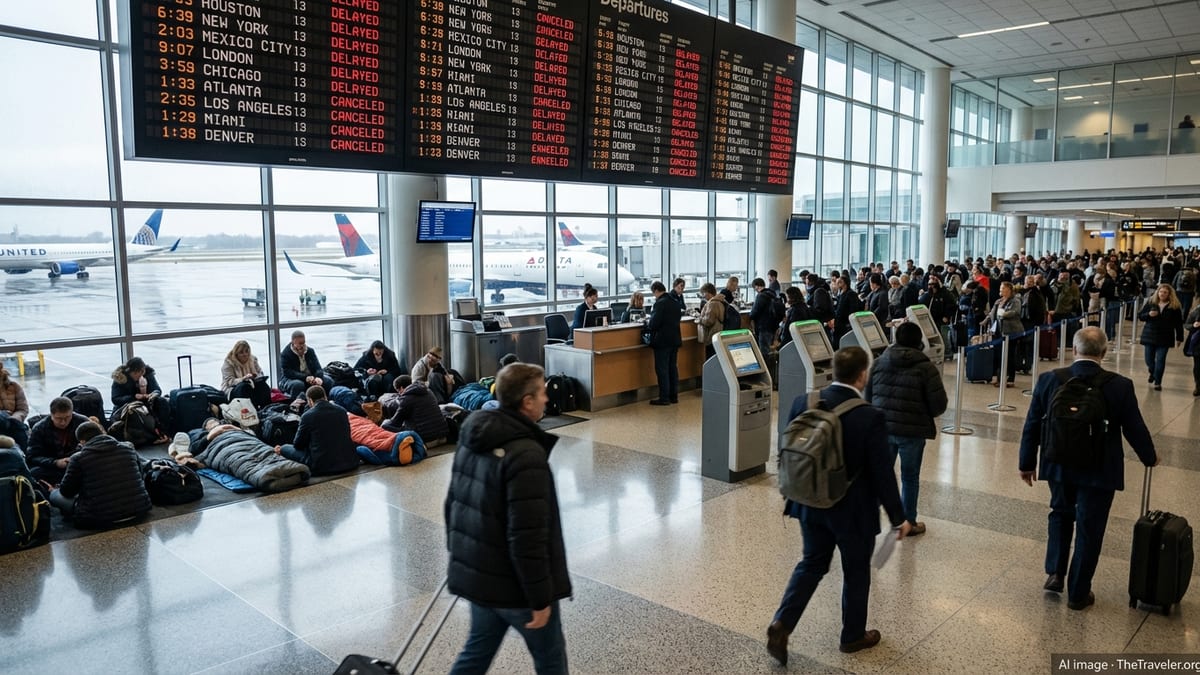
Travelers flying through Houston, New York, Mexico City, London and several major U.S. cities on February 25 are facing a fresh wave of disruption, as a mix of winter weather, technical glitches and knock-on delays leaves United Airlines, Delta Air Lines, Air New Zealand and other major carriers grappling with 46 flight delays and four cancellations across key routes.
Weather-Fueled Turmoil Ripples Across U.S. Gateways
The latest bout of travel chaos comes on the heels of a powerful winter storm that hammered the U.S. Northeast earlier in the week, triggering thousands of delays and cancellations and leaving airline schedules fragile and highly vulnerable to further disruption. As carriers work to rebuild normal operations, relatively minor schedule changes in one city are quickly snowballing into wider network issues affecting passengers nationwide.
In New York, lingering operational challenges at John F. Kennedy, LaGuardia and Newark follow days of weather-related disruptions that saw carriers including Delta and United slash flights and implement broad rebooking waivers for affected travelers. Even as runways clear, crew and aircraft remain out of position, resulting in rolling delays on outbound services to hubs such as Houston, Chicago and Los Angeles.
Houston, a key domestic and international hub, has been particularly exposed. Delayed departures from the Northeast and Midwest are compressing already tight turnaround times at George Bush Intercontinental Airport, generating further schedule slippage on mid-morning and afternoon services and placing additional pressure on connecting passengers bound for Latin America and the U.S. West Coast.
Smaller regional airports feeding these hubs are also feeling the strain. Late-arriving aircraft, as well as rerouted flights avoiding the worst of the weather, have introduced gaps in schedules that carriers are trying to plug with substitute aircraft and revised departure times, sometimes with only limited notice to travelers.
Transatlantic and Latin American Routes Hit as London and Mexico City Back Up
The operational strain is not confined to the United States. In London, airlines are still managing the after-effects of a difficult operational day at Heathrow, where a high volume of delayed and canceled services over the weekend left limited slack in aircraft and crew rosters. Transatlantic partners of U.S. carriers, including flights operated in conjunction with United and Delta, are now facing tight connections and delayed departures to New York and other East Coast cities.
Mexico City is experiencing similar challenges as late-running inbound flights from the United States and Canada disrupt tightly scheduled evening departure banks. Flights that connect through Houston and New York are among the hardest hit, with delays cascading across onward routes to domestic Mexican destinations and other Latin American cities.
For travelers, the impact can be felt at every step of the journey: crowded immigration halls as multiple delayed flights arrive simultaneously, queues at airline service desks as passengers seek new itineraries, and increased competition for remaining hotel rooms near airports when overnight stays become unavoidable. Airport authorities in both London and Mexico City have urged passengers to arrive early, stay informed about their flight status and build extra time into connections.
Airlines, meanwhile, are working to re-balance their global networks by swapping aircraft types, consolidating lightly booked flights and prioritizing long-haul departures in an effort to limit the number of passengers stranded far from home.
Major Carriers Confront Operational Headaches and Knock-on Effects
United Airlines and Delta Air Lines are once again at the forefront of the disruption, a reflection of their extensive domestic and international networks through storm-affected hubs. United’s operations through Houston and Newark remain under particular pressure, with early-morning delays feeding into a chain reaction that affects mid-day and evening departures to cities including Mexico City, London and other major business and leisure destinations.
Delta continues to recover from a combination of winter weather and recent technical issues that hit its operations in New York, where flights at Kennedy and LaGuardia were curtailed and later resumed with limited capacity. While the airline has restored most of its schedule, residual crew and aircraft imbalances are surfacing as shorter delays and occasional cancellations across the network, contributing to the tally of disrupted flights reported on Wednesday.
Air New Zealand, which partners with United on select transpacific and U.S. domestic codeshare routes, has also been touched by the turbulence. Delays to shared services, including those connecting through U.S. hubs on their way to or from the Pacific region, are forcing some passengers to be rebooked onto later departures or alternative routings, particularly where minimum connection times can no longer be met.
Other U.S. carriers are facing similar though often less visible challenges. With airplane utilization running close to capacity, there is little room to absorb extended ground holds or re-crewing requirements, turning even a short delay into a daylong headache for operations planners and travelers alike.
What Passengers Are Experiencing on the Ground
At major hubs, the passenger experience reflects the cumulative strain on the system. In Houston, lines at customer service counters lengthened through the morning as travelers sought new connections after missed links from the Northeast and Midwest. Airport concourses in New York were similarly crowded, with many passengers reporting gate changes announced shortly before boarding and departure times repeatedly pushed back in small increments.
In London and Mexico City, travelers connecting between long-haul and regional flights contend with the added complexity of security rechecks and terminal transfers under tighter timelines. Airport staff have been deployed to guide connecting passengers through expedited channels where possible, but bottlenecks remain around peak departure periods.
Many stranded passengers have turned to airline apps and text alerts for real-time updates, which in some cases arrive faster than public address announcements in the terminal. Still, the fragmented nature of information has left some confused about whether to wait at the gate, seek alternative connections, or head to baggage claim to retrieve checked luggage after cancellations.
Hotels near airport corridors in Houston, New York and London report elevated occupancy driven by distressed travelers, some of whom were unable to secure rebooked flights until the following day. Ride-share pick-up areas and airport shuttle services are similarly busier than usual as passengers shuttle between terminals, hotels and alternative airports in search of workable itineraries.
Outlook: Slow Stabilization as Airlines Rebuild Schedules
Industry analysts expect the latest wave of disruption to ease gradually over the coming 24 to 48 hours, provided no new weather systems or technical failures emerge to compound the challenges. Once the immediate backlog of delayed aircraft and mispositioned crews is addressed, carriers should be able to return to more predictable operations, though a small number of further schedule adjustments remain likely.
Airlines are urging passengers traveling this week, particularly through Houston, New York, Mexico City, London and other storm-affected U.S. cities, to monitor their flight status frequently and to allow extra time for connections. Flexible travel waivers remain in place on many routes, permitting customers to move trips by a few days without additional fees when seats are available.
For now, the episode underscores how vulnerable the global air travel system remains to a combination of bad weather and operational glitches, even as airlines invest heavily in technology, staffing and infrastructure. With aircraft flying fuller schedules and hubs operating close to capacity, a relatively small number of delays and cancellations in key cities can quickly cascade into widespread inconvenience for travelers across multiple continents.
As operations slowly normalize, airports and airlines will again face questions about resiliency planning, staffing levels and the tools they provide passengers to navigate an increasingly unpredictable travel environment.