

More news on this day
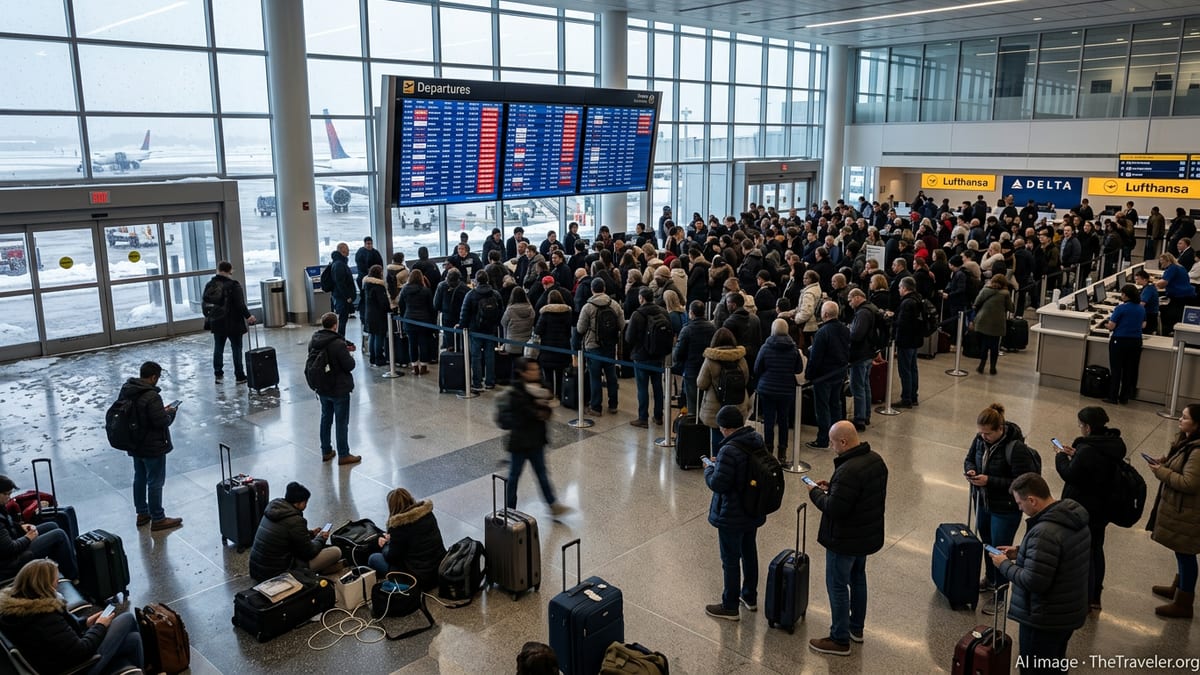
Travelers at Boston Logan International Airport faced hours of uncertainty today as a fast-moving winter storm and air traffic constraints combined to suspend 28 flights and delay more than 200 others, snarling regional links to New York, Raleigh, Rochester, Bar Harbor, Saranac Lake and other key Northeast and Mid-Atlantic destinations.
Get the latest news straight to your inbox!
Major Carriers and Regional Partners Cut Schedules
Operations data from flight tracking services showed a broad cross section of domestic and international airlines trimming schedules at Logan as conditions deteriorated. Regional operators Republic Airways, Cape Air and Piedmont shouldered much of the disruption on shorter-haul routes, while larger brands including Delta Air Lines and Lufthansa reported rolling delays that rippled across their networks.
Many of the 28 suspended flights were operated under major-carrier codeshares, meaning passengers holding tickets on Delta, American or United often discovered at the gate that their actual operating carrier was a regional airline with fewer spare aircraft and crews available to recover from the storm-related backlog. That dynamic made it harder to rebook travelers quickly, particularly on niche routes to smaller airports in northern New England and upstate New York.
International services fared somewhat better, but were not immune. Lufthansa and other transatlantic carriers reported late departures as aircraft waited for clearing in crowded departure queues and for connecting passengers from delayed feeder flights arriving from across the United States.
The result was a patchwork of cancellations and long delays that left departure boards dominated by yellow and red notices through much of the day, even as some early morning operations managed to depart on time before conditions worsened.
Key Routes to New York and the Mid-Atlantic Disrupted
The heaviest impacts were felt on Logan’s high-frequency shuttle corridors to the New York region and the Mid-Atlantic. Flights to John F. Kennedy International, LaGuardia and Newark saw mounting delays as air traffic control imposed flow restrictions into already congested New York airspace, forcing Logan departures into holding patterns on the ground.
Flights to Raleigh-Durham, a key connection point for both business and tech travelers, also experienced suspensions and extended waits. With many of those services operated by regional affiliates under larger carrier brands, the loss of even a handful of rotations wiped out much of the day’s remaining capacity, limiting options for same-day rebooking.
Passengers bound for Washington and other East Coast hubs reported multiple schedule changes in the hours leading up to departure as airlines attempted to consolidate lightly booked flights, reposition aircraft and keep critical banked connections intact. For some, that meant re-routing via more distant hubs such as Atlanta or Chicago to get around the logjam in New York and Boston.
By midafternoon, airport officials were urging travelers headed to any New York area or Mid-Atlantic destination to check flight status repeatedly and to anticipate gate changes, rolling departure times and, in some cases, same-day cancellations triggered by crew duty time limits.
Northeast Leisure Gateways Also Hit Hard
While much of the national attention focused on major city pairs, Logan’s role as a gateway to popular New England leisure destinations meant small communities also bore the brunt of the disruption. Cape Air and other regional carriers suspended or delayed services to Bar Harbor and Saranac Lake, cutting off links that many residents and visitors rely on as lifelines during the quieter shoulder season.
These thinner routes have limited redundancy, so a single cancelled round trip can leave travelers waiting until the next day for an available seat. With aircraft and crews often based at outstations, storm-related delays at one end of a route can cascade through the entire day’s schedule, amplifying the effect of each individual cancellation.
Some passengers described scrambling for last-minute rental cars or intercity bus tickets to salvage holiday plans or make work commitments, particularly on routes where alternative air options are scarce in winter. Others opted to abandon trips altogether when offered rebooking several days out, citing fatigue with the ongoing volatility in regional air travel.
Tourism officials in coastal Maine and upstate New York expressed concern that repeated episodes of weather-driven disruption could dampen demand for shoulder-season getaways, particularly among travelers who are less comfortable navigating complex rebooking and refund processes.
Storm, Staffing and System Strain Behind the Chaos
Meteorologists pointed to a compact but intense winter system tracking along the Northeast corridor, bringing periods of heavy snow, freezing rain and low visibility to Boston and the wider region. That forced airport crews into repeated de-icing cycles and intermittent runway clearing, slowing the pace of departures and arrivals even when conditions technically allowed operations to continue.
At the same time, ongoing staffing constraints in air traffic control and ground handling magnified the impact of the weather. When fewer controllers are on duty, the Federal Aviation Administration reduces the number of takeoffs and landings permitted each hour to maintain safety, which in turn stretches modest weather delays into large-scale schedule disruptions.
Industry analysts noted that Logan, like many high-volume airports, is operating with little slack built into peak-day schedules. That leaves airlines vulnerable when storms hit during busy travel periods, as there may be neither spare aircraft nor reserve crews available to absorb cascading delays. Once aircraft and staff fall out of place early in the day, the recovery can take many hours even after the worst of the weather has moved through.
Carriers affected at Logan on this latest disruptive day broadly echoed a similar message: safety remained the top priority, and while they were working to re-accommodate customers as quickly as possible, limited seating and ongoing weather volatility meant disruptions were likely to continue into the evening.
Passengers Face Long Lines and Limited Options
Inside Terminal A and other concourses, the operational stress was immediately visible. Security and customer service lines swelled as passengers sought answers, with many reporting wait times of an hour or more to speak with an agent about rebooking or refunds. Families traveling with children and older passengers appeared particularly affected as seating and quiet waiting areas filled up.
Some travelers arriving from other parts of the country learned only after landing in Boston that their onward connections to smaller regional airports had been canceled, leaving them to choose between overnight stays in nearby hotels or improvising overland journeys by train, bus or ride-share. With hotel rooms near the airport in high demand, prices climbed through the day and availability tightened.
Consumer advocates reminded passengers that in weather-related events airlines are generally not required to offer compensation beyond rebooking or refunds, though many carriers provided meal vouchers and fee waivers as a goodwill gesture. They urged travelers to document expenses, monitor airline notifications closely and, when possible, make use of mobile apps to rebook rather than waiting in long airport queues.
For now, airport officials and airlines alike are advising anyone with upcoming travel through Boston to build in extra time, remain flexible with routing and, when feasible, consider early morning departures, which statistically are less likely to suffer the compounding delays that turned Logan into a daylong bottleneck.