

More news on this day
Travelers at Minneapolis–Saint Paul International Airport (MSP) faced widespread disruption this week as a powerful late‑winter storm system led Icelandair, Delta Air Lines, and regional operator SkyWest to ground four flights, triggering knock‑on delays across routes to Grand Cayman, Keflavík, Detroit, Toronto, Atlanta, and other key destinations.
Get the latest news straight to your inbox!
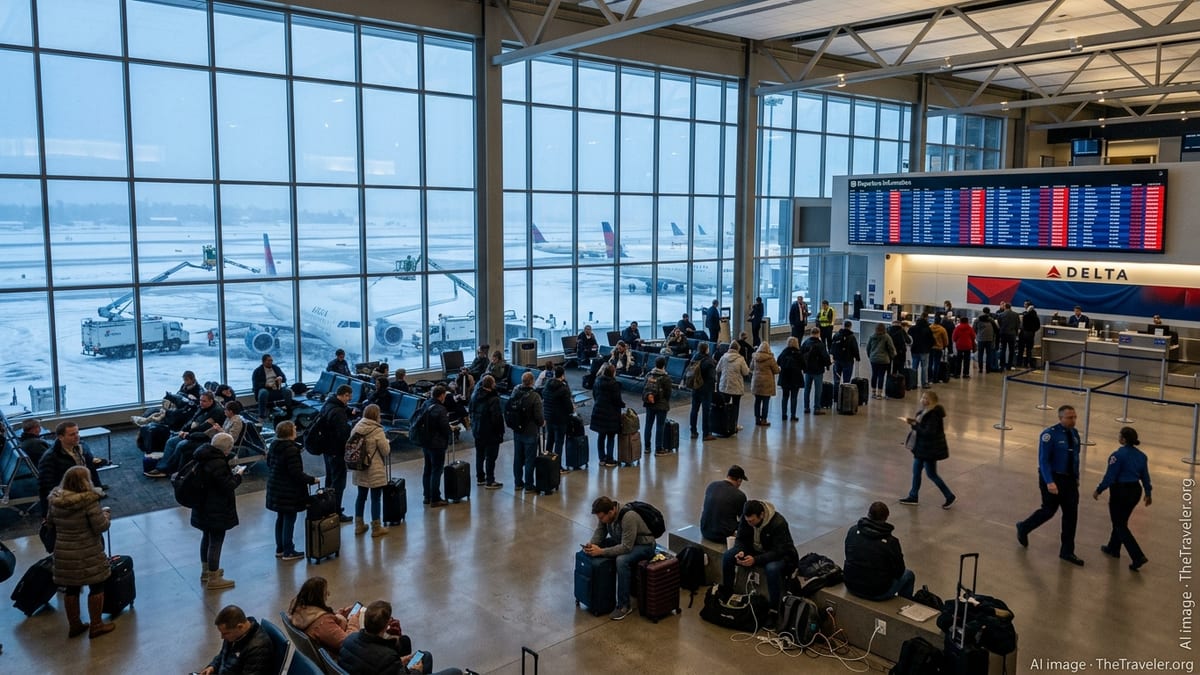
Storm System Batters Upper Midwest and Snarls Air Travel
The disruption at MSP unfolded as a major March storm swept across the Upper Midwest between March 13 and March 17, 2026, bringing intense snowfall, high winds, and poor visibility to aviation hubs across Minnesota and neighboring states. Publicly available weather and aviation data show that Minnesota declared a peacetime emergency as forecasters warned of more than a foot of snow in parts of the state, with Minneapolis among the areas expected to see the heaviest accumulations.
In anticipation of deteriorating conditions, airlines began trimming schedules from March 14 onward, with Delta Air Lines canceling numerous flights into and out of MSP ahead of the worst of the storm. Regional operator SkyWest, which flies under brands including Delta Connection, scaled back many of its shorter-haul services that rely on smaller regional jets more vulnerable to crosswinds and runway contamination.
By the height of the system, four flights operated or marketed by Icelandair, Delta and SkyWest that were scheduled to depart MSP were grounded, according to public flight-tracking boards and passenger accounts. The cancellations were concentrated on routes that depend on tight connection windows through Minneapolis, turning MSP from a reliable Midwest hub into a chokepoint for thousands of travelers at the tail end of winter.
The storm’s reach extended far beyond Minnesota. Widespread flight disruptions were also reported at other Upper Midwest and Great Lakes airports, including Detroit, which further complicated onward connections for travelers attempting to reroute around MSP.
Key Routes Affected: From Island Gateways to Major Hubs
The grounded flights and schedule reshuffles at MSP rippled through an eclectic mix of destinations, from Caribbean beaches to transatlantic gateways. Publicly visible schedules and passenger reports indicate that service to Grand Cayman in the Cayman Islands, typically operated as a connection via Delta hubs, experienced cascading delays as Minneapolis rotations fell out of position.
Transatlantic travelers were hit as well. Icelandair, which links MSP with Keflavík International Airport near Reykjavík, saw one of its Minneapolis departures scrubbed during the height of the storm surge, interrupting a popular northern route used both as a nonstop destination and as a connection point onward to continental Europe. With much of the MSP operation constrained, even flights not formally canceled often departed late after extended deicing and air-traffic flow restrictions.
Closer to home, flights linking MSP with major hubs in Detroit, Toronto, and Atlanta also suffered. Publicly available information and airport boards pointed to rolling delays on Delta and SkyWest-operated services to Detroit Metropolitan Wayne County Airport, where weather-related problems were already mounting. Regional links toward Toronto and high-frequency shuttles to Atlanta, normally reliable pressure valves during disruptions, struggled to absorb demand as aircraft and crews fell out of rotation.
For passengers, that meant missed connections, lengthening layovers, and in many cases overnight stays. Some travelers who started their journeys in warm-weather locales or on European itineraries found themselves unexpectedly marooned in Minnesota or at secondary hubs while airlines worked to rebuild their networks around the grounded flights.
Airlines Balance Safety, Crewing and Network Complexity
The decision to ground four departures at MSP highlighted how airlines now approach large-scale winter weather events, balancing safety considerations with complex crew and aircraft logistics. Deicing requirements, runway conditions, and crosswind limits remain the first constraints, but staffing, duty-time rules, and gate availability can quickly become equally decisive.
Publicly available commentary from aviation observers noted that mainline carriers such as Delta appeared to prioritize long-haul and international services where possible, while trimming regional spokes that are easier to re-accommodate over several daily frequencies. That strategy helps preserve the most time-sensitive and capacity-limited segments, but it can deepen disruption for passengers booked on smaller markets when a hub like MSP is already under stress.
For Icelandair, operating a single daily or near-daily flight between MSP and Keflavík, even one weather-related grounding can create a domino effect for aircraft rotation and crew assignments across the North Atlantic. A canceled outbound from Minneapolis can leave an aircraft and crew out of place in Reykjavík, stretching recovery efforts into subsequent days and impacting travelers who may be connecting onward to European destinations.
SkyWest, which operates regional jets on behalf of multiple major airlines, faced its own network challenges as the storm marched across the central United States. When a single regional aircraft is held in Minneapolis by weather or deicing delays, the impact can roll through a chain of small and midsized cities that depend on that aircraft for their only daily link to a larger hub.
Passenger Experience: Long Delays, Tight Connections and Uncertainty
Travelers passing through MSP during the peak of the storm described a patchwork of rolling delays and sudden cancellations across the Delta and SkyWest network, with departure boards showing wide gaps where regional flights would normally cycle in and out. Public comments shared on social platforms suggested that some passengers faced multi-hour waits in terminal concourses, followed by last-minute changes to routing as airlines tried to salvage connections through Detroit, Atlanta, and other hubs.
For those bound for leisure destinations like Grand Cayman, itinerary changes sometimes meant trading a one-connection trip for more complex routings with additional stops. Weather-driven disruptions can be especially challenging for island-bound travelers, because many Caribbean destinations have limited daily service options, and seats on alternative flights can sell out quickly when a major hub experiences a shock.
Transatlantic passengers heading to or from Keflavík encountered similar complications. A grounded Icelandair flight from Minneapolis leaves fewer same-day alternatives, and the airline’s role as a connector to multiple European cities means that one missed departure can cascade into missed long-haul links. In some cases, travelers appeared to have been rebooked through other North American gateways, lengthening journey times significantly.
Even domestic passengers on routes to Detroit, Toronto and Atlanta contended with uncertainty, as publicly available flight data showed knock-on delays at those hubs associated with the same storm system. Some travelers opted to accept overnight accommodations near MSP or at alternative airports rather than risk further connections late at night when crew duty limits were tightening and rebooking choices were dwindling.
Recovery Efforts and Ongoing Travel Advice
By March 18, signs of recovery were emerging across the Upper Midwest air network, yet residual delays and aircraft repositioning remained a factor. Airlines continued to work through backlogs of displaced passengers, while airports focused on clearing snow, restoring full runway capacity, and returning gate operations to normal patterns.
Publicly available guidance from airlines and airport operators stressed the importance of checking flight status frequently, as schedule adjustments continued even after the storm’s main impact had passed. Same-day connection windows at MSP, Detroit, Toronto and Atlanta remained fragile while carriers reassigned aircraft, crews and gates to rebuild regular patterns of service.
For near-term travelers booked through Minneapolis, analysts observed that routes with only one or two daily frequencies, such as some transatlantic or Caribbean services, could remain susceptible to further rolling adjustments if aircraft remained out of position. By contrast, high-frequency domestic corridors with multiple daily flights offered more flexibility for rebooking and same-day recovery.
With winter weather patterns expected to linger across parts of North America into late March, aviation observers recommended that passengers build extra time into connections through storm-prone hubs like MSP, monitor rebooking options in airline apps, and be prepared for operational changes that can ripple across an entire network when even a small number of flights, such as the four grounded at Minneapolis this week, are removed from the schedule.