

More news on this day
Thousands of passengers across the United States faced severe travel turmoil today as 508 flights were canceled and 234 delayed at New York’s John F. Kennedy International Airport, with disruptions radiating out to major cities including Boston, Los Angeles, Chicago, San Francisco and Charlotte.
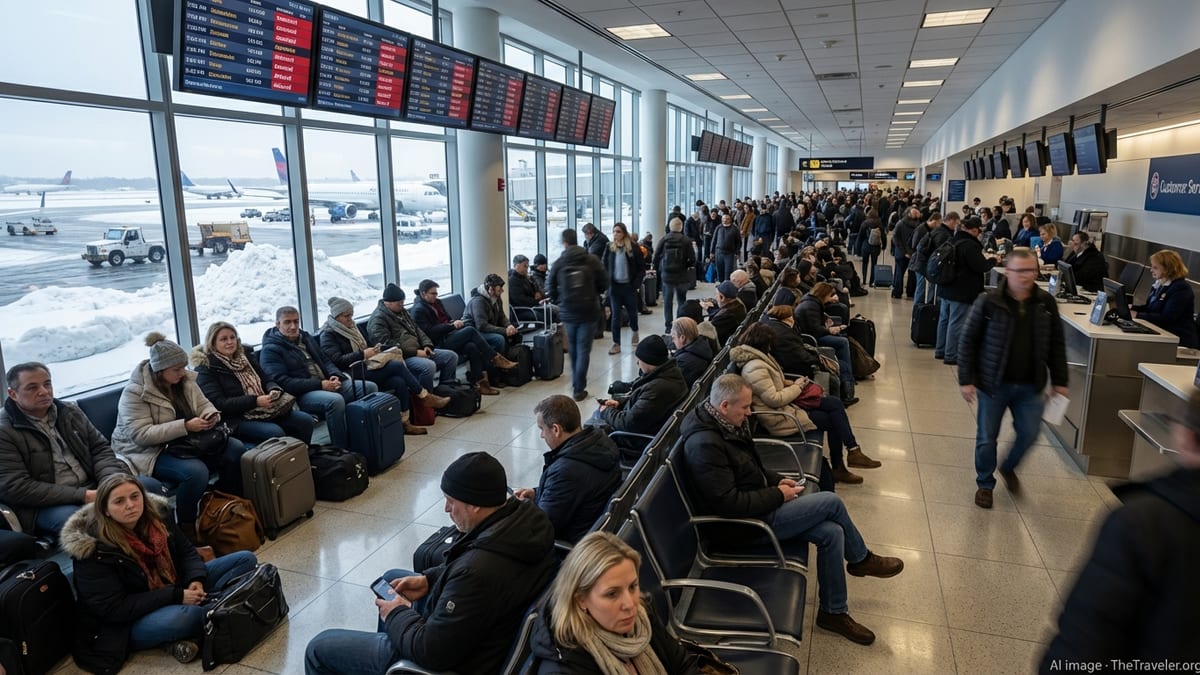
Blizzard Fallout Keeps JFK Operations Severely Constrained
The latest wave of cancellations and delays at John F. Kennedy International Airport comes as airlines continue to dig out from a powerful winter storm that has pounded the Northeast since the weekend. The blizzard has dumped well over a foot of snow across New York City and surrounding states, snarling runways, ground transport and aircraft repositioning for a third straight day.
Despite some improvement in weather conditions by Tuesday, airport operations at JFK remained far from normal. Flight tracking data showed hundreds of departures and arrivals scrubbed or pushed back as crews struggled with snow removal, reduced runway capacity and lingering visibility issues. Airport authorities have warned that recovery will be gradual, with schedules likely to remain fragile through at least midweek.
Airlines serving JFK have been aggressively trimming schedules to prevent passengers from becoming stranded on planes or in long, rolling delays. While that strategy has reduced the number of last-minute gate holds, it has dramatically increased the number of travelers facing rebookings, missed connections and extended time camped out in terminals.
Delta, American and Regional Partners Bear Heavy Operational Strain
Among the hardest hit at JFK today were Delta Air Lines and American Airlines, along with key regional partners Endeavor Air and Republic Airways. Delta, which had suspended most Northeast operations during the height of the storm, has begun a cautious restart at JFK and Boston Logan but warned that its recovery schedule remains highly constrained. The carrier is relying on a series of rolling travel waivers that allow passengers to change plans without typical penalties.
American Airlines, which has also faced days of weather-related disruptions, reported ongoing cancellations tied to both the storm and aircraft and crew displacement across its network. Regional affiliates such as Endeavor Air and Republic Airways, which operate many of the shorter domestic and feeder routes into JFK, have been particularly vulnerable, with aircraft and crews out of position after multiple days of irregular operations.
Industry analysts note that the concentration of affected flights among a handful of major carriers and their regional partners reflects the structure of the U.S. hub-and-spoke system. When a hub like JFK slows dramatically, the impact cascades through dozens of smaller cities that rely on those connections, making it harder for airlines to restart full schedules even after snow clears and runways reopen.
Ripple Effects Stretch From the Northeast to the West Coast
Although the epicenter of today’s disruption has been New York, the operational shock waves have been felt in airports nationwide. Boston and Washington area airports continued to report high rates of cancellations and late departures, while flights into and out of Chicago, Charlotte, Atlanta and several Florida gateways also showed elevated disruption levels as airlines shuffled aircraft and crews.
On the West Coast, passengers in Los Angeles and San Francisco encountered knock-on delays and cancellations tied directly to the turmoil at JFK and other Northeast hubs. Transcontinental flights were among the most volatile, with some services scrubbed outright and others consolidated onto fewer departures as carriers sought to stabilize their operations and work through backlogs of stranded travelers.
In many cases, passengers found that even flights departing clear-sky airports were impacted by aircraft rotations starting or ending in storm-battered Northeastern cities. As a result, terminals in far-flung locations saw long lines at customer service desks, crowded boarding areas and limited same-day rebooking options, especially for travelers on peak business routes.
Passengers Face Long Queues, Limited Options and Mounting Costs
Inside JFK’s terminals, scenes today ranged from families stretched out on the floor with luggage piled around them to business travelers hunched over laptops as they waited for sporadic rebooking opportunities. Many passengers reported spending hours in line to speak with airline agents or on hold with call centers, only to learn that the next available seats out of New York could be days away on popular routes.
While airlines have broadly encouraged customers to use mobile apps and online tools to rebook, those systems have also come under strain, with high demand and rapidly changing flight status information. Travelers with flexible schedules and carry-on baggage have generally fared better, while those with checked bags, pets or complex itineraries involving multiple carriers have faced the most complicated recovery journeys.
The financial impact on passengers has also grown as hotel rooms near the airport fill up and last-minute availability dwindles. Some travelers have resorted to booking rooms far from JFK or staying with friends and relatives in the region, while others have opted to cancel trips entirely rather than endure repeated delays and uncertainty.
Slow Return to Normal Likely as Airlines Rebuild Schedules
Airline executives and aviation experts caution that even as snowplows clear runways and skies brighten over New York, a full return to normal operations at JFK will take time. Aircraft must be repositioned, flight crews need to be rescheduled within strict duty-time limits, and maintenance checks compressed during the storm must be completed before some jets can reenter service.
Because JFK is a critical international gateway and a key connection point for domestic routes, restoring its schedule is central to stabilizing the broader U.S. air travel system. Carriers are expected to prioritize core trunk routes and international services as they rebuild, while some lower-frequency or off-peak flights may remain temporarily reduced.
For travelers planning to fly in or out of New York, Boston or other Northeast airports over the next several days, aviation authorities and airlines alike are urging a cautious approach. Passengers are being advised to monitor their flight status frequently, allow extra time for airport check-in and security, and be prepared for last-minute gate or schedule changes as operations gradually recover from one of the most disruptive winter storms of the season.