

More news on this day
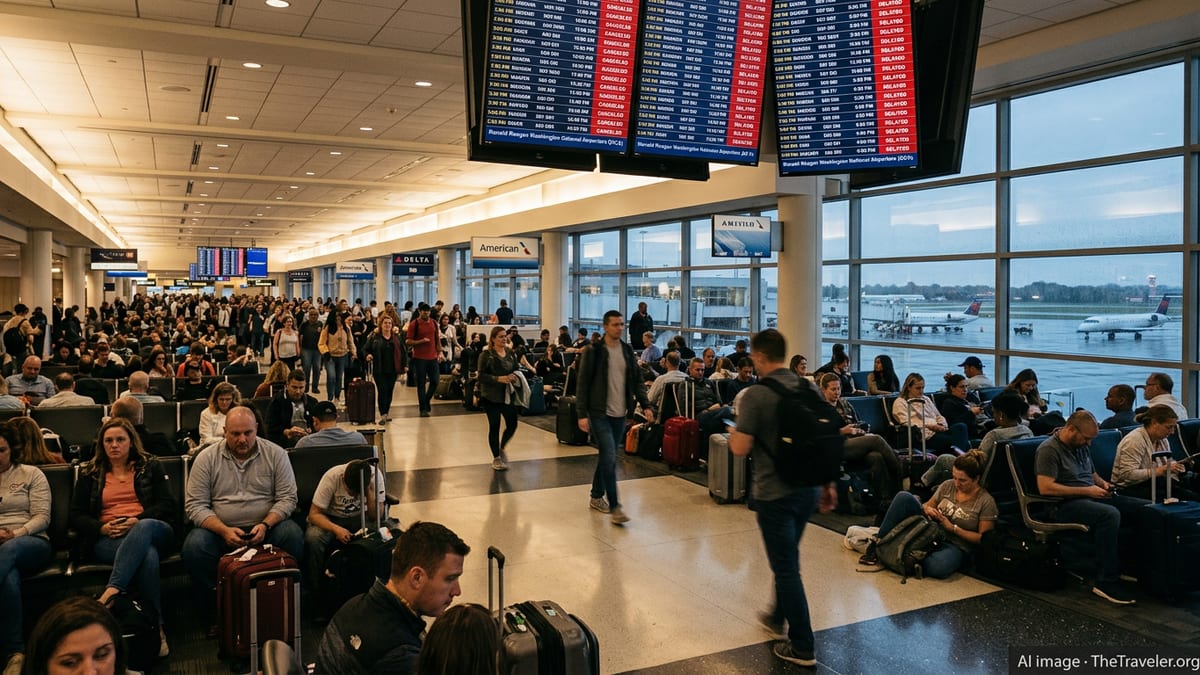
Travelers at Ronald Reagan Washington National Airport faced hours of disruption on Thursday as regional carriers PSA Airlines, Republic Airways, Endeavor Air, GoJet and Jazz suspended around 60 flights and logged more than 200 delays, snarling connections across Washington, Providence, Kansas City, Pensacola, Hartford and other major domestic routes.
Get the latest news straight to your inbox!
Weather Turmoil and Tight Capacity Trigger Widespread Disruptions
The latest wave of cancellations at Reagan National followed another round of fast-moving storms sweeping through the Mid-Atlantic and Northeast, bringing low visibility, gusty crosswinds and intermittent lightning strikes that forced air traffic controllers to slow arrivals and space out departures. While large mainline carriers trimmed schedules, it was the regional affiliates that absorbed much of the impact, with PSA Airlines, Republic, Endeavor Air, GoJet and Jazz all cutting flights as conditions deteriorated.
Because Reagan National operates near its slot and runway capacity on a normal day, even brief ground stops and reduced arrival rates can ripple quickly through the schedule. Aircraft and crews positioned for evening departures to secondary markets such as Providence, Hartford, Pensacola and Kansas City were held out of place, prompting a series of late-afternoon and evening cancellations that stranded hundreds of passengers both in Washington and at outstations.
By early evening, departures boards in Terminal B and C showed clusters of scrubbed flights to smaller and medium-sized cities along the East Coast and in the Midwest. Regional jets that typically turn multiple short segments in a single day could not complete their rotations, creating a domino effect that is expected to linger into the overnight period and early morning bank.
Regional Carriers Bear the Brunt at DCA
PSA Airlines, which operates American Eagle-branded flights out of Reagan National, saw one of the steepest impacts as a combination of weather holds and downstream crew time limits forced the carrier to consolidate or cancel multiple departures. Passengers on popular business routes between Washington and Providence and between Washington and Hartford reported abrupt gate changes, rolling delay announcements and eventual flight suspensions as aircraft missed their planned turns.
Republic Airways, a key feeder for American and United in the region, also curtailed service as the day progressed. Flights to Midwestern gateways including Kansas City and connecting hubs were either significantly delayed or removed from the board entirely, with airport staff advising affected travelers that a lack of available repositioned aircraft made same-night rebooking difficult on some routes.
Endeavor Air, operating regional services for Delta, joined GoJet and Jazz in paring down schedules from Reagan National as the storm band moved through. While some carriers managed to operate limited service with longer en route times and holding patterns, others opted to suspend select rotations altogether, citing both safety margins and the risk that crews would “time out” before reaching their final destination.
Passengers Face Long Lines, Limited Rebooking Options
Inside the terminals, long queues formed at customer service desks as travelers tried to salvage vacation plans, business trips and family visits. Many passengers whose flights to cities like Pensacola and Kansas City were canceled found that same-day alternatives were scarce or fully booked, given the already tight capacity on regional jets and the concentration of flights in peak travel banks.
Those connecting through Reagan National from smaller markets into the broader networks of American, Delta and United were among the hardest hit. With aircraft and crews scattered and arrival slots constrained, missed connections piled up. Some travelers were offered hotel vouchers and confirmed seats the following day, while others were rebooked through alternative airports including Washington Dulles and Baltimore/Washington International to keep itineraries intact.
Airport staff urged passengers still at home or in hotels to verify their flight status before heading to the airport, stressing that schedules remained fluid and that additional rolling delays were possible as airlines attempted to realign aircraft and crews. Self-service kiosks and airline apps were heavily used as travelers sought to avoid the longest in-person queues at the concourse counters.
Knock-On Effects Reach Beyond Washington
The disruption at Reagan National quickly radiated outward to other airports as regional jets and their crews failed to arrive for subsequent departures. In Providence and Hartford, evening departures back to Washington were delayed or canceled outright, leaving aircraft parked at gates and passengers uncertain whether they would be able to return the same night.
In the Southeast, Pensacola reported extended delays on inbound and outbound regional services tied to Washington connections, while some Kansas City passengers bound for the capital were re-accommodated on flights through larger hubs such as Charlotte or Atlanta. Airline operations teams warned that the imbalance of aircraft and crews might take several schedule cycles to resolve, particularly on thinner point-to-point routes that lack multiple daily frequencies.
Travel analysts noted that when a capacity-constrained airport like Reagan National experiences even a single day of heavy disruption, smaller spoke cities are often the first to lose service temporarily. With carriers prioritizing trunk routes and hub connections, some travelers in secondary markets may face one or two days of reduced options until fleets are repositioned and crew rosters reset.
Airlines and Airport Move Into Recovery Mode
As the worst of the storms moved east and conditions around the Potomac River improved, the Federal Aviation Administration gradually eased arrival and departure restrictions, allowing airlines to begin recovery operations. Ground crews focused on turning aircraft already on the ramp for late-night departures, while regional carriers evaluated which early-morning flights could be restored based on available aircraft and rested crews.
Reagan National officials said they were coordinating closely with airline partners to manage gate assignments and passenger flow, in an effort to avoid further crowding in the most congested parts of the terminal. Announcements throughout the concourses reminded travelers that parking facilities and ground transportation services were operating as normal despite the flight disruptions.
Industry observers expect schedules to stabilize over the next 24 to 36 hours, though some routes may continue to experience above-average delays as stranded passengers are re-accommodated and aircraft work back into position. For many travelers caught up in the latest wave of disruptions, the day served as another reminder of how quickly weather, tight capacity and the complex web of regional airline operations can combine to upend even the most carefully planned itineraries.