

More news on this day
Travelers flying through Peru faced mounting disruption on February 24 as LATAM Airlines and United Airlines scrubbed a series of key flights linking Lima with New York’s JFK, Newark and regional hubs, leaving hundreds of passengers stranded overnight and rippling delays across onward connections to Quito and other South American destinations.
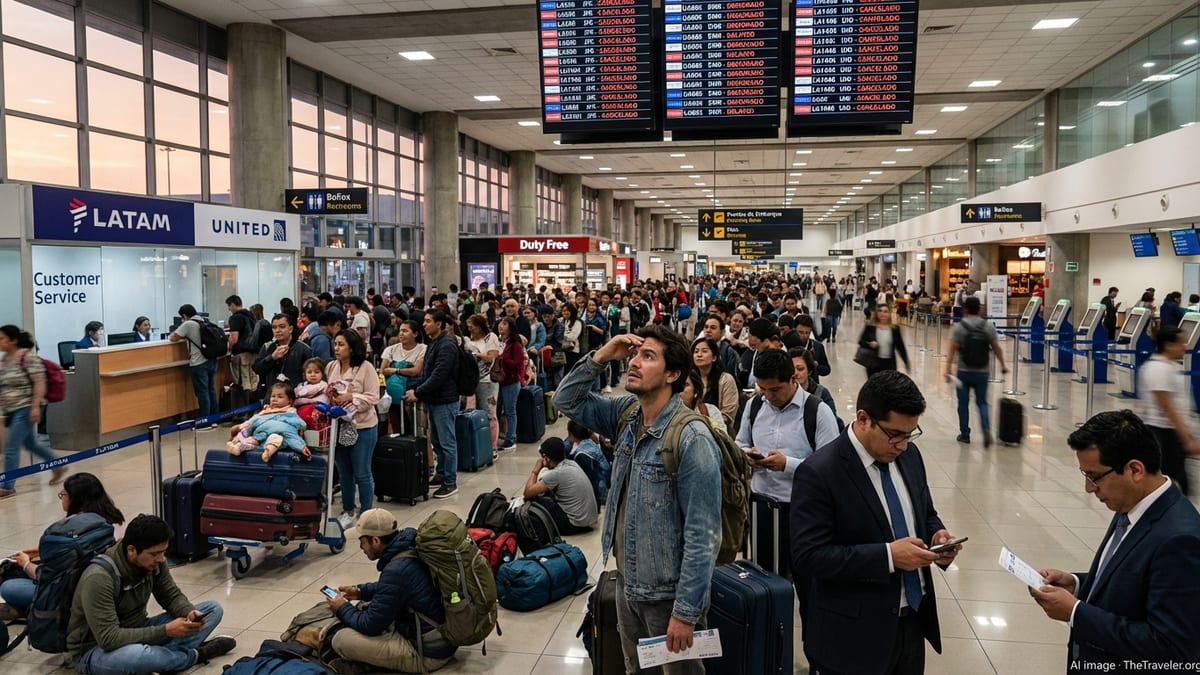
Key Lima Flights to New York and Newark Canceled
Operational data and airport status boards on Monday indicated multiple cancellations on typically busy routes between Lima’s Jorge Chávez International Airport and major gateways in the United States. A regularly scheduled LATAM service from New York JFK to Lima was among the flights marked as canceled, disrupting travel plans for passengers heading into Peru at the start of the week.
Real time status tools also showed LATAM flight LA2469, a New York JFK to Lima overnight departure, listed as canceled after having been scheduled to leave late Sunday and arrive in the Peruvian capital early Monday. Travelers expecting to connect onward from Lima found themselves without clear rebooking options as the carrier worked through an already tight schedule.
United Airlines services between Newark Liberty International Airport and Lima were also affected, with at least one nonstop flight pulled from the board and others experiencing rolling delays. The disruptions were significant given that both LATAM and United are key operators on the US Peru corridor, handling a large share of business, leisure and connecting traffic.
Industry trackers noted that the cancellations came during a period of heavy strain on North and South American networks, as winter weather in the United States combined with congestion and construction related bottlenecks around Lima, leaving airlines with little slack to recover from schedule shocks.
Knock on Effects for Quito and Regional Connections
The cancellations in and out of Lima quickly cascaded across the network for passengers heading to or from Quito and other Andean cities that rely on the Peruvian capital as a primary connecting hub. Travelers booked on itineraries linking New York area airports with Quito via Lima reported misconnecting or being told to expect lengthy delays before alternative routings could be arranged.
Lima traditionally serves as a bridge between North American long haul flights and shorter regional hops to Ecuador, Bolivia and southern Colombia. When key long haul links from JFK and Newark are pulled, airlines often struggle to re accommodate passengers on already full services or to shift them to alternative hubs such as Bogota, Panama City or Miami.
Some passengers with tickets to Quito reported being rerouted through other Latin American gateways at the last minute, often involving overnight layovers or multiple stops. Others were given hotel vouchers in Lima but faced uncertainty about when seats would open on subsequent departures, as demand remained high heading into late February travel peaks.
Travel agents in both Peru and Ecuador said the disruption illustrated how dependent regional connectivity remains on a small number of trunk routes. With only a handful of daily flights linking New York with key South American hubs, the loss of just a few services in one day can significantly reduce options for travelers, especially those who booked close to departure or on discounted fares.
Passengers Face Long Lines, Limited Information and Rebooking Frustrations
At Lima’s Jorge Chávez airport, stranded passengers described long queues at LATAM and United check in counters as staff attempted to process rebookings and issue vouchers. With several flights affected within the same time window, airport facilities were quickly stretched, particularly in the late evening and early morning hours when staffing and services traditionally taper off.
Some travelers said they received notifications about cancellations only after arriving at the airport, while others saw their flights flip from delayed to canceled on departure boards with little advance warning. This left many scrambling to contact airline call centers or use mobile apps, which at times struggled under heavy traffic from simultaneous rebooking requests.
Families and leisure travelers were among the most affected groups, often tied to fixed holiday dates or cruise departures from Ecuador and the Galapagos. Business travelers, for their part, faced missed meetings and onward commitments in New York, New Jersey and other US cities reliant on these transcontinental links.
Consumer advocates reiterated calls for airlines to provide clearer, more proactive communication when cascading cancellations are likely, and to ensure that information given at counters, over the phone and via digital channels is consistent. They also urged passengers to document expenses for hotels, meals and ground transport, which may be subject to reimbursement under carrier policies or local regulations.
Weather, Congestion and Tight Schedules Compound Airline Challenges
The latest round of cancellations in Peru unfolded as airlines on both sides of the equator grappled with a volatile mix of seasonal weather and structural constraints. Severe winter storms impacting the US East Coast in recent days prompted multiple carriers to adjust New York and Newark schedules, creating knock on effects for international operations that feed into those hubs.
At the same time, Lima’s main airport has been dealing with heavy traffic, ongoing infrastructure upgrades and slot pressures that leave operators with limited flexibility to retime flights once disruption sets in. Tight turnarounds between long haul and regional services mean that a delay or cancellation on one leg can quickly propagate across several routes, including those to Quito and other secondary cities.
Aviation analysts noted that both LATAM and United have been operating near peak utilization on some long haul fleets, a strategy that maximizes efficiency under normal conditions but leaves little margin when aircraft or crew rotations are disrupted. When weather or operational issues arise simultaneously in multiple regions, the result can be rapid, widespread schedule thinning.
The events in Peru echoed similar disruption patterns seen elsewhere this season, with passengers urged to build buffer time into itineraries involving tight connections, particularly when traveling through weather prone hubs or highly congested airports during peak periods.
What Travelers Should Do If Their Peru Flight Is Affected
For travelers currently booked on LATAM or United flights touching Lima, experts recommend closely monitoring flight status in the 24 hours before departure and again just before leaving for the airport. Given the fluid situation, schedule changes can occur with limited notice, and early awareness improves the chances of securing alternative options.
Passengers whose flights are canceled are generally advised to first check airline apps or websites, which may show automatic rebooking proposals or allow self service changes at no additional cost. If digital tools do not display suitable alternatives, contacting the airline by phone or through social media channels can sometimes yield additional routing possibilities via other hubs.
Travelers with onward connections to Quito or other regional destinations should pay particular attention to minimum connection times and the risk of misconnecting if their initial segment into Lima is delayed. When possible, same ticket itineraries offer stronger protection, as airlines are typically obligated to rebook through to the final destination, whereas separate tickets can leave passengers more exposed.
Insurance providers and credit card issuers may also play a role in mitigating costs from extended delays or involuntary overnight stays. Policyholders are urged to retain receipts and documentation related to the disruption, and to review coverage terms for trip interruption, missed connection and additional accommodation benefits.