

More news on this day
Hundreds of passengers were left stranded at Miami International Airport on Monday as 98 flights were delayed and 143 cancelled, snarling operations for major U.S. carriers and disrupting key routes across the United States, the Caribbean and Latin America.
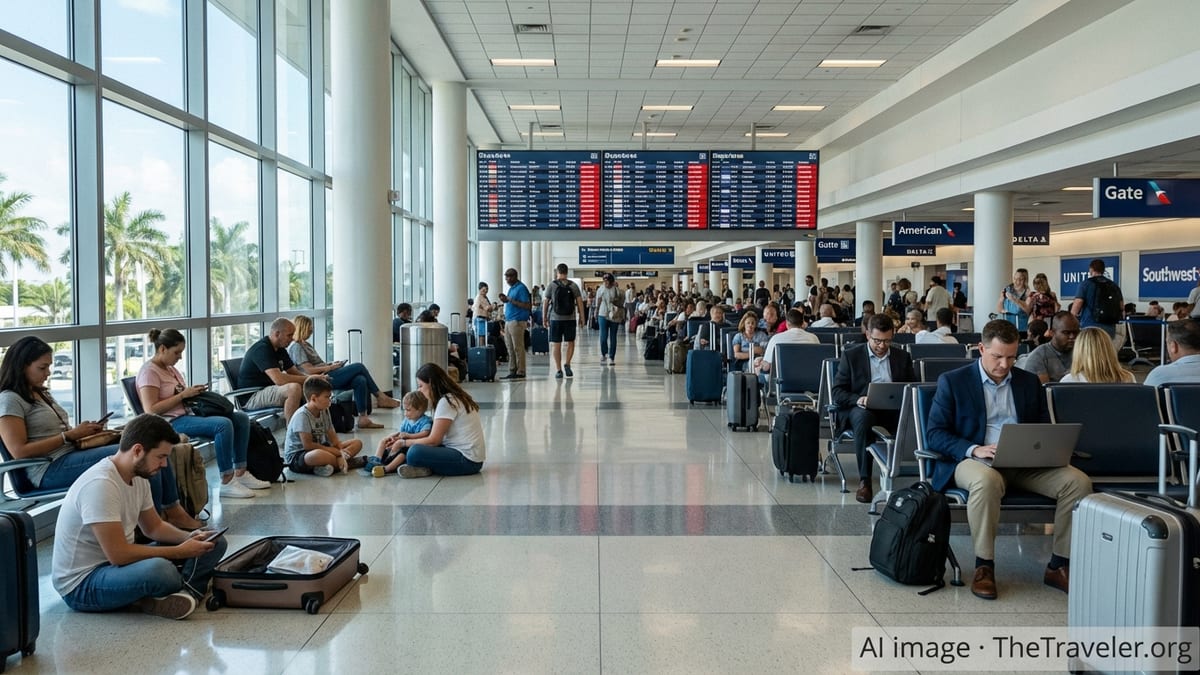
Blizzard in the Northeast Ripples Deep Into Miami
The disruptions at Miami International Airport, one of the nation’s busiest international hubs, stem from a powerful winter storm battering the Northeast and mid-Atlantic, where blizzard conditions have grounded thousands of flights. Airlines preemptively cancelled large portions of their schedules into and out of major airports such as New York’s John F. Kennedy and LaGuardia, Newark Liberty, Boston Logan and Philadelphia, triggering a domino effect in South Florida.
American Airlines, Delta Air Lines, United Airlines and Southwest Airlines were among the hardest hit at Miami, according to aviation data and local airport tallies. With aircraft and crews stuck at snowbound hubs, airlines were forced to scrub departures from Miami and cancel inbound flights that would have operated onward services to Caribbean islands and Latin American capitals.
Although weather in South Florida remained largely fair, with clear conditions reported around Miami on Monday afternoon, the operational impact of the storm was felt acutely in the terminals. Cancellations into the Northeast meant that planes never arrived to operate later legs, while remaining flights filled quickly as stranded travelers scrambled to rebook.
Airport officials urged passengers to check directly with airlines before heading to the airport and warned that disruption could linger into Tuesday as carriers work through backlogs and reposition aircraft.
Stranded Passengers Face Long Lines and Limited Options
Inside Miami International Airport, departure boards flashing red cancellation notices set the tone for a day marked by uncertainty. Families returning home from cruises out of PortMiami, vacationers ending South Florida holidays and business travelers connecting to regional financial centers all converged on customer service desks in search of alternatives.
Lines snaked through concourses as passengers waited to speak with airline agents about rebooking options and hotel vouchers. With the cancellations attributed to severe weather rather than airline-controlled causes, many travelers were told that compensation for meals and accommodation would be limited, leaving some to seek last-minute rooms in a city also hosting winter visitors and convention traffic.
For those bound for key Caribbean and Latin American destinations, options were especially constrained. Popular routes linking Miami with San Juan, Nassau, Santo Domingo, Mexico City, Bogotá and São Paulo are heavily banked around connections from the Northeast and Midwest. When those feeder flights vanish from the schedule, same-day alternatives are quickly exhausted.
Some passengers turned to rental cars or intercity buses to reach alternate Florida airports in hopes of finding open seats, but widespread cancellations statewide meant that Orlando, Fort Lauderdale and Tampa were also struggling with limited inventory and mounting crowds.
Major U.S., Caribbean and Latin American Routes Disrupted
The impact extended well beyond point-to-point travel between Miami and the Northeast. As a primary U.S. gateway to Latin America and the Caribbean, Miami International Airport functions as a critical transfer node where domestic flights from across the country feed long-haul services.
With 98 delays and 143 cancellations in a single reporting period, that network was severely compromised. Morning and midday disruption cascaded into the afternoon as missed connections forced airlines to offload passengers in Miami who would normally continue southbound. Some long-haul departures operated with lighter loads or were retimed, while others were cancelled outright when crew or equipment could not be positioned in time.
Carriers serving business destinations such as Panama City, Lima and Santiago, as well as leisure-heavy routes to Caribbean beach gateways, reported heavy rebooking demand. Travel agents and corporate travel managers worked through the day to reroute clients, often stitching together complex itineraries that avoided the hardest-hit Northeast hubs.
Industry analysts noted that Miami’s central role in north-south air traffic means that weather events thousands of miles away can effectively sever air links for entire regions, particularly smaller Caribbean islands heavily dependent on U.S. connections for tourism and trade.
Pressure Mounts on Airlines and Airport Operations
The scale of Monday’s disruption added pressure on both airlines and airport operations teams. Gate changes became frequent as carriers attempted to consolidate flights, while ground handlers juggled aircraft towing, baggage transfers and refuelling schedules in an effort to keep remaining services on time.
Airport staff increased patrols in seating areas and food courts, where passengers settled in for extended waits, some camping out on the floor near charging stations. Volunteers and information desk staff fielded questions about rebooking procedures, baggage retrieval for cancelled flights and overnight transportation options.
Airlines leaned heavily on mobile apps and text notifications to push real-time updates, encouraging customers to rebook digitally where possible to reduce pressure at physical counters. However, with limited seat availability over the next 24 to 48 hours on the most affected routes, many travelers still needed in-person assistance to explore alternative cities or dates.
Operational planners indicated that restoring normal patterns would likely take several schedule cycles. Once the blizzard conditions ease in the Northeast and airports there resume full operations, carriers will still need to reposition aircraft and crews, a process that often extends the life of a disruption well beyond the initial weather event.
What Travelers Can Expect in the Coming Days
With thousands of flights cancelled nationwide and hundreds affected across Florida, travel experts warned that ripple effects would likely persist through at least midweek. Even as fresh snow is cleared from runways and de-icing operations ramp down at northern airports, crews may be out of position or bumping up against duty-time limits, leading to additional last-minute schedule adjustments.
Passengers departing from or connecting through Miami in the next 24 to 72 hours are being advised to build in extra time, continuously monitor their flight status and remain flexible about routing. Same-day changes to alternate hubs, including Atlanta, Dallas, Charlotte or Houston, may offer more reliable paths for some travelers than direct services to or from the hardest-hit cities.
Travelers heading to cruises, major events or tightly timed business engagements are being urged to arrive at their departure city at least a day early where possible, given the system-wide strain. Those with nonessential trips are considering fee waivers and change policies offered by airlines during severe weather events, opting to postpone journeys until operations stabilize.
At Miami International Airport, staff and airlines continued working into the evening to untangle the backlog, even as passengers sprawled across concourses checked weather maps and flight trackers, hoping that the next update would finally bring a confirmed seat out of South Florida.