

More news on this day
Hundreds of passengers were left stranded at Lynden Pindling International Airport in Nassau on Monday as a major U.S. winter storm triggered cascading delays and cancellations, disrupting 32 flights and forcing 27 to be scrubbed outright on key routes linking The Bahamas with major American hubs.
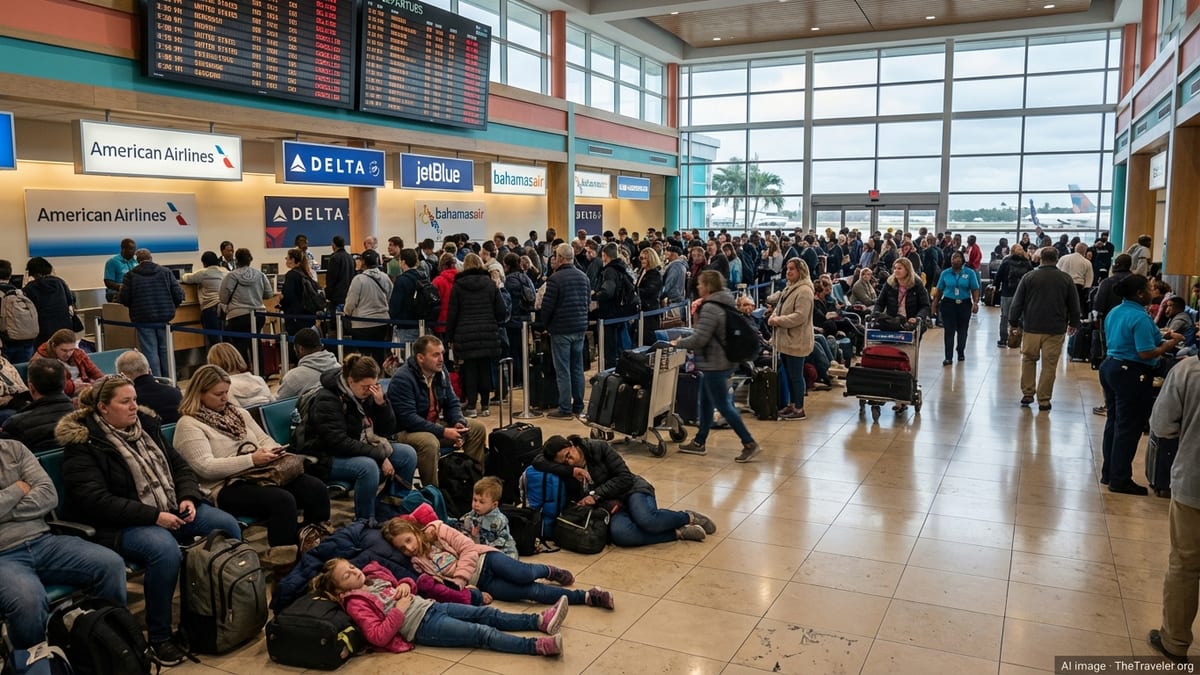
Severe U.S. Winter Storm Ripples Into The Bahamas
The disruption at Nassau’s Lynden Pindling International Airport unfolded as a powerful nor’easter, widely referred to as Winter Storm Hernando or the Blizzard of 2026, pounded the northeastern United States with heavy snow, winds and whiteout conditions. Airlines preemptively grounded thousands of flights across the U.S. East Coast on February 22 and 23, and the shockwaves quickly reached Caribbean gateways that depend on those hubs for connectivity.
By mid-afternoon in Nassau, airport staff and airline agents were contending with a rolling series of schedule changes as aircraft and crews failed to arrive from storm-battered cities including New York, Boston, Philadelphia and Newark. Arriving flights were delayed or diverted, and outbound departures from Lynden Pindling International Airport to the United States were pushed back repeatedly or cancelled altogether.
Airport officials said the situation was fluid throughout the day, as airlines adjusted operations in line with conditions at individual U.S. airports. What began as a handful of delays in the early morning soon escalated into widespread disruption, leaving some travelers facing unplanned overnight stays and missed connections.
While the weather in Nassau itself remained largely calm, the island’s role as a leisure gateway for U.S. visitors meant that local operations were at the mercy of a storm system playing out more than a thousand kilometres away.
American, Delta, JetBlue and Bahamasair Among Hardest Hit
According to preliminary figures compiled from airport operations data and airline schedules, a total of 59 flights linked to Lynden Pindling International Airport were directly impacted by Monday’s storm-related disruption. Of these, 32 were delayed, in some cases by several hours, while 27 were cancelled outright, primarily on routes to and from the northeastern United States and major Florida gateways.
The largest share of cancellations affected flights operated by American Airlines, Delta Air Lines and JetBlue Airways, which all rely heavily on hubs in New York and Boston that have seen some of the highest cancellation rates in the country. Multiple round trips between Nassau and New York’s John F. Kennedy International Airport, LaGuardia Airport and Boston Logan International Airport were grounded as those airports scaled back or suspended operations.
Bahamasair, the national carrier, also faced cancellations and rolling delays on services to Florida, including Miami, Fort Lauderdale and Orlando, as those airports contended with knock-on effects from the shutdown further north. A handful of services involving other U.S. carriers, including United Airlines and low-cost operators serving Florida and the Mid-Atlantic, were delayed as crews and aircraft were repositioned around weather-affected hubs.
With so many flights interlinked across airline networks, a single cancellation in New York or Boston often translated into multiple downstream disruptions, from late arrivals in Nassau to missed onward departures for passengers heading deeper into the Caribbean or back to the U.S. Midwest and West Coast.
Terminal Crowds Swell as Passengers Scramble for Options
Inside the terminal at Nassau, long lines formed at airline counters as travelers tried to rebook flights and secure hotel rooms. Families returning to U.S. schools after midwinter breaks, wedding groups, and cruise passengers who had combined sailings with short stays in The Bahamas all found themselves competing for a shrinking pool of available seats.
With 27 flights cancelled and dozens more heavily delayed, airport seating areas quickly filled with passengers camped out on suitcases and around power outlets. Some travelers reported waiting hours for clarity as airlines worked through backlogs of calls and in-person queries, with reservation systems straining under the volume of schedule changes across North America.
Local hotels reported a surge in last-minute bookings from stranded passengers who opted to stay an extra night or two in Nassau rather than remain in the terminal. Travel agents and tour operators based in The Bahamas spent much of the day rearranging itineraries, extending stays, and helping visitors navigate airline change policies and storm-related waivers.
For many, the upheaval came with a financial sting. While major U.S. carriers have broadly issued change-fee waivers for affected routes, not all additional costs are covered, leaving some travelers to shoulder extra nights of accommodation and unexpected meals while they waited for the storm’s aviation fallout to ease.
Key U.S. Gateways Among Primary Trouble Spots
The scale of the disruption at Lynden Pindling International Airport reflects how closely The Bahamas is tied to the U.S. aviation network, particularly through East Coast hubs that sit squarely in the storm’s path. New York’s trio of major airports, along with Boston and Philadelphia, reported some of the highest cancellation percentages nationwide on Monday, forcing airlines to significantly curtail their schedules.
Frequent Nassau routes to New York’s LaGuardia and John F. Kennedy airports were heavily affected, with many services cancelled in advance once forecasts made clear that runways and taxiways in the region would be blanketed by snow and visibility reduced to near zero. Flights connecting through Boston, another important origin city for Bahamian tourism, were also grounded as that airport faced blizzard conditions.
Even airports further south, including Miami and Fort Lauderdale, experienced sizable knock-on cancellations and delays as aircraft and crews scheduled to feed those hubs from the Northeast were unable to depart. In turn, that left Nassau-bound services short of available equipment, prompting last-minute timetable changes that rippled across the day’s operation.
Industry analysts note that when a nor’easter of this magnitude strikes the Northeast corridor, Caribbean islands closely linked to U.S. tourism inevitably feel the effects, as holidaymakers and business travelers are stranded on both sides of the route network.
Airlines Extend Waivers as Rebooking Challenges Mount
In response to the storm and widespread operational challenges, major carriers serving Nassau, including American Airlines, Delta Air Lines and JetBlue, have extended travel waivers for affected customers. These typically allow passengers whose flights are cancelled or significantly delayed to rebook within a defined window without incurring change fees, though fare differences can still apply on some itineraries.
However, with so many flights across the United States grounded, securing an alternative seat has proven difficult for many travelers, particularly those trying to return to congested Northeast airports or to connect from there to onward domestic or international services. Rebooking windows are being stretched as airlines work to rebuild schedules, and some passengers are being offered options several days out or via indirect routings through less affected hubs.
Airline call centers and digital channels have been inundated, prompting carriers to encourage customers to use mobile apps and websites where possible to avoid long waits on phone lines. Airport agents in Nassau are also attempting to prioritize travelers with urgent needs, such as those with medical appointments or time-sensitive work commitments in the United States.
Travel advisors recommend that affected passengers monitor the status of their flights closely, keep contact details current in airline profiles, and consider accepting rebookings to alternative U.S. gateways if that increases the chance of returning home sooner.
Lynden Pindling Airport Stresses Preparedness and Passenger Care
Officials at Lynden Pindling International Airport emphasised that while they have limited control over weather-driven cancellations in distant cities, they are focused on managing the passenger experience on the ground in Nassau. The airport’s operator activated contingency plans early on Monday, bringing in additional staff to support crowd management, information updates and coordination with airlines and ground handlers.
Public-address announcements and display boards were updated frequently as new information came in from airline operations centers. Airport teams also worked with local security and customs officials to ensure that passengers could exit and re-enter secure areas when lengthy delays made it necessary to leave the terminal temporarily for accommodation or meal breaks.
Food and beverage outlets remained busy throughout the day, and some extended opening hours to accommodate stranded passengers. Airport staff distributed basic guidance on travelers’ rights under airline contracts and urged passengers to retain receipts for any additional expenses that might be claimable later.
The airport has experienced similar, though less severe, disruption during past U.S. winter storms, and management said lessons learned from those events had been put into practice, including clearer communication protocols and closer coordination with tourism partners across Nassau and Paradise Island.
Tourism Industry Braces for Short-Term Shock
The timing of the disruption is particularly sensitive for The Bahamas, which is in the midst of the peak winter tourism season, when travelers from colder U.S. states flock to Nassau and neighboring islands for sunshine getaways. Hotels, resorts and cruise operators rely heavily on reliable air links through Lynden Pindling International Airport to keep occupancy levels high and maintain smooth turnaround of guests.
Tourism stakeholders warned that the cumulative effect of cancellations and delays across several days could translate into late arrivals, shortened vacations and a small wave of rebookings later in the season as affected visitors look to recapture lost time. Some travelers who were due to arrive in Nassau on Monday saw their flights cancelled before departure from the United States, forcing them to cut trips entirely or shift travel to later in the week.
Local businesses that depend on visitor spending, from tour operators and taxi drivers to restaurants and retailers, are likely to feel a temporary dip in revenue as arrivals slow. However, industry representatives expressed confidence that The Bahamas’ strong appeal and the generally resilient demand for winter sun breaks would help offset the short-term impact once flight schedules normalise.
Travel planners say that while storms of this magnitude can cause sharp, sudden disruptions, they rarely dampen overall seasonal performance if the aviation system recovers quickly and clear communication keeps traveler confidence intact.
What Passengers Can Expect in the Days Ahead
Looking ahead, aviation experts caution that even after the snow stops falling in the northeastern United States, the aftermath of this week’s storm is likely to linger for several days. Airlines will need time to reposition aircraft and crews, clear maintenance backlogs created by extended ground time, and rebuild destroyed flight sequences across their networks.
For travelers in Nassau, that means continued schedule changes are possible, particularly on routes to the hardest-hit U.S. airports. While the number of outright cancellations may start to fall as runways reopen, delays and last-minute reshuffling of departure times could remain common as carriers work through displaced passengers.
Passengers with travel booked over the next several days are being advised to check in online as early as possible, reconfirm flight status on the morning of departure, and allow extra time at the airport, as lines at check-in and security may still be longer than usual. Those with flexible plans may wish to consider routing via less affected hubs or shifting travel to later in the week, when operations are expected to stabilise.
For now, the sight of crowded departure halls and weary passengers at Lynden Pindling International Airport underscores the vulnerability of island destinations to extreme weather far beyond their shores, and the intricate web of connections that link a sunny terminal in Nassau to storm-lashed runways along the U.S. East Coast.