

More news on this day
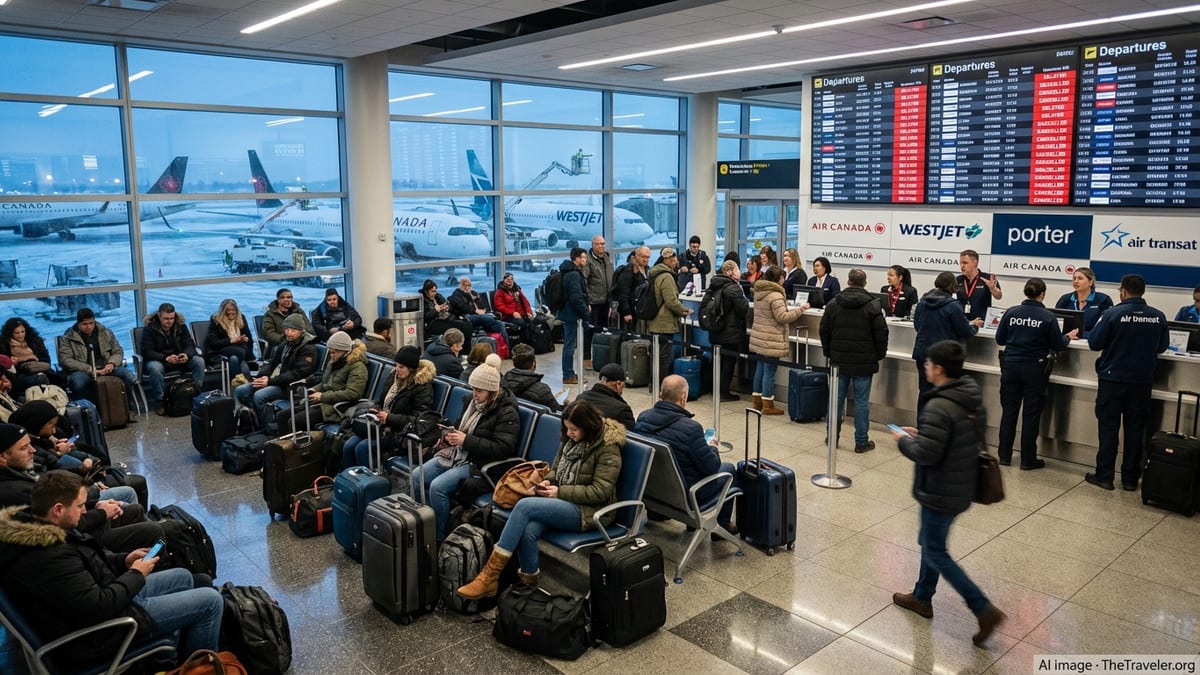
Thousands of air travelers across Canada are facing hours-long waits, missed connections and unexpected overnight stays as 51 flight cancellations and 327 delays ripple through major airports in Montreal, Vancouver, Toronto, Calgary, Ottawa and other cities, snarling operations at carriers including Air Canada, Jazz, WestJet, Porter and Air Inuit.
Winter Weather Turns Routine Travel Into a National Ordeal
The latest wave of disruptions unfolded as a vigorous winter system pushed across multiple provinces, bringing snow, freezing rain and low visibility that have repeatedly disrupted schedules throughout February. At key hubs from Toronto Pearson to Vancouver International, departure boards once again filled with rescheduled and cancelled flights, leaving terminals crowded with weary passengers clinging to rebooking vouchers and meal coupons.
Airport authorities say the current tally of 51 cancellations and 327 delays reflects the compounding effect of several days of difficult weather and constrained operations rather than a single catastrophic event. Each new band of snow or ice has forced repeated runway clearings and cycles of de-icing that compress already tight schedules and make it harder for airlines to recover. Even when the heaviest precipitation briefly eases, crews and aircraft are often out of position, and small issues cascade into system-wide delays.
For travelers, the result is a patchwork of experiences. Some flights are leaving more or less on time, while others are pushed back by hours or scrubbed entirely at short notice. Families headed for midwinter vacations, business travelers bound for critical meetings and students returning to campus are all competing for limited open seats on later services, with many forced to consider alternate routings or even other modes of transport.
The timing is particularly painful because the stormy pattern follows an already challenging winter for Canadian aviation, marked by previous bouts of severe cold, snowstorms and freezing rain. Industry observers note that each new disruption starts from a weaker baseline, as systems and staff that have been stretched for weeks struggle to absorb yet another shock to the network.
Major Hubs Bear the Brunt in Montreal, Toronto and Vancouver
Among the hardest hit airports are Montreal–Trudeau, Toronto Pearson and Vancouver International, which together handle a substantial share of Canada’s domestic and international traffic. In Montreal, a mix of blowing snow and intermittent freezing drizzle has slowed ground operations, pushing turnaround times well beyond normal and forcing airlines to prioritize certain departures to keep critical connections intact.
Toronto Pearson, the country’s busiest airport, remains a flashpoint for disruption whenever winter weather sweeps through Southern Ontario. Even modest snowfall can trigger a backlog as dozens of aircraft jockey for limited de-icing capacity and cleared runway slots, and the current episode is no exception. Passengers report long queues at check-in and security, frequent gate changes and repeated public-address announcements urging travelers to check airline apps for the latest information.
On the West Coast, Vancouver International is contending with its own weather challenges as Pacific systems bring bouts of wet snow, gusty winds and low cloud ceilings. While the airport’s milder climate often allows for quicker recovery than inland hubs, today’s conditions have still produced significant knock-on delays, especially for transcontinental flights that rely on precise timings to meet curfew and crew-duty limits at eastern destinations.
Secondary hubs including Calgary and Ottawa are also feeling the strain. Calgary International, serving as both a domestic connector and a key gateway to Western Canada and the Rockies, has seen schedules compressed as airlines attempt to keep essential routes operating. In Ottawa, intermittent freezing rain has made ramp conditions hazardous, further slowing the flow of aircraft in and out of gates.
Air Canada, WestJet, Jazz, Porter and Inuit Struggle to Stabilize Operations
Canada’s leading carriers are once again on the front lines of the disruption. Air Canada and its regional partner Jazz Aviation, which together operate a dense network of mainline and feeder services, have recorded a significant share of today’s cancellations and delays. Their hubs in Toronto, Montreal, Vancouver and Calgary act as pressure points where even minor slowdowns can reverberate across the national network.
WestJet is likewise battling schedule volatility, particularly on routes connecting Western Canada to Ontario and Quebec. With aircraft and crews spread across a wide geography, a delayed inbound flight in Vancouver or Calgary can easily translate into missed departure times hours later in Toronto or Montreal. The carrier has been working to consolidate lightly booked services and re-accommodate affected passengers on remaining departures.
Porter Airlines, which has expanded from its Toronto city airport roots into a broader national player, is navigating disruptions at both Billy Bishop and major hubs such as Ottawa and Montreal. Its point-to-point model offers some flexibility, but today’s cross-country weather challenges are testing that resilience as airport slowdowns stack up through the day.
Regional and northern carriers including Air Inuit are facing their own set of obstacles. In remote communities, runway conditions, visibility limits and the availability of specialized equipment all play outsized roles. Even a handful of cancelled or delayed flights can be deeply disruptive for residents who rely on air service for essential travel, medical appointments and cargo deliveries. Airlines in these markets often have fewer spare aircraft or crews to draw upon, making recovery slower when weather closes in.
Passengers Face Long Waits, Confusion and Limited Options
For the thousands of travelers caught in the disruption, the statistics of 51 cancellations and 327 delays translate into very personal stories of frustration and uncertainty. In terminal waiting areas from Montreal to Vancouver, passengers have been spotted stretched out on jackets and carry-on bags, using backpacks as makeshift pillows while they wait for updated departure times or stand-by seats.
Many report receiving multiple schedule-change notifications over the course of the day as airlines adjust operations in real time, only to see flights delayed again when new bands of snow or freezing rain move through. Others have arrived at the airport to discover that an early morning departure has been cancelled overnight, forcing them into rebooking queues that can stretch for dozens of people.
Hotel availability near major airports is tightening as airlines distribute accommodation vouchers and stranded travelers scramble to secure a bed for the night. Those living within driving distance of their departure point often face a difficult choice between going home and risking further travel complications, or staying close to the terminal in the hope of an earlier rebooking.
Families traveling with young children or elderly relatives are particularly vulnerable, as long waits and shifting plans complicate access to food, medicine and quiet resting spaces. Airport volunteers and staff have been working to direct passengers to less crowded areas, while some terminals have extended operating hours for shops and restaurants to accommodate those stuck airside late into the evening.
Airlines Activate Weather Waivers and Recovery Plans
In response to the deteriorating conditions, multiple carriers have activated flexible rebooking policies, often waiving change fees for passengers willing to move their travel to later in the week or reroute through alternate cities. These waivers are designed to ease pressure on the most congested days while giving travelers more control over their options.
Operationally, airlines are prioritizing safety-critical procedures such as thorough de-icing, careful runway inspections and conservative approach standards when visibility drops. While these steps contribute to longer turnarounds and more frequent delays, regulators and carriers alike stress that they are non-negotiable in winter conditions, especially when temperatures hover around the freezing mark and surfaces can refreeze quickly.
Behind the scenes, network control centers are attempting to rebalance aircraft and crew resources that have been thrown off by earlier disruptions. This can include swapping aircraft types on certain routes, combining lightly booked flights, or using ferry flights to reposition planes where they are needed most. Crew-scheduling teams are working within strict duty-time rules to avoid fatigue, which sometimes means flights must be cancelled even when the weather briefly improves.
Ground handlers and airport partners are also part of the recovery effort. De-icing teams, baggage handlers and maintenance crews are working extended shifts in challenging conditions, where cold, wet weather increases the risk of equipment failures and slows basic tasks. Their ability to keep operations moving safely often determines how quickly airlines can dig out from the backlog.
Weather Pattern Extends a Season of Disruption for Canadian Aviation
The current wave of cancellations and delays comes on the heels of earlier winter storms that have already strained Canada’s aviation infrastructure this year. In January, a powerful cold outbreak and major snow events disrupted operations at multiple hubs, closing runways, stranding aircraft and prompting airlines to trim schedules temporarily. Those episodes left lingering scars in the form of deferred maintenance, stretched staffing and reduced schedule resilience.
February has brought little relief, with repeated systems crossing the Prairies and Eastern Canada, each delivering its own mix of snow, ice pellets and gusty winds. Meteorologists warn that such patterns can set up prolonged periods of weather volatility in which even moderate storms have outsized operational impacts because airports and airlines have so little breathing room between events.
Industry analysts note that compared to a decade ago, airlines today run much tighter schedules with higher aircraft utilization and leaner staffing. While this efficiency is crucial to keeping fares competitive, it also leaves the system more exposed when multiple days of poor weather cut into on-time performance. Once buffers are absorbed, there is less spare capacity to accommodate displaced passengers or add extra flights to clear backlogs.
Some carriers have responded by preemptively trimming frequencies or consolidating lightly booked services on days when forecasts are particularly grim. While unpopular with affected customers, advance cancellations can sometimes reduce chaos on the day of travel by avoiding last-minute scrambles and enabling more orderly rebookings.
What Impacted Travelers Can Do Today
As the disruptions continue, aviation experts and consumer advocates emphasize a few practical steps for those with upcoming flights in or out of Canadian airports. First, passengers are urged to monitor their flight status closely using airline apps and airport information feeds rather than relying on static confirmation emails. In fast-moving weather situations, schedules can change multiple times within a few hours.
Second, travelers whose trips are not time-sensitive may wish to take advantage of voluntary rebooking options, shifting to later dates once the current pattern has eased. Doing so not only lowers the risk of getting stranded but also helps relieve pressure on airlines and airports attempting to move those who have no flexibility, such as travelers with critical medical or family commitments.
For those who must travel, arriving at the airport early remains prudent, particularly when de-icing and extended security lines are likely. Packing extra medications, snacks, chargers and warm clothing can also make a substantial difference if delays stretch into the night or if passengers need to relocate to quieter parts of the terminal while they wait.
Finally, travelers are encouraged to document their disruptions, keeping records of boarding passes, delay notifications and receipts for food or accommodation. While many of the current problems stem from weather, and compensation rules vary by jurisdiction and airline policy, clear documentation can be useful if carriers later offer goodwill vouchers or if regulatory bodies review specific incidents.
Outlook: Gradual Improvement but Ongoing Vulnerability
Forecasts suggest that while the most intense phase of the current winter system may ease over the coming days, conditions are likely to remain variable, with intermittent snow and freezing rain still possible in several regions. That means some degree of disruption could persist as airlines work through today’s backlog while guarding against new weather-related setbacks.
Operational leaders caution that recovery is unlikely to be instantaneous. Aircraft and crew imbalances created by the latest round of cancellations and delays will take time to resolve, and some routes may see reduced frequencies or schedule adjustments even after skies clear. The priority, they say, is to stabilize the network and restore predictability for passengers rather than push for aggressive capacity at the risk of further breakdowns.
Looking ahead to the remainder of winter, both airlines and airport authorities are reviewing their playbooks, from de-icing capacity and snow-removal resources to communication strategies and staffing plans. While winter storms are an annual reality in Canada, the cumulative effect of repeated severe events is prompting renewed debate about how much redundancy and flexibility the system should build in.
For now, the immediate concern remains the thousands of passengers still waiting in terminals from Vancouver to Montreal, watching departure boards and phone screens for signs that their journeys can finally resume. As operations slowly recalibrate, today’s tally of 51 cancellations and 327 delays stands as the latest reminder of how profoundly winter weather can reshape travel plans across such a vast, climate-challenged country.