

More news on this day
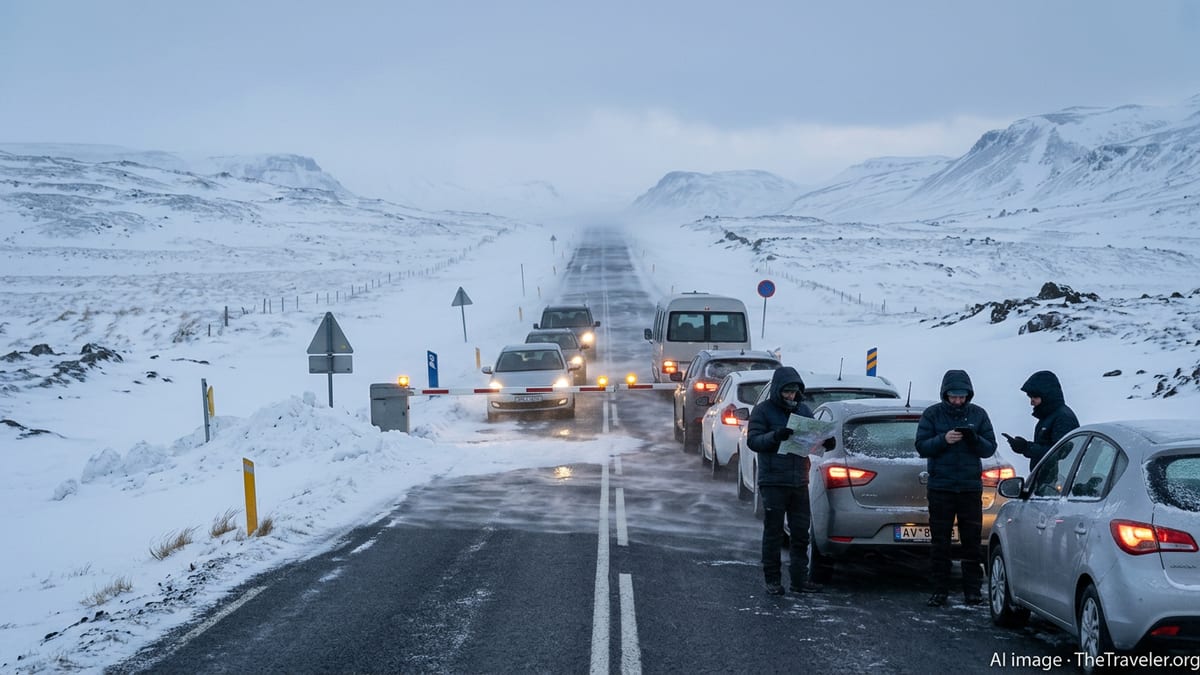
Severe winter weather sweeping across northwest Iceland in recent days has triggered major transport disruptions, leaving tourists stranded on closed roads, facing cancelled excursions and scrambling for last-minute accommodation changes as local services struggle to keep pace with rapidly shifting conditions.
Get the latest news straight to your inbox!
Blizzard Conditions Hit a Popular Winter Travel Region
Northwest Iceland, a region that draws visitors for its remote fjords, hot springs and chances of clear northern lights skies, has been hit by a burst of intense winter weather in mid-March 2026. Publicly available forecasts have pointed to strong winds, drifting snow and poor visibility across western and northern areas of the country, with warnings that conditions may deteriorate quickly along exposed routes.
Reports from recent travelers describe stretches of the Ring Road and connecting routes in western and northern sectors periodically closing or becoming impassable for hours at a time. While such closures are not unusual in Icelandic winter, the timing during a busy late-winter tourism period has created a sharp ripple effect for tour operators, car renters and small guesthouses that depend heavily on reliable road links.
Weather alerts in recent weeks have emphasized the risk of hazardous driving in western Iceland, especially around fjord routes and mountain passes that serve as gateways to the Northwest and Westfjords. Travel advisories from foreign governments updated in February and March 2026 have also highlighted that road closures, strong winds and blowing snow can disrupt itineraries with little notice, even on the main Ring Road.
Although major international routes into Keflavík and Reykjavík remain broadly functional, the combination of localized blizzards, drifting snow and icy surfaces in northwest Iceland has made overland travel particularly unpredictable. For many visitors who planned self-drive loops through the region, this has meant a rapid shift from scenic road trip to logistical problem-solving.
Road Closures Leave Self-Drive Tourists Stranded
Accounts shared by visitors traveling in March 2026 describe how key segments of national roads in the west and north have been shut for extended periods due to high winds and whiteout conditions. Some travelers report being forced to wait for hours behind closure barriers, while others have had to abandon planned loops toward the Snæfellsnes Peninsula, the Northwest region or the northern Ring Road and retreat to safer, more accessible areas.
Guidance from Icelandic travel and road-safety resources stresses that driving on closed roads is illegal and uninsured, even where other tire tracks appear. That message has become particularly relevant in recent days as new arrivals, unfamiliar with Iceland’s fast-changing weather, encounter red or impassable warnings just as peak sightseeing days were scheduled. Car rental guidance regularly advises visitors to monitor official road-condition maps multiple times per day during winter, a step that has proved critical for those attempting to navigate northwest routes this week.
Reports indicate that some smaller communities and guesthouses in the affected areas have seen unplanned arrivals as road closures force travelers to stop earlier than expected. At the same time, travelers holding bookings farther along their intended route have faced no-shows and cancellation fees, with many operators applying flexible policies but still grappling with last-minute changes and capacity constraints.
Travel forums and social media posts from early and mid-March describe cancelled day tours, delayed guided excursions and abrupt rerouting away from exposed coastal segments. While such outcomes are a known risk of Icelandic winter travel, the current wave of disruptions appears to have concentrated particularly along approaches to northwest destinations, compounding the sense of uncertainty for visitors.
Regional Flights and Tours Disrupted Across the Northwest
In tandem with road problems, winter storms have also affected regional air services that connect Reykjavík with smaller airports around Iceland. Historical coverage from Icelandic media shows that storms frequently lead to cancellations to destinations such as Ísafjörður in the Westfjords, and recent patterns suggest similar vulnerabilities this season as strong winds and low visibility complicate approaches to short, coastal runways.
Tour operators offering excursions in western and northern regions, including glacier tours, snowmobiling trips and northern lights outings, have used their public channels to notify customers of weather-related cancellations and schedule revisions. In some trip reports from March 2026, visitors describe multi-hour delays on rural roads followed by notifications that highland or glacier excursions for the following day had been cancelled outright because of safety concerns.
These cancellations have a cascading impact on itineraries focused on the northwest. Travelers who booked tightly timed trips combining Reykjavík, the Golden Circle and more remote northern or western routes often find that a single day of severe weather can render large sections of their schedule unworkable. In many cases, they are left weighing whether to attempt to rebook tours farther south or remain in place and wait out the conditions with limited activity options.
Travel-industry analyses published in early 2026 emphasize that Iceland’s appeal as a winter destination has grown substantially in recent years, increasing the number of visitors attempting ambitious road trips in shoulder-season months such as March. The current disruptions in northwest Iceland highlight how this growth intersects with the country’s longstanding exposure to volatile North Atlantic weather systems.
Confused Visitors Confront Safety Rules and Limited Options
For many tourists caught in the latest storm cycle, the greatest challenge is less the snow and wind themselves than the uncertainty about what is possible and safe to attempt. Online discussions in March 2026 feature travelers asking whether full Ring Road drives are realistic given multi-hour or overnight closures reported earlier in the month, especially on more remote eastern and northern stretches that are commonly paired with northwest routes in circular itineraries.
Experienced visitors and local commentators frequently advise scaling back winter driving plans, recommending that those visiting in March consider focusing on the south coast and west Iceland closest to Reykjavík, where infrastructure and services are denser and emergency support is easier to access. The ongoing disruptions in northwest Iceland appear to reinforce that guidance, as travelers recount having to reroute to more accessible areas after closure notices extended longer than anticipated.
Travel advice from national and foreign agencies updated in February and March 2026 also reminds visitors that Iceland’s highland F-roads and many interior routes remain closed through winter and early spring. Even outside the highlands, mountain passes and exposed coastal roads in the west and north can close on short notice, and those conditions can persist for many hours. For tourists accustomed to more predictable highway maintenance in their home countries, the scale and speed of closures can come as an unwelcome surprise.
Accommodation providers and tour companies in northwest Iceland are meanwhile navigating a difficult balance between safety and economic realities. While many promote flexible rebooking policies and emphasize that safety decisions take priority over revenue, extended storms mean lost income during a season that has become increasingly important to the local economy as winter tourism grows.
Travel Guidance Shifts Toward Flexibility and Preparedness
As reports of stranded tourists and cancelled excursions accumulate, public-facing travel guidance related to Iceland is placing renewed emphasis on flexibility and contingency planning. Recent safety advisories encourage visitors to build additional days into winter itineraries, avoid overcommitting to nonrefundable bookings in remote regions, and prioritize accommodations in areas with multiple road options rather than at the end of a single exposed route.
Updated driving guides for Iceland in 2026 stress the importance of checking official weather forecasts and road-condition resources repeatedly throughout the day, particularly when traveling in western and northern regions where conditions can change by the hour. Travelers are advised to carry warm clothing, food, water and battery packs in their vehicles in case closures require waiting for extended periods in remote locations.
Tourism-focused coverage also notes that while the current disruptions in northwest Iceland are severe, they fit a broader pattern in which winter and early spring travel across the island can never be fully guaranteed. For some visitors, this unpredictability is part of the country’s stark appeal. For others, especially those on short trips with tightly packed schedules, the latest storm sequence has turned a long-anticipated adventure into an exercise in patience and risk management.
With the peak of the March storm system still working its way across the North Atlantic region, it remains unclear how quickly conditions in northwest Iceland will stabilize. What is already evident is that the episode has underscored the critical role of real-time information, realistic route planning and flexible expectations for anyone hoping to navigate Iceland’s wild winter landscapes by road.