

More news on this day
Travelers across South Florida and major US cities are facing another day of disruption today, as a powerful winter storm in the Northeast triggers dozens of fresh flight cancellations and delays for JetBlue, Spirit and Delta at Fort Lauderdale, Miami, Palm Beach, Orlando and beyond.
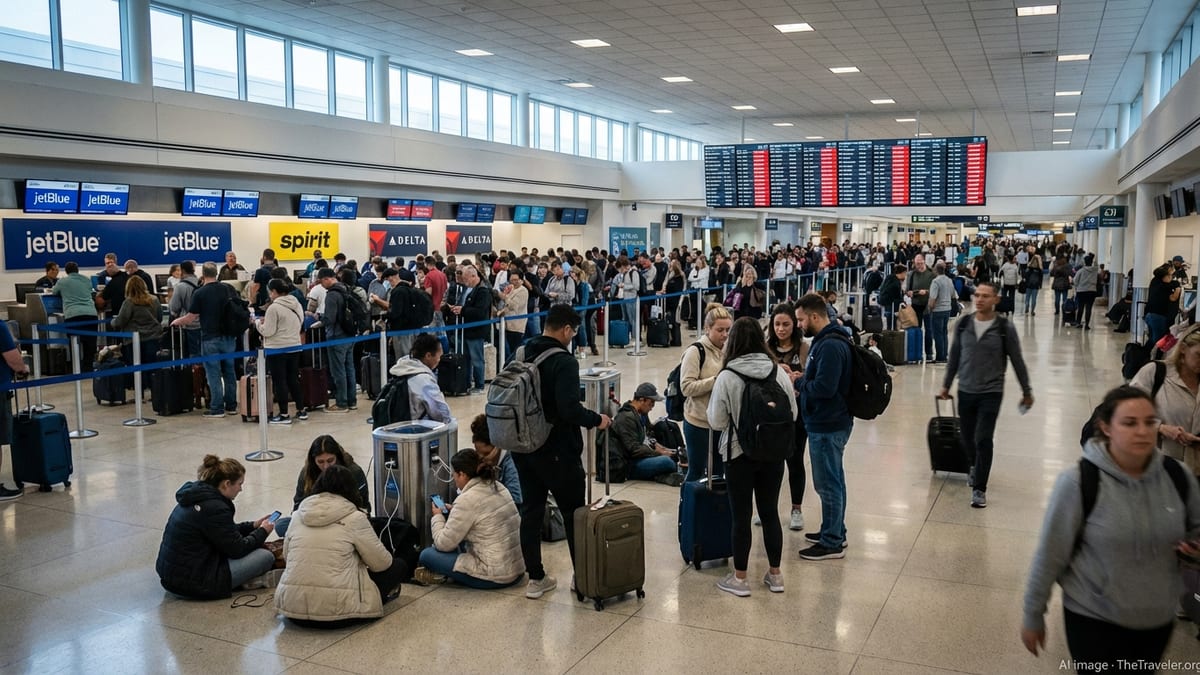
Fresh Wave of Cancellations at Key South Florida Hubs
At Fort Lauderdale–Hollywood International Airport, the disruption began before sunrise. By 6:30 a.m. local time today, 91 flights had already been canceled, with JetBlue, Spirit and Delta among the hardest hit carriers. The figures, drawn from live flight-tracking data, show Fort Lauderdale once again bearing the brunt of weather-related schedule chaos as airlines cut services to storm-battered cities in the Northeast.
Miami International Airport is seeing similar disruption, with 50 flights canceled in the early morning hours. While American Airlines accounts for many of Miami’s cancellations, Delta and Spirit are also grounding multiple departures and arrivals, tightening options for travelers seeking alternative routes out of South Florida.
Farther north, Palm Beach International Airport is contending with at least 51 cancellations for the day, a striking number for a smaller regional hub. JetBlue alone has scrubbed more than 30 flights at Palm Beach, underscoring how deeply the storm has cut into the carrier’s network along the East Coast. Delta, United, Spirit, American and Southwest have also canceled services, effectively shutting down many links to storm-affected destinations.
Orlando International, a key gateway for both tourists and business travelers, is also reporting significant disruptions tied to the same weather system, as flights to and from major Northeast cities are scaled back or halted outright. The ripple effect is leaving passengers stranded not only in Florida but at connecting airports around the country.
Passengers Left Stranded as Options Narrow Nationwide
For many travelers, the growing list of cancellations has translated into long lines, overnight airport stays and difficult choices. Families returning from long weekends in South Florida have found themselves camped out beneath departure boards, watching departure times slip later or disappear entirely as airlines update their schedules in real time.
With JetBlue, Spirit and Delta all trimming large portions of their Tuesday operations, rebooking has become a challenge. Limited open seats on remaining flights, combined with aircraft and crews stranded out of position, mean that some passengers are being told they may not be able to depart until later in the week. Those who must reach work, school or medical appointments in the Northeast are increasingly turning to rental cars, buses or alternate airports in a bid to get home.
The impact also stretches well beyond Florida. Major hubs such as New York, Boston, Philadelphia, Chicago and Washington, D.C., have all faced successive rounds of cancellations since the storm intensified, pushing overall US cancellations into the thousands on Monday and keeping the national tally above 2,000 flights today. As airlines juggle equipment, crews and new weather forecasts, travelers are being urged to assume that same-day connections and tight layovers may no longer be realistic.
Airport officials advise passengers not to head to the terminal until their flight status is confirmed and to expect crowded gate areas, extended wait times at customer-service counters and limited last-minute alternatives, especially on popular business routes.
JetBlue, Spirit and Delta Bear Brunt of Weather Fallout
Among US carriers, JetBlue appears particularly exposed to this round of weather disruption because of its dense network along the Northeast corridor. Flight-tracking data shows that a substantial share of the airline’s schedule today has been canceled outright, a reflection of both the storm’s intensity and the difficulty of operating into airports facing high winds, low visibility and ongoing runway-clearing operations.
Spirit, which uses Fort Lauderdale as a major gateway, is also seeing a disproportionate number of cancellations from South Florida. With so much of its route map reliant on connections between leisure markets and East Coast cities, the storm has pulled key aircraft and crews out of rotation. For cost-conscious travelers who often rely on Spirit’s nonstop options, the resulting gaps in service can mean not only delays but also far more expensive last-minute alternatives on other carriers.
Delta, with a large national and international network, is working through its own slate of cancellations and delays tied to the winter weather. While the airline has greater flexibility to reroute aircraft across its hubs, schedules at affected airports in Florida and the Northeast are still constrained. The carrier is encouraging customers to use its app and website to rebook, noting that many change fees are waived when weather is to blame.
Across all three airlines, the pattern is similar: proactive cancellations of flights into the hardest-hit regions, aimed at preventing passengers and planes from becoming stuck in the middle of the storm, followed by incremental restoration of services as conditions allow. For travelers on the ground, however, that strategy often feels indistinguishable from a complete shutdown.
Storm’s Reach Extends From Northeast to Florida Gateways
The disruptions in Florida are rooted not in local conditions but in a powerful nor’easter system centered hundreds of miles away. The storm, which intensified over the past 48 hours, has battered the Northeast with heavy snow, blizzard conditions and strong winds, forcing runway closures and ground stops at some of the nation’s busiest airports. Meteorologists have described travel conditions across portions of the Mid-Atlantic and New England as nearly impossible at times.
Because Florida is tightly linked to those regions through dense air service, the cancellations cascade southward even when skies remain clear over Miami or Fort Lauderdale. Flights to cities such as New York, Boston, Newark and Philadelphia cannot operate if destination airports are overwhelmed by snow removal, deicing and air-traffic control constraints. As a result, aircraft scheduled to return to Florida later in the day never depart, leaving holes in the schedule that can take days to repair.
Industry analysts note that today’s figures, with more than 2,000 flights canceled nationwide, still represent an improvement from Monday’s peak disruption. However, they caution that the recovery phase can be frustratingly slow for individual passengers. Once a large storm begins to move offshore, the challenge shifts from weather management to logistics, as airlines race to reposition planes and crews while accommodating thousands of displaced travelers.
Florida’s tourism sector is watching closely. With peak winter visitor season in full swing, interruptions at major gateways like Orlando, Fort Lauderdale and Miami can ripple across hotels, cruise departures and theme-park bookings, especially if travelers cut trips short or abandon plans altogether after extended delays.
What Stranded Travelers Can Do Right Now
For those already stuck at the airport, the immediate priority is staying informed. Airports and airlines are urging passengers to rely on official apps and text alerts rather than third-party booking sites for the most accurate, real-time status updates. Many carriers are updating schedules in rolling waves throughout the day, meaning a flight shown as “on time” this morning may still be subject to cancellation later as the impact of the storm continues to unfold.
Consumer advocates stress that when flights are canceled, passengers are generally entitled to a full refund if they choose not to travel, even when weather is the cause. That includes taxes, fees and most ancillary charges attached to the ticket. Travelers who still wish to fly can typically rebook without change fees onto later services, though fare differences may apply and seat availability is often limited during major disruptions.
Because airlines are not required to provide hotel rooms or meal vouchers when weather is to blame, many stranded travelers are turning to travel insurance, credit-card benefits or loyalty-program support for help with unexpected overnight stays. Others are seeking creative alternatives, such as booking flights into less affected airports and completing the journey by rail or rental car, though those options, too, are filling quickly.
With the storm expected to move away from the Northeast later today, operations should gradually stabilize over the coming days. Until then, those hoping to depart Fort Lauderdale, Miami, Palm Beach, Orlando or other major US airports are being advised to pack extra patience along with their carry-ons, as the air-travel system works through yet another bout of severe winter weather.