

More news on this day
Travelers moving through Toronto Pearson International Airport on February 23 found themselves in the middle of cascading disruption, as a powerful winter system and knock-on operational challenges triggered 94 flight cancellations and 397 delays, snarling air links between Canada, the United States, Mexico, Japan and other international destinations.
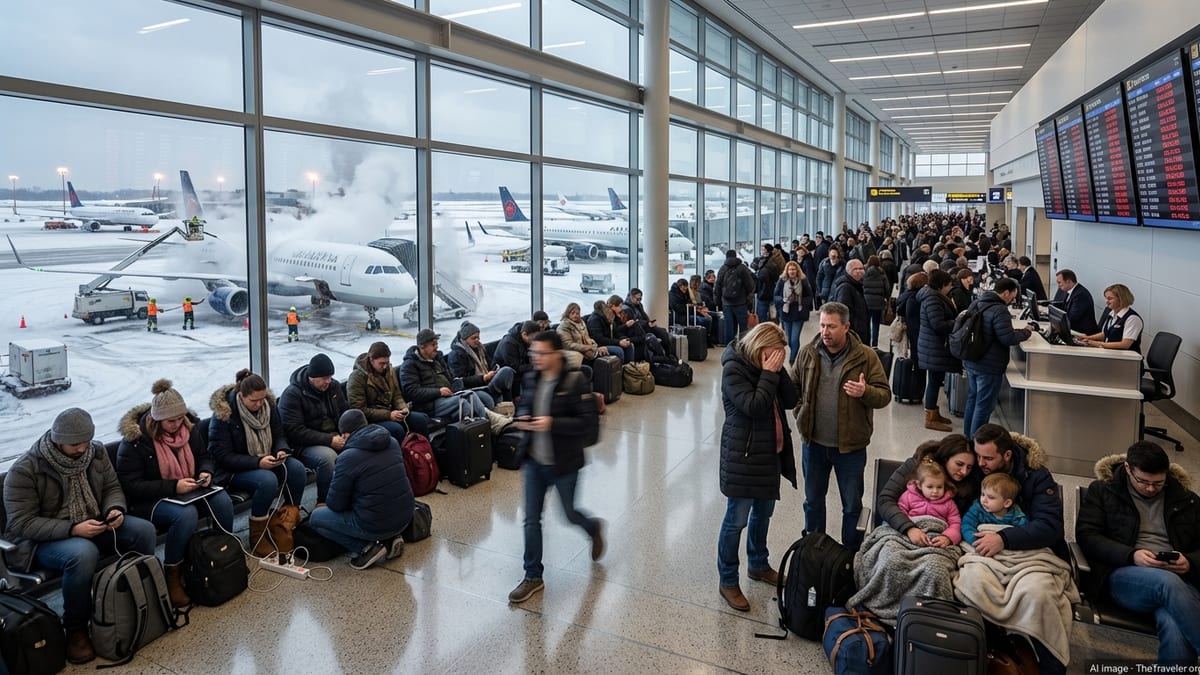
Storm System Turns Canada’s Busiest Hub into a Bottleneck
The latest wave of disruption at Toronto Pearson unfolded as southern Ontario contended with another round of snow, ice pellets and low visibility, conditions that have repeatedly tested the resilience of Canada’s largest airport this winter. Airport operations teams spent much of the day treating runways and taxiways, cycling plows across critical surfaces and running deicing operations at full tilt in an effort to keep traffic moving.
Despite those efforts, the combination of deteriorating weather and required safety procedures led airlines to slow their schedules, extend ground times and, in many cases, cancel departures outright. As the day progressed, delays mounted across both domestic and international banks, leaving departure and arrival boards dominated by orange and red status bars as aircraft waited for slots to depart or land.
By evening, a total of 94 flights in and out of Pearson had been canceled and 397 delayed, placing the airport among the most heavily impacted hubs in North America. While some of those cancellations were proactive, intended to prevent aircraft and crew from becoming badly out of position, others were last-minute decisions, adding to the frustration for travelers already at the airport.
Passenger flows inside the terminals reflected the strain. Lineups at check-in counters, self-service kiosks and customer service desks for rebooking stretched well beyond normal weekend volumes, while concessions and seating areas filled with travelers waiting on updated departure times or scrambling to salvage missed connections.
Air Canada, Jazz, Porter, Endeavor and Others Bear the Brunt
The brunt of the disruption at Pearson fell on the airport’s largest operators, with Air Canada and its regional partner Jazz seeing extensive schedule changes on key transcontinental and cross-border routes. Flights to and from major Canadian cities such as Vancouver, Calgary, Edmonton, Winnipeg, Ottawa and Montreal experienced rolling delays as aircraft waited for deicing and crews bumped against duty-time limits.
Jazz-operated Air Canada Express services, which connect Toronto with smaller communities and regional US gateways, were particularly affected, as short-haul rotations are more vulnerable to cascading delays. A single late-arriving aircraft could easily impact two or three subsequent departures in the same day, magnifying the effect of each weather-related slowdown on the network.
Porter Airlines, which has been aggressively building its presence at Pearson alongside its long-established base at Billy Bishop Toronto City Airport, also encountered significant disruption. The carrier’s flights linking Toronto with destinations such as Ottawa, Halifax, Calgary, Edmonton and popular sun markets faced extended ground times and schedule adjustments as deicing queues grew and airport flow rates were reduced for safety.
US regional operator Endeavor Air, flying for Delta Air Lines on routes between Pearson and American hubs, was among several international partners contending with tightly controlled arrival and departure slots. With their aircraft sharing the same airspace and runway system as domestic carriers, their operations were equally exposed to the weather-related constraints gripping the airport throughout the day.
Ripple Effects Across Canada, the United States and Mexico
With Pearson functioning as a central gateway for both domestic and transborder travel, the impact of Saturday’s disruption rippled rapidly across Canada. Passengers in cities including Montreal, Ottawa, Halifax and St. John’s reported knock-on delays as aircraft scheduled to originate from Toronto arrived hours late or were substituted by different equipment, compressing turnaround windows.
Further west, travelers in Winnipeg, Calgary, Edmonton and Vancouver also felt the squeeze. Flights destined for Toronto left behind schedule to keep connections viable for onward international services, while some eastbound departures were held on the ground until conditions at Pearson and the surrounding airspace allowed for a steadier arrival flow.
In the United States, major partner hubs such as New York, Chicago, Detroit and Minneapolis saw their Toronto-bound rotations reshuffled, with some flights reduced to a single daily frequency and others canceled altogether. Vacationers heading to or returning from Florida, Arizona and other winter-sun states faced last-minute gate changes and missed connections as tight layovers evaporated under the weight of the day’s delays.
Mexico, a key leisure market during the Canadian winter, was similarly caught in the disruption. Services linking Toronto to Cancun, Puerto Vallarta, Los Cabos and Mexico City saw passengers stranded at both ends, with some flights departing significantly behind schedule and others withdrawn from the timetable to protect aircraft positioning. Airlines prioritized routes where they could still offer viable onward connections or where hotel and ground handling support were easier to secure for displaced travelers.
Long-Haul Links to Japan and Beyond Strained
Long-haul international services that depend on tightly coordinated connection banks at Pearson also came under pressure. Flights between Toronto and major European hubs were adjusted to account for delayed feed from across Canada and the United States, while ground handling teams worked to rebook passengers whose itineraries could no longer be completed the same day.
Routes bridging Toronto and Asia, including services to Japan, were particularly vulnerable to the day’s operational pinch points. For carriers and alliance partners routing Japan-bound passengers via Pearson, the disruption risked breaking complex itineraries that involved multiple carriers and time-sensitive transfers. In some cases, travelers were shifted to later departures or rerouted through alternate North American hubs where winter conditions were less severe.
The nature of long-haul flying meant that any delay in departure from Toronto had an outsized effect on aircraft utilization. A late evening transpacific or transatlantic departure could cause the aircraft to miss its next day’s schedule on the far side of the ocean, triggering an additional wave of disruptions for passengers who were never near Toronto but whose flights depended on the same aircraft circulating through the network.
International cargo traffic also experienced complications, with freighters and belly-hold shipments facing schedule uncertainty. Sensitive logistics operations, from automotive parts to medical supplies, were forced to adjust timelines and routing options as carriers waited for more predictable operating windows at Pearson.
Passengers Face Missed Holidays, Work Trips and Family Events
For travelers on the ground, the statistics of 94 cancellations and 397 delays translated into missed holidays, disrupted work trips and emotional family setbacks. Social media feeds filled with images of crowded departure halls, long lines at airline service desks and children sleeping across rows of seats as parents negotiated new itineraries.
Many passengers described a familiar pattern: initial notifications of modest delays, followed by incremental schedule pushes as aircraft waited for deicing, crew changes or new departure slots, before an eventual cancellation. For those on multi-leg journeys, even a short delay on a first segment could unravel carefully planned connections through Pearson to US, Mexican, Caribbean or Asian destinations.
Travelers with flexible plans and travel insurance generally fared better, finding space on later flights or accepting reroutes via alternate hubs such as Montreal, Vancouver or US gateway airports. Others, particularly those traveling for time-sensitive events such as weddings, funerals or key business meetings, were less fortunate, facing the reality that no combination of rebooking options could get them to their destination in time.
At hotels around the airport, front desks reported a surge in last-minute check-ins from stranded travelers, as airlines issued vouchers where policies allowed or as passengers paid out of pocket to avoid spending the night on terminal floors. Ride-share drivers and local transit services also saw elevated demand as people abandoned air travel altogether in favor of trains, buses or rental cars for regional trips.
Airlines and Airport Work to Stabilize Operations
As weather conditions slowly began to stabilize, both airlines and the airport authority focused on clearing the backlog and restoring a more predictable operating rhythm. Crews at Pearson’s central deicing facility continued working at high capacity, cycling aircraft through as efficiently as safety standards allowed, while runway and taxiway maintenance teams remained on standby for further snow or ice bands.
Airlines implemented a variety of recovery tactics, from consolidating lightly booked flights onto a single departure to deploying larger aircraft on key routes to move greater numbers of passengers once conditions improved. Some carriers prioritized routes with significant numbers of connecting travelers, seeking to rebuild fractured itineraries and limit the number of customers who would need overnight accommodation or multi-day rebookings.
Customer communication became a critical element of the recovery strategy. Carriers urged travelers to rely on mobile apps and text alerts for live updates rather than airport departure boards alone, and encouraged those whose trips were not essential to take advantage of flexible change-fee waivers. Airport announcements reminded passengers to check with their airline before heading to Pearson, underscoring that schedules remained fluid even as visibility improved.
Despite these efforts, aviation analysts noted that a full reset of operations could take more than a day, particularly for airlines with high aircraft utilization and interconnected route structures. With aircraft and crews out of position, the aftershocks of Saturday’s turmoil were expected to be felt across Sunday’s timetable and potentially into the start of the new workweek.
Another Stress Test for a Winter-Weary Travel System
The latest round of disruption at Toronto Pearson comes in a winter that has already delivered multiple stress tests for Canada’s aviation system. Earlier storms brought heavy snow and ice to southern Ontario and other regions, prompting waves of cancellations, equipment incidents on snowy taxiways and temporary ground stops that left aircraft and passengers waiting for extended periods.
Operational leaders and front-line workers have been running at a sustained high tempo, from ground handlers and deicing crews to air traffic controllers and flight attendants. Each new weather event has highlighted the delicate balance between maintaining safety margins, keeping schedules viable and managing passenger expectations in an era when travelers are increasingly vocal about disruption on social platforms.
Industry observers point out that Pearson’s complexity as a major hub makes it especially sensitive to winter irregular operations. With dozens of airlines, hundreds of daily departures and a broad mix of narrowbody, widebody and regional aircraft types, even a modest reduction in arrival or departure capacity can quickly translate into long queues, ground delays and missed slots in surrounding airspace.
The events of February 23 are likely to feed into ongoing discussions about resilience investments, from further enhancements to deicing infrastructure and runway maintenance capabilities to data-driven tools that help airlines and airports make earlier, more targeted decisions about which flights to protect and which to cancel when the next storm system approaches.
What Travelers Should Do as Disruptions Continue
With residual delays likely to spill into the coming days, travel experts urge passengers with upcoming flights to and from Toronto Pearson to take a proactive approach. Monitoring flight status frequently through airline apps and signing up for text alerts can offer earlier warning of changes than airport displays, which sometimes lag during busy irregular operations.
Where airlines have issued weather waivers, travelers who do not need to fly on a specific day are encouraged to rebook to later dates at no additional charge, reducing pressure on already strained schedules and freeing up seats for those with urgent travel needs. Flexibility in choice of routing, such as accepting a connection through another Canadian or US hub, can also increase the chances of reaching a destination on the same day.
Passengers already at the airport are advised to stay close to their departure gates once through security, as boarding times can shift suddenly when a narrow window opens in the flow of arrivals and departures. Keeping medications, chargers, essential documents and a change of clothes in carry-on bags remains a key best practice in case of unexpected overnight stays or misdirected checked luggage.
For those still planning trips in the remaining weeks of winter, the events at Toronto Pearson serve as a reminder to factor weather volatility into travel planning. Allowing longer connection times, purchasing travel insurance that covers weather-related disruption and building flexibility into itineraries can all help mitigate the impact when the next storm once again turns one of North America’s busiest hubs into an unexpected bottleneck.