

More news on this day
Storm Dave has swept across large parts of the UK over the Easter bank holiday, bringing damaging coastal winds, rough seas and widespread disruption to roads, rail services and flights at the height of the holiday getaway.
Get the latest news straight to your inbox!
Amber Warnings, Fierce Gusts and Coastal Erosion
Storm Dave was officially named by the Met Office in the run-up to the Easter weekend, after forecasts showed a deep area of low pressure tracking across the North Atlantic and swinging into the British Isles. Publicly available information from the agency described the system as the fourth named storm of the year, with the potential to bring disruptive winds, heavy showers and, in northern upland areas, snow.
By Saturday evening and into the early hours of Easter Sunday, an amber warning for wind covered parts of northern England, North Wales and southern Scotland, alongside wider yellow warnings stretching across other northern and western regions. Reports indicate that exposed coasts and hills saw gusts widely in the 60 to 70 mph range, with some higher, localized gusts close to 80 mph along headlands and island shorelines.
Along the western seaboard, including parts of the Irish Sea and North Channel, Storm Dave drove large waves onto already vulnerable shorelines. Local media coverage from coastal towns described overtopping sea walls, shingle washed across promenades and minor structural damage to seafront properties and harbor infrastructure. Images shared by broadcasters showed sea spray blasting over piers, with debris scattered across coastal roads at high tide.
Environment and flood agencies highlighted an increased risk of coastal flooding where strong onshore winds coincided with spring tides. While the focus of official concern remained on wind damage and transport disruption, monitoring sites around estuaries and low-lying coastal communities recorded elevated water levels and choppy conditions, prompting temporary closures of some waterfront paths and car parks.
Road Closures and Hazardous Driving Conditions
Across the road network, Storm Dave created challenging conditions from late Saturday through early Sunday. According to published coverage from UK news outlets, multiple trunk roads and local routes were closed for periods as crews worked to clear fallen trees, branches and debris. High-sided vehicles were particularly affected on exposed stretches of motorway and upland passes where crosswinds were strongest.
In Scotland and northern England, reports described blocked rural roads after trees came down onto carriageways, with some minor collisions and vehicles becoming stranded. On higher routes, a combination of strong winds and wintry showers led to difficult driving, with snow and sleet briefly settling on some upland sections. Local authorities advised against unnecessary travel overnight in the worst-affected corridors while gritting and clearance operations were under way.
Further south, heavy squally showers associated with Storm Dave caused surface water on key commuter routes and holiday corridors. Short-lived but intense downpours led to localised flooding at known pinch points, including underpasses and low-lying junctions. Highway agencies used matrix signs to warn drivers about strong crosswinds on bridges and viaducts, and in some instances imposed reduced speed limits as a precaution.
By Easter Sunday morning, as the core of the low pressure system cleared to the northeast, many closures began to ease, but residual delays continued where clean-up operations were still in progress. Publicly available travel updates suggested that motorists heading home or setting out on late holiday trips were urged to allow extra time and check for regional advisories, particularly in northern and western areas where showers and gusty winds persisted.
Flight Delays, Wobbly Landings and Airport Disruption
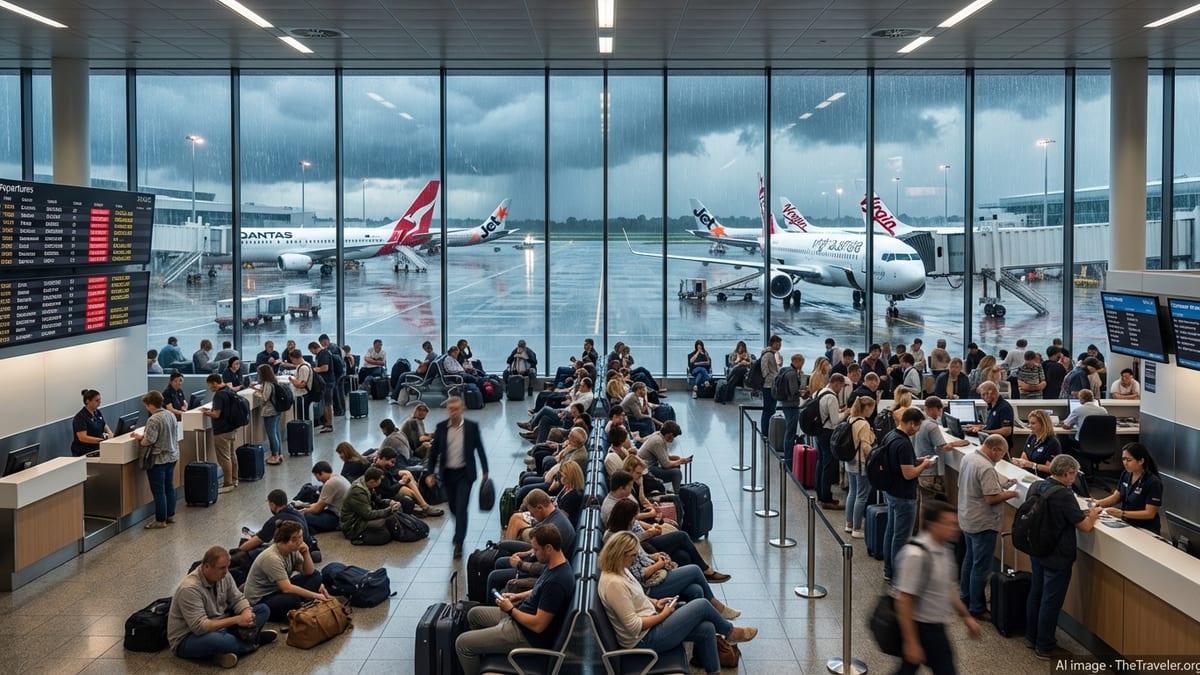
Air travel was also hit as Storm Dave crossed the country, particularly at airports exposed to crosswinds. Aviation tracking data and broadcast footage showed aircraft making visibly buffeted approaches into several major UK hubs, with pilots contending with turbulent air and shifting gusts on final descent. While safety margins kept operations within regulated limits, the unstable conditions contributed to delays and schedule changes.
According to reports from national broadcasters, airlines implemented a mixture of precautionary diversions and cancellations at the height of the storm, particularly on Saturday night and early Sunday. Short-haul routes to and from northern England and Scotland saw the greatest disruption, while larger hubs in the south experienced a combination of arrival holding patterns and extended turnaround times as ground crews worked in strong, sometimes driving, winds.
Passengers reported queues at check-in and customer service desks as airlines attempted to rebook travelers on later departures once conditions started to improve. In some cases, inbound flights diverted to alternative airports less affected by crosswinds, adding to the complexity of repositioning aircraft and crews for the remainder of the holiday timetable.
By late Sunday morning, publicly available information from aviation and weather services indicated a gradual return to more normal operations as Storm Dave moved away and wind speeds eased. However, residual knock-on delays were expected through the day, especially on busy leisure routes linked to the Easter break.
Rail Disruption and Ferry Cancellations Across Regions
On the railways, Storm Dave led to a series of speed restrictions and line blockages across northern and western regions. Coverage from national and regional news outlets reported disruption on key intercity and regional routes where strong winds brought trees and other debris onto tracks. In some locations, overhead power lines were affected, prompting emergency inspections and temporary suspensions of services.
Operators imposed precautionary reduced speeds on exposed sections, particularly along coastal stretches and viaducts prone to high crosswinds. These safety measures, while limiting the risk of incidents, extended journey times and caused missed connections for passengers travelling over the Easter weekend. Real-time information screens at major stations showed a mix of cancellations, late-running services and train formations altered at short notice.
Ferry services around the UK also experienced significant disruption. Publicly available updates from major operators highlighted multiple cancelled sailings on routes across the Irish Sea and to island communities, as gale-force winds and large waves rendered conditions unsafe for some vessels. Where sailings did go ahead, passengers were warned to expect rough crossings, and there were reports of queuing traffic at ports as departures were rescheduled.
In Scotland and on western routes linking to Northern Ireland and the Republic of Ireland, the combination of strong winds and heavy seas was particularly impactful. Operators advised passengers to check the latest service information before travelling, noting that further short-notice changes were possible until the storm fully cleared and sea states began to moderate.
Storm Dave Eases but Further Showers and Clean-up Ahead
By Sunday morning, the Met Office confirmed via its publicly accessible forecast updates that formal weather warnings related to Storm Dave had been lifted, with the system moving away to the northeast. Forecasters indicated that, in its wake, the UK would see a mix of sunny intervals and scattered heavy, blustery showers, especially across northern and western areas, where it would feel distinctly cool for early April.
Despite the easing of the most severe conditions, travel networks and coastal communities faced an extended period of recovery. Local councils and infrastructure operators began assessing damage to sea defences, promenades and rural roads, with engineers inspecting structures that had been exposed to prolonged battering from wind and waves. Early reports highlighted debris-strewn seafronts, damaged street furniture and eroded dune systems in some stretches of coast.
Energy companies worked to restore electricity supplies where lines had been damaged by falling trees or blown debris, particularly in parts of Scotland and northern England that bore the brunt of the strongest gusts. Industry updates suggested that most customers would see power restored relatively quickly, although isolated rural properties could face longer outages while access routes were cleared.
Looking ahead, forecasting services indicated that once Storm Dave’s trailing showers finally clear, a more settled pattern with milder temperatures is likely to develop later in the week. For many travelers and coastal residents, however, the immediate focus remains on disrupted plans and the clean-up along shores and transport corridors that once again underline the vulnerability of parts of the UK to early-spring Atlantic storms.