

More news on this day
Storm Dave has severely disrupted operations at Dublin Airport, forcing a Ryanair flight from Malaga to Dublin into an unscheduled diversion to Paris and contributing to a sharp spike in aborted landings, cancellations and delays across the airport’s weekend schedule.
Get the latest news straight to your inbox!
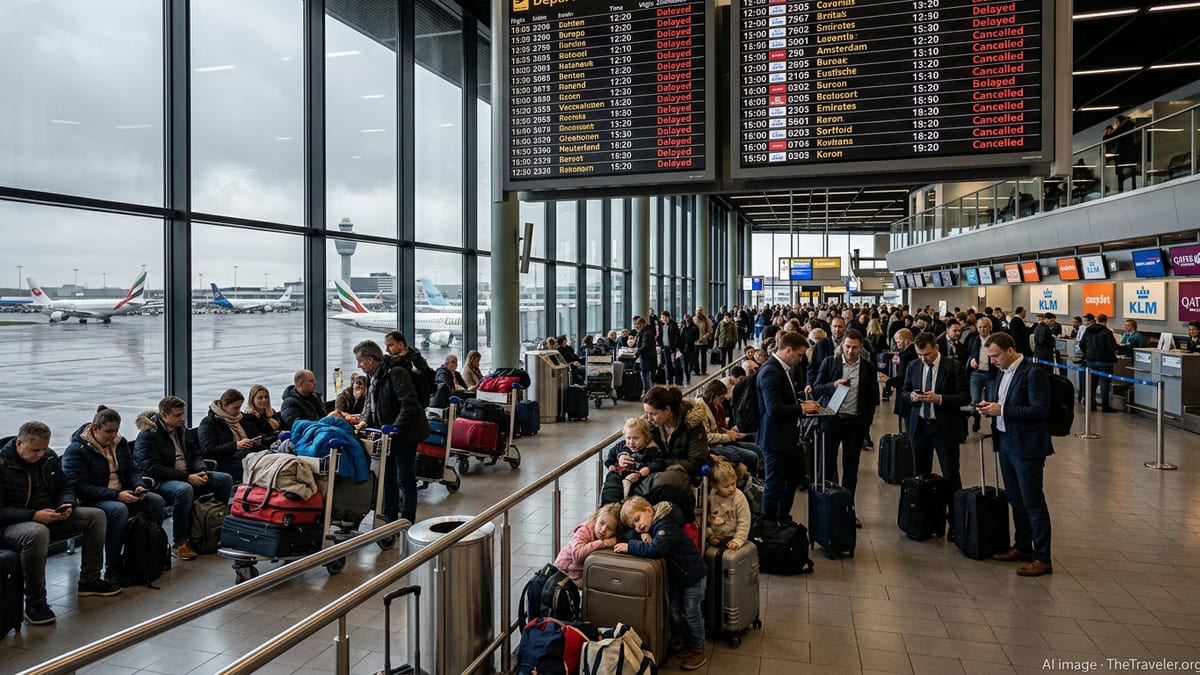
Malaga to Dublin Service Diverted to Paris Beauvais
According to aviation tracking data and specialist aviation coverage, Ryanair flight FR7055 departed Malaga on the evening of 4 April, bound for Dublin on what was planned as a routine short-haul service. As Storm Dave intensified over Ireland, the Boeing 737 encountered challenging conditions on approach to the Irish capital.
Reports indicate the aircraft attempted multiple approaches into Dublin before abandoning its landing efforts due to reported windshear and severe crosswinds near the runway. With weather conditions persisting and holding patterns extending, the flight crew initiated a diversion procedure rather than continue further attempts to land.
The aircraft ultimately redirected more than 700 kilometres to Paris Beauvais Airport, where it landed safely late on Saturday. Publicly available flight data show the Malaga to Dublin service arriving in northern France several hours behind its planned arrival time in Ireland, leaving passengers unexpectedly disembarking in Paris instead of Dublin.
The diversion has drawn attention because of the distance involved, highlighting how adverse weather at a major hub can rapidly alter routings across European airspace when closer alternates are also affected by the same weather system or capacity constraints.
Widespread Disruption at Dublin Airport
The diversion of FR7055 formed part of a broader pattern of disruption at Dublin Airport on 4 April as Storm Dave swept across Ireland. Travel trade and national media coverage note that strong winds and windshear led to an unusual volume of go-arounds, with more than 50 aborted landing attempts recorded over the course of the day.
Operational data collated by travel industry outlets indicate that at least 17 flights were cancelled and around a dozen services were diverted to alternate airports as the storm peaked. These figures sit alongside additional delays to both arrivals and departures as airlines adjusted schedules, repositioned aircraft and waited for brief weather windows to complete landings.
Aviation observers pointed out that diversions were spread across multiple airports in Britain and continental Europe, reflecting the wide footprint of the storm system. The Malaga to Dublin flight’s eventual arrival in Paris Beauvais became one of the more visible examples, amplified by flight-tracking maps and social media commentary showing the aircraft breaking away from holding patterns and heading south-east towards France.
Dublin Airport had already warned of potential disruption as wind alerts were issued. Passengers travelling on the affected days faced long queues, extended waits for updated departure times and, in some cases, overnight arrangements as airlines worked through the backlog created by the weather event.
Meteorological Conditions Behind Storm Dave
Meteorological data from Ireland’s national forecaster Met Éireann, referenced in domestic news coverage, show that Storm Dave brought strong and gusty winds to large parts of the country on 4 and 5 April. At Dublin Airport, sustained winds were accompanied by gusts reported in excess of 40 knots at times, levels that can significantly complicate landing procedures, particularly when combined with shifting wind directions close to the ground.
Such conditions increase the risk of windshear, in which abrupt changes in wind speed or direction occur near the runway environment. In commercial aviation, windshear is treated conservatively, and standard operating procedures require pilots to break off an approach if the aircraft’s stability or descent profile is compromised, leading to go-arounds like those recorded at Dublin.
The storm formed as part of an active European windstorm pattern during the current season, with successive low-pressure systems crossing the Atlantic and deepening over the North Atlantic and western Europe. In addition to aviation impacts, Storm Dave also produced power outages, transport challenges on road and rail networks, and localised damage across parts of Ireland and the United Kingdom.
Forecasters had issued status-level wind warnings for several regions ahead of the worst of the conditions, advising that travel could be disrupted and that high-sided vehicles, coastal routes and exposed infrastructure would be particularly vulnerable to gusts.
Passenger Experience and Travel Advice
The sudden diversion of a holiday flight from Spain to an unplanned arrival in northern France illustrates the practical consequences for passengers when storm systems intersect with tightly timed airline schedules. Travellers on the Malaga to Dublin service faced an extended flight time, onward ground transfers and rebooked connections as airline operations teams worked to return them to Ireland or onward to their final destinations.
According to publicly available guidance on air travel disruptions, passengers whose flights are cancelled or significantly delayed for weather-related reasons are generally entitled to rerouting or refunds, though compensation rules vary by jurisdiction and depend on whether the disruption is deemed outside an airline’s control. Accommodation, meals and ground transport arrangements can differ between carriers and are usually set out in each airline’s conditions of carriage.
Consumer advocates typically recommend that passengers retain boarding passes, booking confirmations and receipts for any additional expenses incurred while disrupted. Travel insurance policies may provide supplemental coverage for missed connections, extra hotel nights or alternative transport, provided that weather-related disruption is included in the policy wording.
With Storm Dave’s effects expected to ripple through timetables for at least another day, airlines have urged customers via public channels to monitor flight status information closely and to allow extra time at the airport, especially for early morning and late evening services that can be most susceptible to further schedule adjustments.
Operational Resilience and Future Planning
The events at Dublin Airport during Storm Dave have renewed discussion within Ireland’s travel sector about the resilience of aviation operations in the face of more frequent episodes of severe weather. Recent years have seen multiple windstorms affect western Europe, periodically disrupting major hubs and regional airports alike.
Industry analysts note that airports and airlines routinely invest in infrastructure, training and contingency planning to manage crosswind and low-visibility operations. Dublin Airport’s dual-runway layout, modern air traffic control tower and established diversion protocols are cited in public documentation as key elements of its operational toolkit when faced with challenging conditions.
Nevertheless, the combination of strong crosswinds, airport congestion and broader European weather impacts can still result in significant disruption, as demonstrated by the tally of go-arounds, diversions and cancellations during Storm Dave. The high-profile diversion of a Malaga to Dublin leisure flight to Paris Beauvais has become emblematic of the logistical complexity involved in keeping passengers moving when meteorological conditions deteriorate rapidly.
Travel industry commentators suggest that, as storm systems continue to affect northwestern Europe, passengers flying to and from hubs like Dublin may increasingly benefit from flexible bookings, robust travel insurance and readiness for sudden route changes, particularly during the stormier months of the year.