

More news on this day
Power cuts, blocked roads and widespread travel disruption are affecting parts of Scotland after Storm Dave swept across the country overnight with heavy snow and gale force winds at the peak of the Easter getaway.
Get the latest news straight to your inbox!
High winds, snow and lingering weather warnings
Storm Dave moved across Scotland late on Saturday and into the early hours of Sunday, bringing a mix of heavy snow over higher ground and severe gales in exposed coastal and upland areas. Meteorologists reported gusts in excess of 70 miles per hour in some northern and western locations, combined with rapidly drifting snow that reduced visibility on key routes.
Amber wind alerts covering southern Scotland were in force until the early hours, with broader yellow warnings for wind and snow affecting much of the Highlands, central belt and border areas through Sunday morning. According to published coverage, those stronger warnings expired around 3am local time, with remaining yellow alerts phased out later in the morning as conditions slowly improved.
Forecasters indicated that showers and brisk winds would continue through Easter Sunday, particularly in northern and western Scotland, but with the most disruptive phase of Storm Dave now past. Temperatures are expected to remain slightly below seasonal norms in areas affected by lying snow and slush, creating lingering risks on untreated surfaces.
Thousands experience power cuts in storm-hit communities
Energy network operators reported scattered power cuts across Scotland as Storm Dave’s strong winds damaged local lines and brought down trees onto cables. Publicly available information from regional suppliers pointed to clusters of outages in rural parts of the Highlands, Perthshire and pockets of Argyll and Bute, where overhead infrastructure is more exposed to high winds and heavy snow loading.
In many communities, engineers began restoration work overnight, prioritising larger faults affecting groups of customers before moving on to more isolated properties. Reports indicate that some households experienced only brief interruptions, while others in more remote glens and islands awoke on Easter Sunday to continuing loss of supply and limited mobile connectivity.
Electricity companies urged customers, through their online channels, to use battery-powered lights where needed and to report downed lines from a safe distance. Travel and tourism businesses in affected areas have been advising visitors to check with accommodation providers in advance, as smaller guesthouses and self-catering properties can be more vulnerable to longer outages.
Road closures, difficult driving and stranded travelers
Road travel has been particularly challenging across parts of central and northern Scotland. According to traffic bulletins, high winds and drifting snow led to temporary closures on sections of trunk roads serving key Highland corridors, with snowploughs and gritters deployed through the night to keep priority routes open.
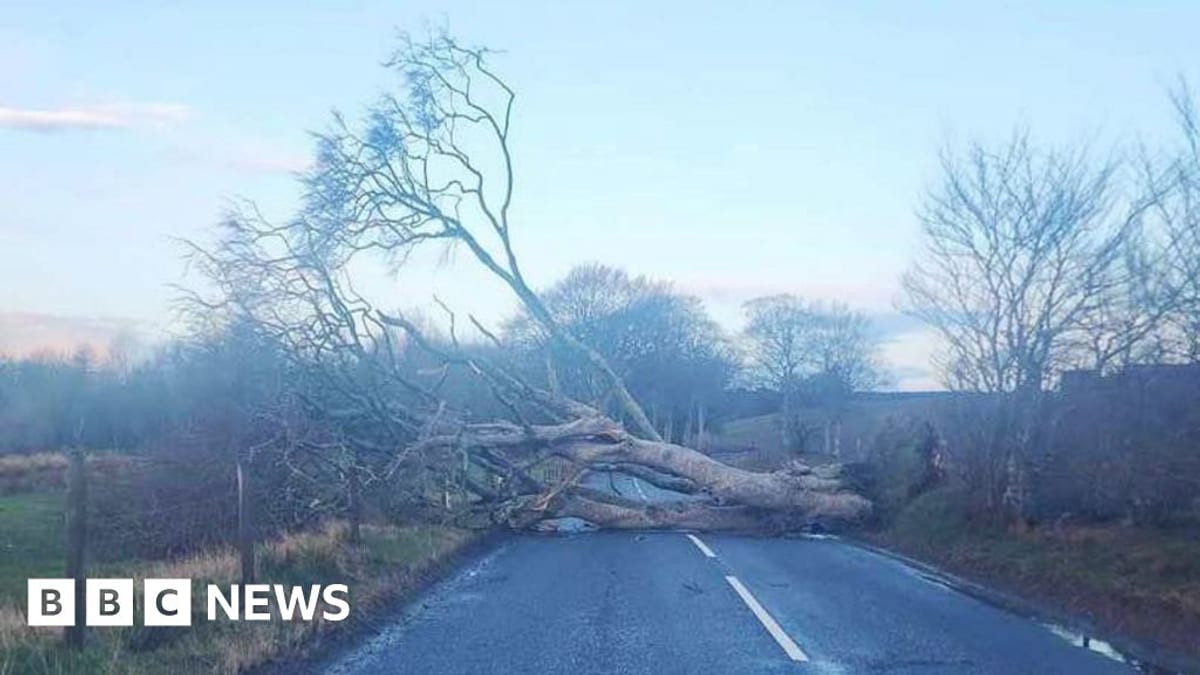
Reports from local authorities and transport agencies describe fallen trees blocking minor roads, especially in wooded stretches of the central belt and southern uplands. In some locations, debris from damaged roofs and outbuildings added to the hazards, requiring clean-up teams to work alongside road maintenance crews before routes could safely reopen.
Those attempting to complete Easter journeys by car encountered long delays where speed restrictions were in force and where convoys were used behind snowploughs on higher passes. Travel information services have advised motorists to allow extra time, carry warm clothing and basic supplies, and to avoid nonessential journeys in areas still affected by snow and ice.
Rail, air and ferry networks under pressure
Storm Dave has also impacted Scotland’s rail services, with published coverage indicating that emergency speed restrictions were introduced across parts of the network as a precaution against debris on the line and reduced braking performance in wet and icy conditions. These restrictions led to extended journey times on some intercity and regional routes on Easter Sunday morning.
Rail operators reported a combination of cancellations and short-notice alterations where trains were unable to run on exposed stretches, particularly in northern and coastal areas. Passengers heading to and from major cities such as Glasgow, Edinburgh, Inverness and Aberdeen were encouraged via online updates and station announcements to check revised timetables before travelling.
Air and ferry services also experienced disruption, although impacts varied by region. Strong crosswinds and poor visibility prompted delays and occasional cancellations at some Scottish airports late on Saturday and early Sunday, while several west coast and island ferry crossings were either suspended or subject to significant timetable changes. Travellers heading to island destinations for the holiday weekend have been urged to monitor operator channels closely and to be prepared for further weather-related adjustments.
Tourism and Easter getaway plans thrown off course
The timing of Storm Dave during one of the busiest getaway weekends of the spring has amplified its effect on Scotland’s tourism sector. Hotels, guesthouses and short-term rentals across popular destinations from the Highlands to the central belt had been expecting strong Easter occupancy, but many have instead had to manage late arrivals, cancellations and requests to rebook affected stays.
Travel and tourism websites tracking the situation describe families delayed on routes north from England as they navigated reduced speed limits, snow-affected roads and intermittent rail services. Some visitors reported abandoning plans to reach more remote areas in favour of staying closer to larger towns and cities where transport options and emergency services are more readily available.
For businesses that rely heavily on the Easter period, such as outdoor activity providers, attractions and tour operators, the storm’s impact is likely to be felt beyond the immediate clean-up. With more unsettled weather still possible in the days ahead, industry observers suggest that flexible booking policies, clear communication on social channels and close monitoring of forecasts will be critical to reassuring visitors and managing demand as Scotland recovers from Storm Dave.