

More news on this day
Strong winds from Storm Dave triggered acute travel disruption at Dublin Airport on Saturday, with at least 15 flights cancelled and thousands of passengers facing delays and missed connections across Ireland, the UK, continental Europe and the United States.
Get the latest news straight to your inbox!
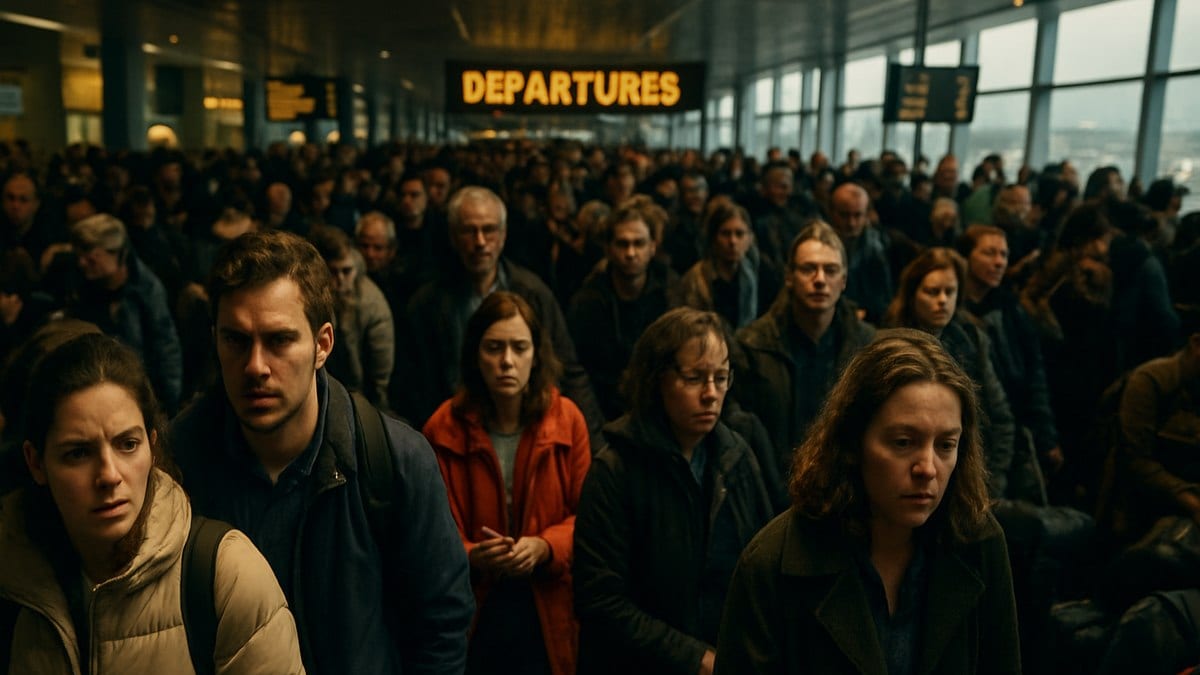
Storm Dave Slams Ireland and the UK
Storm Dave swept across Ireland and parts of the UK over the Easter weekend, bringing powerful southerly and westerly gusts that disrupted transport on both sides of the Irish Sea. National forecasters in Ireland and Britain issued wind warnings as the low pressure system moved east, with coastal areas bearing the brunt of severe gusts and heavy showers.
Publicly available information shows that conditions deteriorated rapidly on Saturday afternoon, with crosswinds and turbulence intensifying over central and eastern Ireland. The storm’s timing, coinciding with a busy holiday travel period, compounded the impact on air passengers attempting to depart or transit through Dublin.
Reports indicate that wind speeds at times exceeded safe crosswind limits for routine operations, forcing crews to abandon landing attempts and air traffic managers to recalibrate runway usage. Short, sharp squalls added further unpredictability, making it harder to sustain normal landing and departure rates at Dublin Airport and several regional hubs in the UK.
As the system tracked north and east overnight, strong gusts continued to affect parts of Northern Ireland, western Scotland and northern England, prompting ongoing disruption to flights connecting Dublin with airports across Britain.
Fifteen Flights Cancelled as Operations Slow
According to published coverage from Irish and international outlets, airlines operating at Dublin Airport cancelled at least 15 flights on Saturday as Storm Dave intensified. The wiped‑out services included a mix of departures and arrivals, hitting both short‑haul European routes and longer transatlantic links.
While the airport itself remained open, reports indicate that airlines scaled back schedules in response to crosswind limits, air traffic flow restrictions and deteriorating weather at destination airports. Several affected flights were bound for or originating from major hubs in the UK, Germany, France, Spain, the Netherlands, Portugal and Italy, creating knock‑on disruption for onward connections.
Analysts note that even a relatively small number of outright cancellations can ripple through the wider network during a peak travel window. Missing one sector often removes both the aircraft and crew from later rotations, tightening capacity at a time when spare seats are limited and rebooking options are already constrained.
Operational data published by aviation tracking services also show multiple delays and diversions as pilots opted to hold, change approach direction or reroute to alternative airports when windshear warnings were reported around Dublin’s runways.
Passengers Stranded Across Europe and the US
The immediate result of the cancellations and rolling delays was a surge of stranded passengers both in Dublin and at overseas airports waiting for inbound aircraft. Travel industry reports suggest that several thousand people across Ireland, the UK, mainland Europe and the United States experienced missed connections or overnight stays as aircraft and crews fell out of position.
In Europe, disruption was most visible on key city‑pair links to and from Dublin, including services connecting with London, Manchester and Edinburgh in the UK, as well as Paris, Amsterdam, Frankfurt, Madrid, Barcelona, Lisbon, Porto, Rome and Milan. With Storm Dave also affecting parts of Britain and the near continent, delays at those hubs further limited options for same‑day rebooking.
Long‑haul passengers were not spared. Publicly available flight data show that some transatlantic services between Dublin and major US gateways encountered prolonged delays or schedule changes after missing their allocated departure slots. Travellers arriving into European hubs from North America, planning to connect onwards to Dublin, also faced cancellations as airlines trimmed rotations in response to the weather system.
At airports in Germany, France, Spain, the Netherlands, Portugal and Italy, delayed arrival boards and queues at transfer desks highlighted how a localized weather event in Ireland could quickly spread disruption across multiple countries linked by dense short‑haul networks.
Diversions and Dramatic Approaches Underscore Safety Focus
The intensity of Storm Dave’s gusts around Dublin produced several striking scenes captured in publicly shared footage, including aircraft appearing to track almost sideways on approach as pilots fought crosswinds to stay aligned with the runway. Aviation analysts note that such approaches, while visually dramatic, remain tightly controlled within strict safety margins.
At least one Ryanair flight inbound from Spain was reported to have diverted to a French airport after multiple landing attempts at Dublin were abandoned due to windshear alerts. Flight‑tracking records show that the aircraft broke off its approach and climbed away before routing to an alternate field several hundred kilometres from the Irish capital.
Aviation experts stress that diversions and go‑arounds are routine safety procedures, particularly during strong wind events. If onboard systems or pilots detect unsafe wind shifts near the runway, the safest option is often to discontinue the landing, even if that results in lengthy delays and unplanned overnight stays for passengers.
These decisions, while disruptive, underline the priority placed on safety in modern commercial aviation, especially when fast‑moving frontal systems like Storm Dave pass over busy airports such as Dublin at peak times.
What Travellers Can Expect in the Coming Days
With Storm Dave forecast to move away from Ireland and the UK by Sunday, airlines are expected to begin restoring normal schedules, though residual delays and repositioning flights are likely to continue into the early part of the week. Passengers with itineraries touching Dublin, particularly those connecting from cities in the UK, Germany, France, Spain, the Netherlands, Portugal, Italy or the US, may still encounter altered departure times as operations stabilise.
Published guidance from airlines and passenger‑rights platforms advises travellers to monitor their booking channels closely, as same‑day schedule changes are common after major weather events. Many carriers offer options such as free rebooking onto later flights, vouchers for overnight accommodation where mandated, and meal support at the airport while waiting.
Industry observers also point out that Dublin Airport has been operating near its permitted capacity, which can amplify the impact of weather‑related slowdowns. When adverse conditions reduce available landing and take‑off slots, there is less room to absorb disruption, increasing the likelihood of cancellations and extended delays on busy days.
For now, the focus for airlines and airports across Ireland, the UK and continental Europe is on clearing backlogs, reuniting passengers with their luggage and aircraft, and preparing for the next Atlantic weather system that could test the resilience of an already stretched aviation network.