

More news on this day
Storm Dave has unleashed severe wind and rain across Ireland, triggering widespread transport disruption and forcing the cancellation of at least 15 flights at Dublin Airport, with thousands of passengers facing delays and missed connections on routes linking Ireland with the UK, the United States and major European destinations.
Get the latest news straight to your inbox!
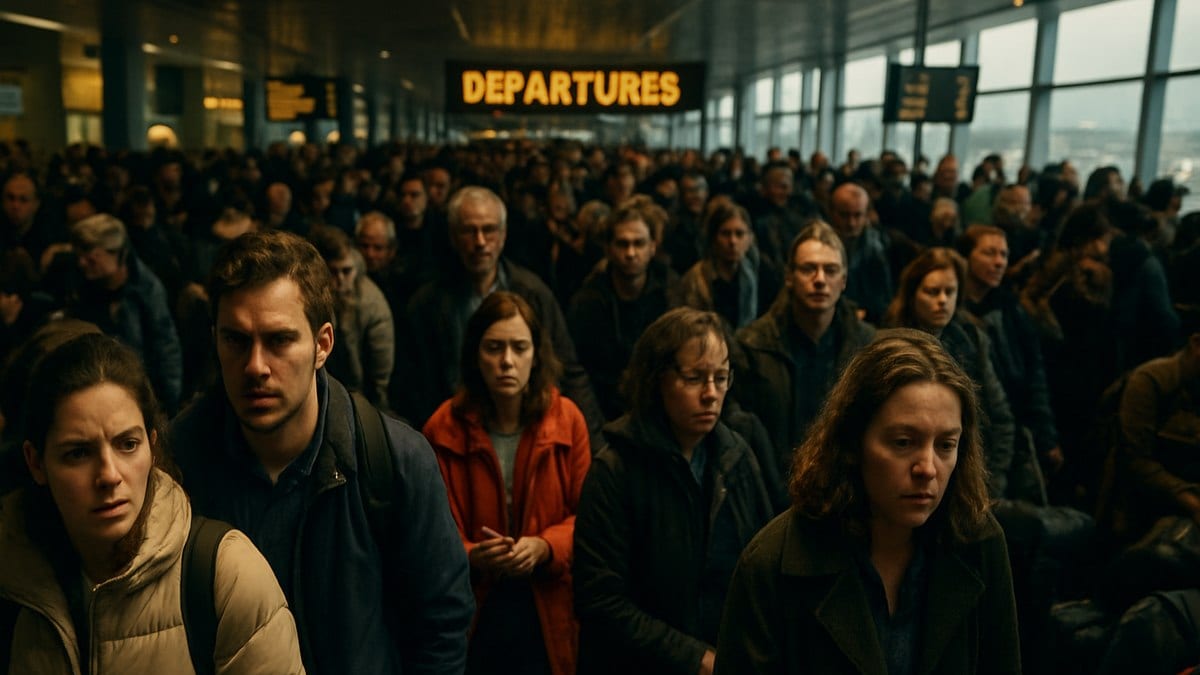
Flights Cancelled as Storm Dave Batters Ireland
Published coverage from Irish and international outlets indicates that Storm Dave intensified over the weekend, bringing powerful gusts and heavy rain across much of the country. Weather alerts issued by Met Éireann and the UK Met Office warned of very strong winds, difficult driving conditions and potential damage to infrastructure, prompting transport operators to scale back services for safety reasons.
Reports focused on power outages and coastal hazards are now being matched by growing evidence of aviation disruption. Dublin Airport, Ireland’s busiest international gateway, has emerged as a key flashpoint as crosswinds and rapidly changing conditions interfere with takeoffs and landings. According to national media and aviation monitoring data, at least 15 flights to and from the airport were cancelled as Storm Dave’s strongest bands passed over the east coast.
The cancellations have affected a mix of short-haul and long-haul services, including morning and evening rotations that normally feed onward connections. This has left passengers not only stranded in Dublin but also stuck at overseas airports where Dublin-bound aircraft could not depart on schedule.
Airport operators and airlines have emphasized that safety margins for operating in high winds are strictly defined and that runway use, approach paths and aircraft performance are closely assessed during storms. As a result, even when the airport itself remains technically open, schedules can be sharply reduced when wind direction or strength exceeds operating limits for specific aircraft types or runway configurations.
Knock-On Disruption Across the UK and Transatlantic Routes
Storm Dave’s impact has not been limited to Ireland. Publicly available information from UK media and regional grid updates shows the weather system sweeping across Northern Ireland, Wales and parts of England, where thousands of homes lost power and transport networks reported fallen trees and hazardous conditions. These issues have compounded the aviation challenges by affecting crew positioning, regional feeder flights and ground operations at key UK hubs.
According to flight tracking snapshots and airline advisories, services between Dublin and major UK airports such as London, Manchester and Birmingham have faced a mix of outright cancellations and extended delays. With many Dublin passengers relying on these routes to connect onward to long-haul services, the disruption has cascaded through itineraries, stranding some travelers mid-journey.
Transatlantic operations have also felt the strain. Published coverage referencing airline updates indicates that flights linking Dublin with East Coast cities in the United States have faced weather-related schedule changes, including at least one rotation scrubbed in advance of the worst winds and others delayed while airlines reassessed conditions. In some cases, US-bound passengers from regional Irish and UK airports have missed their Dublin connections entirely, forcing last-minute rebooking via alternative hubs.
These ripple effects highlight how a storm centered on Ireland and the UK can quickly snarl traffic far beyond the immediate area, particularly for passengers relying on tight connections across multiple airlines and alliance partners.
European Links Hit: Germany, France, Spain, Netherlands, Portugal and Italy
In parallel with UK and US disruption, European routes have been clipped by Storm Dave’s arrival. Data from publicly accessible flight-status dashboards and airport information feeds shows weather-related cancellations and delays on services linking Dublin with key continental markets, including Germany, France, Spain, the Netherlands, Portugal and Italy.
Short-haul routes are especially vulnerable during windstorms, as they often operate at higher daily frequencies with smaller aircraft and shorter turnaround times. When conditions deteriorate during peak operating windows, carriers may cancel selected rotations to reduce congestion, free up aircraft and crew, and create recovery space later in the day. Reports indicate that this strategy has been visible at Dublin, with airlines trimming mid-day and late-evening departures to and from European hubs.
Passengers on leisure-focused routes, particularly to Spain and Portugal, have reported multi-hour waits and unexpected overnight stays as weather and crew-rest requirements limited the ability to operate make-up flights. Business travelers heading to major financial and political centers in Germany, France and the Netherlands have also faced missed meetings and conference delays as storms around the Irish Sea disrupted finely tuned day-trip itineraries.
For Italy-bound services, which often connect holidaymakers and visiting friends and relatives traffic, the timing of cancellations has been particularly challenging for those heading to weekend events or returning from short city breaks. Public comments on social media platforms and travel forums suggest that many travelers faced a choice between waiting for rebooked flights or purchasing new tickets via alternative European hubs to keep plans on track.
Thousands Stranded and Limited Same-Day Alternatives
The combination of grounded aircraft, diverted services and missed connections has left thousands of passengers stranded in Dublin and across the wider network. Airport terminal images and traveler accounts posted online describe busy departure halls, long queues at airline service desks and limited same-day options as seats on remaining flights quickly filled.
At Dublin Airport itself, Storm Dave has arrived against a backdrop of already high spring travel demand. Publicly available passenger statistics for recent years show steady growth in traffic, meaning that even a relatively modest number of cancellations can displace a large volume of travelers when most flights are already operating near capacity. Once a storm triggers an initial wave of schedule cuts, the backlog can take many hours or even days to clear.
Overseas, passengers connecting through UK and European airports onto Dublin services have encountered similar challenges. With weather advisories affecting multiple regions simultaneously, alternative routes are not always available. Travelers attempting to reroute through other hubs have sometimes found that those airports are also dealing with their own weather-related disruptions, further limiting options.
Travel industry analysts note that modern airline networks are highly efficient but also tightly optimized, leaving little spare capacity during busy periods. Severe weather episodes such as Storm Dave reveal how quickly this efficiency can unravel when aircraft and crews are out of position, even if the total number of cancelled flights at a single airport appears relatively small in isolation.
What Affected Travelers Can Do Next
Consumer organizations and passenger-rights groups advise that travelers impacted by Storm Dave should carefully review their airline’s conditions of carriage and applicable European Union regulations governing delays and cancellations. Public guidance from aviation and consumer bodies explains that severe weather is generally considered an extraordinary circumstance, which can limit entitlement to financial compensation even when flights are cancelled at short notice.
However, passengers typically remain entitled to a choice between rerouting at the earliest opportunity or receiving a refund for unused tickets when a flight is cancelled. For those already away from home, published advice suggests keeping all receipts for meals, local transport and accommodation arranged during the disruption, as some airlines may provide reimbursement for reasonable expenses or offer vouchers, particularly when travelers are rebooked for travel on a later date.
With Storm Dave continuing to influence conditions in parts of Ireland and the UK, publicly available airport and airline updates recommend that passengers check the status of their flight before setting out for the airport and allow extra time for travel to and through the terminal. Real-time flight-status tools and airport information boards remain the most direct way to confirm whether a service is operating, delayed or cancelled.
Looking ahead, operational data and past storm patterns suggest that once winds ease and ground conditions improve, airlines will begin the process of rebuilding normal schedules, adding extra capacity where possible to accommodate stranded passengers. For now, however, Storm Dave’s impact has underscored the vulnerability of tightly timed international travel plans to sudden weather shifts around one of Europe’s key aviation hubs.