

More news on this day
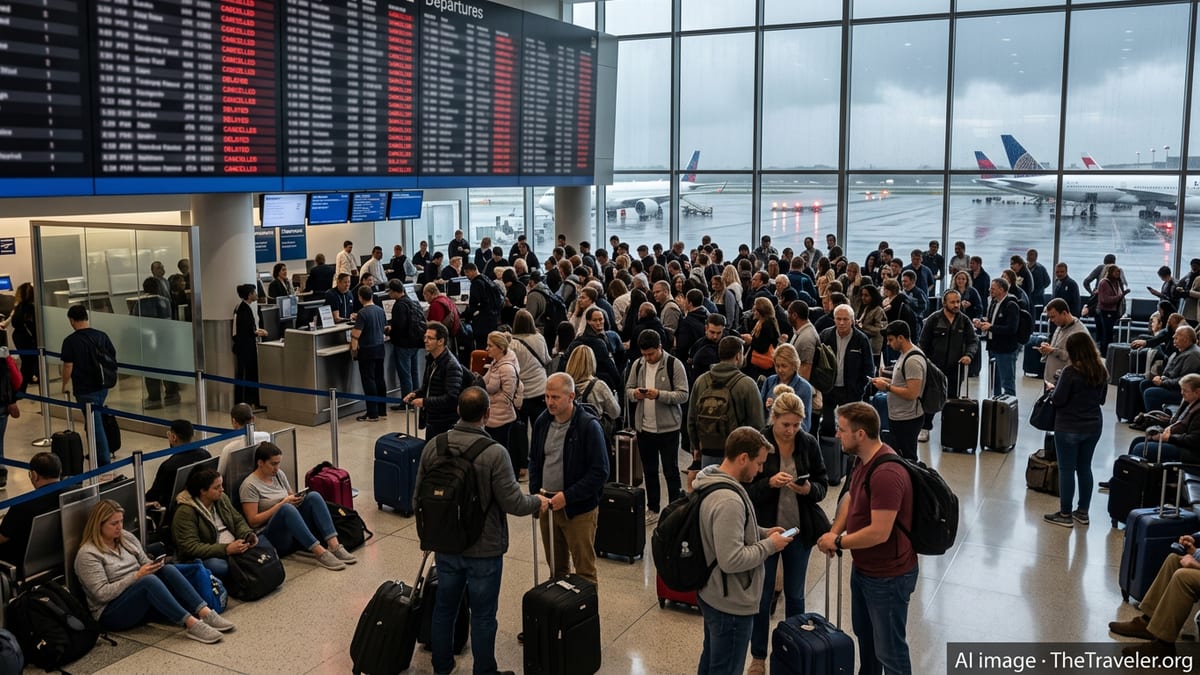
Hundreds of travelers at New York’s John F. Kennedy International Airport are facing long waits, rebookings, and overnight stays after around 80 flights were canceled amid severe storms and air-traffic restrictions affecting the U.S. East Coast.
Get the latest news straight to your inbox!
What Is Happening at JFK Right Now
Airline status boards at John F. Kennedy International Airport show clusters of cancellations and rolling delays after powerful thunderstorms and high winds moved across the Northeast, triggering regional air-traffic flow programs. According to published coverage and real-time airline status updates, roughly 80 flights in and out of JFK have been canceled, with more affected by multi-hour delays.
The disruption is part of a broader weather pattern that has slowed operations at major East Coast hubs, including the three primary New York area airports. Flight-tracking data and aviation reports indicate that carriers have trimmed schedules proactively, canceling some departures in advance to reduce gridlock on the tarmac and in the air.
Although JFK remains open, the combination of ground delay programs, aircraft out of position, and crew duty-time limits is constraining how quickly airlines can recover. Travelers are experiencing a mix of outright cancellations, last-minute gate changes, and missed connections as the ripple effects spread through domestic and transatlantic networks.
Airport operations teams are working within these limits to keep some traffic moving, prioritizing flights based on factors such as international connections, available aircraft, and crew availability. For passengers, this means conditions can change quickly, and a flight that looks on time in the morning can become delayed or cancelled later in the day as the system adjusts.
Why So Many Flights Are Being Canceled
Publicly available information on recent weather systems shows that strong thunderstorms, low clouds, and gusty winds have affected a broad swath of the East Coast, including the busy New York air corridor. When storms approach, the Federal Aviation Administration typically slows arrivals and departures into major hubs, cutting the number of planes allowed to land or take off per hour.
Because JFK is already one of the most congested airports in the United States, even modest reductions in arrival and departure rates can force airlines to cancel flights. Carriers often target shorter domestic legs or late-evening departures, reasoning that consolidating passengers onto fewer flights is preferable to having every aircraft depart hours behind schedule.
In addition to immediate storm impacts, the current cancellations reflect how tightly scheduled airline operations are. Aircraft and crews are shared between multiple flights throughout the day. Once weather delays an early rotation, subsequent flights can lose their plane or their pilots and flight attendants, leading to later cancellations even after the worst of the weather has passed.
Recent data on U.S. aviation disruptions indicates that weather remains a leading cause of flight cancellations, but not the only one. Air-traffic staffing constraints, runway work, and congestion in neighboring airspace can all contribute. At JFK, where airlines operate within strict slot and runway-capacity limits, these factors combine to magnify the impact of any storm system.
How Travelers at JFK Are Being Affected
For passengers, the most visible impact is on the departure boards and at airline customer-service counters. With dozens of flights canceled, many travelers are being rebooked onto later departures or rerouted through other hubs such as Boston, Washington, or Chicago. Some are receiving same-day alternatives, while others are being moved to flights one or more days later, depending on seat availability.
Reports from travelers indicate crowded gate areas, long lines at rebooking desks, and heavy demand for nearby hotel rooms as evening cancellations accumulate. International passengers whose onward connections were disrupted are particularly affected, as missed links can require complex re-ticketing across multiple airlines and alliances.
The timing of the disruption, during a period of already strong demand for both business and leisure travel, is making it harder to find empty seats. Airlines have less spare capacity than in previous years, and many flights were already near full before the storms prompted schedule cuts. That reality can leave some passengers with limited options, especially if they must arrive by a specific date.
Travelers with checked luggage may also face delays in retrieving bags if a flight is cancelled after being loaded. While airlines typically aim to return bags to passengers in the terminal, the process can take hours during large-scale disruptions, and some luggage may be automatically re-routed onto new flights once rebooking is complete.
What Passengers Can Do If Their Flight Is Affected
For those scheduled to travel through JFK over the next 24 to 48 hours, aviation experts and consumer guidance consistently advise checking flight status early and often. Airline mobile apps and text alerts usually provide the fastest notification when schedules change, and many carriers now allow self-service rebooking through their apps or websites during widespread disruptions.
If a flight is cancelled, passengers are generally entitled to be rebooked on the next available departure operated by the same airline at no additional fare, subject to seat availability. Some airlines may also permit changes to nearby airports or alternate dates during weather-related events, especially when they have published travel waivers covering the affected period.
Because call centers can become overwhelmed, travelers at the airport often have better luck combining several approaches at once: speaking with gate or customer-service agents, using airline apps to search for open seats, and, when available, sending direct messages through official social-media channels. Those not yet en route to the airport can sometimes make faster progress by managing changes from home rather than joining physical queues at JFK.
Travelers who booked through online travel agencies or third-party platforms should be prepared to work with those companies for certain changes, particularly if tickets were issued as part of complex itineraries. In many cases, however, airlines will still handle same-day rebooking at the airport, especially during clearly defined disruption events like the current wave of cancellations.
Key Tips for Upcoming Flights Through JFK
For passengers with flights in the coming days, planning ahead can help reduce the risk of severe disruption. Industry guidance suggests avoiding tight connections through JFK when storms are in the forecast and, when possible, opting for earlier departures in the day, which are more likely to operate before delays accumulate.
Arriving at the airport with extra time is also prudent while operations remain strained. Security lines, check-in counters, and immigration processing can all slow down when large numbers of passengers are rebooked or rerouted through the same terminals. Allowing additional time helps ensure that travelers who still have operating flights do not miss them because of bottlenecks on the ground.
Passengers should save boarding passes, receipts, and any documentation of additional expenses such as meals or hotels. While U.S. regulations do not require airlines to compensate travelers for weather-related cancellations, individual carriers may offer meal vouchers, hotel discounts, or goodwill credits in certain situations, and having clear records can make it easier to request assistance or file after-the-fact feedback.
Most importantly, those traveling to or from JFK during this period should remain flexible. As weather systems evolve and traffic management programs change, airlines may restore some flights or cancel others with relatively short notice. Keeping an eye on real-time updates and being willing to accept alternative routings or airports can make the difference between arriving late and not traveling at all.