

More news on this day
Dozens of passengers at Pittsburgh International Airport found themselves unexpectedly stranded on Thursday as a fresh round of cancellations and rolling delays on Delta Air Lines and regional partners such as Republic Airways and GoJet rippled across the national network, disrupting travel plans to and from New York, Chicago, Dallas, Miami and other major US cities.
Get the latest news straight to your inbox!
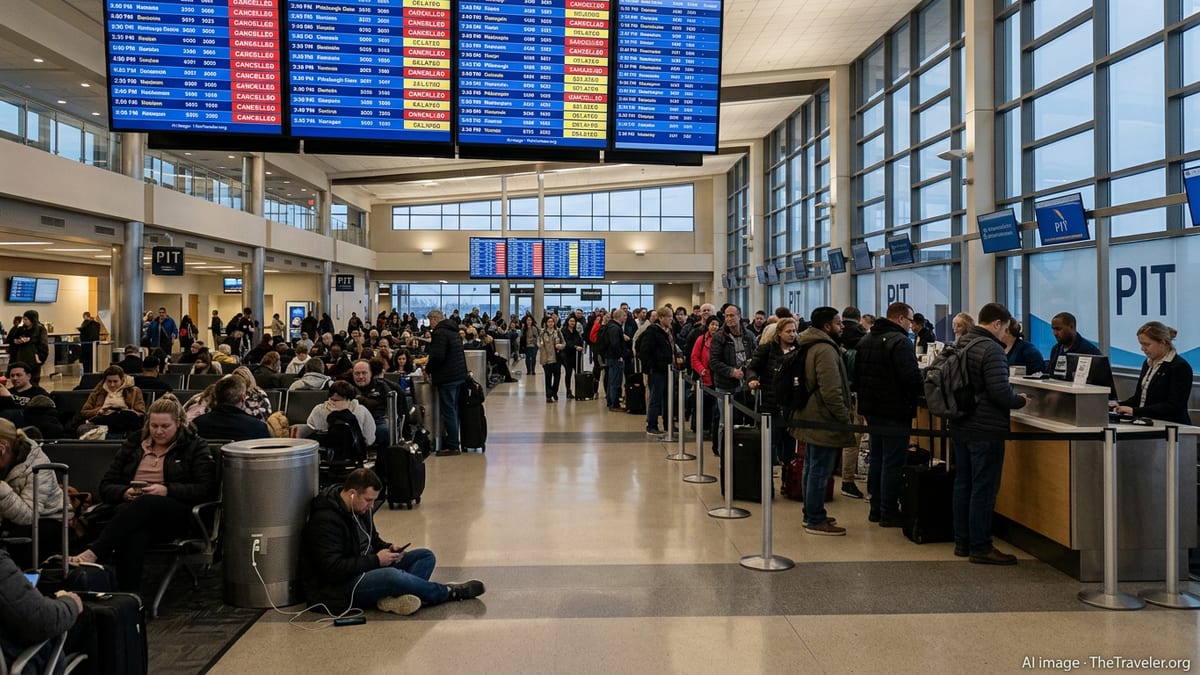
Winter Weather and Network Strain Hit Pittsburgh
The latest disruption comes as a powerful late-season winter system continues to strain airline operations across the United States, with carriers preemptively trimming schedules and struggling to reposition aircraft and crews. While the storm’s worst impacts have been concentrated at major hubs, smaller and mid-sized airports such as Pittsburgh International are bearing the brunt of rolling knock-on effects as connections misalign and aircraft arrive out of sequence.
On Thursday, Pittsburgh’s departure boards showed 13 flight cancellations and around 80 delays tied chiefly to Delta and its regional affiliates, along with a scattering of schedule changes by other carriers. Many of the affected services were short-haul links feeding larger hubs, a pattern that amplified disruption for travelers attempting to connect onward to cities including New York, Chicago, Dallas and Miami.
Airport officials urged travelers to arrive early, keep a close eye on airline alerts and be prepared for last-minute gate and timing changes. With de-icing operations still in use and air traffic control programs slowing departures in several regions, even flights listed as “on time” in the morning were vulnerable to cascading delays by afternoon.
Delta, Republic and GoJet Cancel Regional Links
Delta’s schedule at Pittsburgh relies heavily on code-share operations with regional carriers Republic Airways and GoJet, which operate smaller jets on feeder routes under the Delta Connection brand. When those regional flights cancel, passengers quickly lose access to crucial early-morning and late-evening connections into hub airports such as New York, Atlanta and Detroit.
On Thursday, the 13 cancellations recorded at Pittsburgh were dominated by regional services, including multiple departures bound for major hubs where weather and ground delays were already constraining arrivals. The cancellations forced many travelers onto later flights that were themselves delayed, or onto connecting itineraries through alternative hubs already coping with heavy traffic and reduced margins in the wake of the storm.
For travelers, the regional nature of the disruption meant that a single scrubbed 90-minute hop could upend long-haul and multi-city itineraries. Families bound for Florida cruises via Miami, business travelers heading to late-afternoon meetings in Chicago, and students returning to campuses in the Northeast all found themselves suddenly hunting for scarce rebooking options at crowded service desks.
Ripple Effects Across New York, Chicago, Dallas and Miami
The impact of Pittsburgh’s cancellations stretched far beyond western Pennsylvania. Flights linking the airport to New York’s LaGuardia and John F. Kennedy airports, Chicago’s O’Hare, Dallas Fort Worth and Miami International were deeply enmeshed in a national traffic pattern already battered by days of weather-related constraints.
In New York and Chicago, congestion from earlier storms left airlines operating tight turnarounds and juggling aircraft assignments. When an incoming regional jet from Pittsburgh arrived late or not at all, downstream flights in both directions were vulnerable to delay as dispatchers scrambled to plug gaps in the schedule. Passengers arriving late into LaGuardia, for example, were often too late to make evening connections within the Northeast corridor, triggering a spike in overnight hotel requests and standby lists for early-morning departures.
At Dallas and Miami, the combination of weather, crew time limits and crowded ramp operations added further friction. A delayed Pittsburgh-originating flight into Dallas could push connecting departures beyond legal crew duty times, forcing last-minute cancellations that stranded travelers who had already made it most of the way to their destinations. For Miami-bound passengers from Pittsburgh, missed connections through hubs such as Atlanta or New York left them facing rebookings a day or more later during an already busy travel period.
Passengers Face Long Waits as Rebooking Options Shrink
Inside Pittsburgh International’s terminals, the human toll of the disruption unfolded in long lines at service counters, crowded gate areas and makeshift camps of passengers tethered to power outlets and phone chargers. With 80 flights showing some form of delay, even travelers whose departures were still scheduled felt compelled to remain close to their gates, wary that boarding could begin suddenly after hours of silence.
Some passengers reported spending much of the day attempting to rebook via airline apps only to find that alternative routings were sold out or offered arrival times well into the next day. Others recounted being rerouted through second- or third-choice hubs, adding hours and extra connections to journeys that would typically be nonstop or single-connection itineraries from Pittsburgh.
Families traveling with young children, elderly passengers and those with tight international connections were among the hardest hit, often requiring additional assistance that was in short supply as frontline staff tried to juggle operational updates, rebookings and a steady stream of questions from anxious travelers. Food outlets and seating areas near the most affected concourses remained crowded throughout the day, with many travelers reluctant to step away even briefly from departure boards that seemed to change by the minute.
Airlines Urge Flexibility as More Disruptions Possible
Airlines operating at Pittsburgh, including Delta and its regional partners, encouraged customers to utilize digital tools and self-service channels for the fastest access to rebooking options. Many carriers activated flexible travel policies, allowing customers whose flights were delayed or canceled to shift to alternate dates or nearby airports without change fees, subject to seat availability.
Travel experts said passengers departing in the coming days should anticipate lingering disruptions as airlines work through a backlog of displaced travelers and reposition aircraft and crews. Even if weather conditions improve over major hubs, the recovery period is expected to last beyond the immediate storm as carriers rebalance their networks and address maintenance and crew-rest requirements built up during the peak of the disruption.
For those planning to travel through Pittsburgh International, the advice remained sober but practical: monitor flight status frequently, build extra buffer time into itineraries, travel with essentials in carry-on bags and, where possible, secure refundable or flexible tickets. With 13 cancellations and dozens of delays in a single day serving as a stark reminder of how quickly conditions can change, travelers were once again reminded that even a relatively modest disruption at one airport can have outsized effects across the US air travel system.