

More news on this day
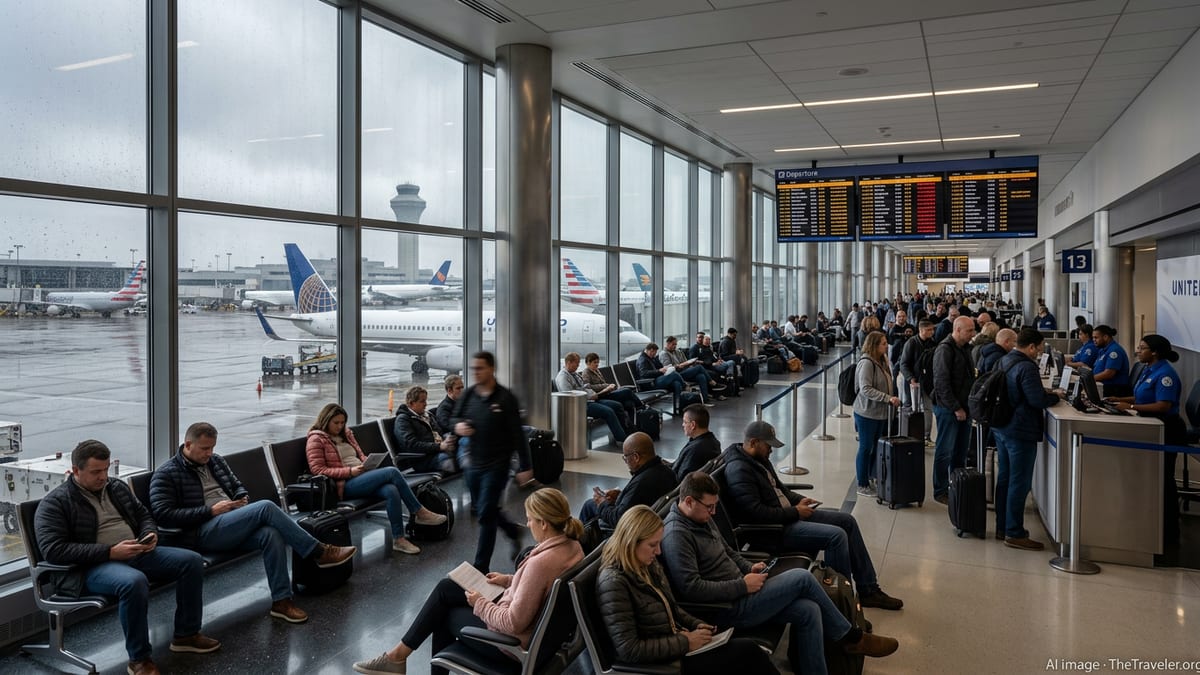
Travelers moving through Chicago O’Hare International Airport on Sunday faced mounting disruptions as 53 flight cancellations and around 490 delays rippled across domestic and long-haul routes linking the United States with Europe and the Middle East.
Thunderstorms and Low Ceilings Trigger Fresh Turbulence
The latest round of travel chaos follows a volatile stretch of Midwest weather, with thunderstorms, fog and low cloud ceilings repeatedly slowing operations at O’Hare in recent days. Ground stops and flow-control programs earlier in the weekend sharply reduced the rate at which flights could depart and arrive, forcing airlines to push back schedules and trim departures.
On Sunday, lingering operational knock-on effects rather than active storms were primarily to blame for the elevated disruption levels. After earlier thunderstorms pushed aircraft and crews out of position, airlines at O’Hare entered the new day with thinner buffers, meaning minor schedule slips quickly cascaded into widespread delays.
O’Hare, one of the world’s busiest hubs, is particularly vulnerable when severe weather hits because of its tight banked schedules and heavy connecting traffic. When storm systems linger over the Great Lakes or sweep through Illinois, the airport’s complex choreography of arrivals and departures can slow dramatically, and the backlog often takes a full day or more to clear.
Major Carriers Feel the Strain Across Their Networks
Regional carrier SkyWest was among the hardest hit, with cancellations and extended delays on routes it operates for major brands such as United, Delta and American. Because SkyWest links dozens of smaller U.S. communities into O’Hare’s global network, disruptions on its schedule reverberated well beyond Chicago and into secondary markets across the Midwest, Plains and Mountain West.
United Airlines, which maintains one of its largest hubs at O’Hare, reported a mix of scrubbed departures and rolling delays on both domestic services and transatlantic flights. Delta and American also contended with off-schedule operations as aircraft arriving late from other storm-affected hubs forced crews to turn planes around more quickly than usual or consolidate frequencies where demand allowed.
International carriers including Iberia and other European and Middle Eastern airlines were not immune. Long-haul aircraft arriving late into Chicago from overseas pushed back subsequent departures, while crews faced tighter duty-time limits. In several cases, flights to Europe and the Middle East were held on the ground in Chicago to wait for connecting passengers and baggage from delayed feeder services.
Transatlantic and Middle East Routes Hit as Connections Unravel
For travelers booked between the United States and major European gateways such as London, Madrid, Frankfurt and Paris, O’Hare’s disruption translated into misconnected itineraries and unexpected overnight stays. Passengers arriving late into Chicago from smaller U.S. cities frequently found that their onward flights had either closed boarding or been retimed, forcing rebookings onto later departures.
Services linking Chicago with Middle Eastern hubs also felt the pressure as long-haul schedules offered fewer same-day alternatives. Even when flights ultimately departed, many pushed back well behind schedule, with some passengers reporting waits of several hours at the gate while ground crews balanced connecting traffic, aircraft servicing and crew rest requirements.
These delays had knock-on consequences at the far end of the route. Late arrivals into Europe and the Middle East compressed connection windows for onward flights to Africa and Asia, effectively extending some journeys by half a day or more. Airline operations teams worked through the day to reroute affected travelers and secure seats on partner carriers where interline agreements allowed.
Passengers Face Long Queues, Rebookings and Limited Options
Inside O’Hare’s terminals, the disruption was most visible in the long lines at customer service counters and self-service kiosks as travelers sought new routes and fresh assurances. Families heading off on spring holidays and business travelers trying to reach Monday meetings joined the queues, scrolling through airline apps in search of alternate options before seats disappeared.
With 53 cancellations compressing demand onto remaining departures, spare capacity on popular domestic and international routes quickly tightened. Some passengers reported being rebooked onto flights 12 to 24 hours later than originally scheduled, while others opted to connect through alternative hubs such as Denver, Dallas or New York when seats via Chicago were no longer available.
Hotel desks near the baggage claim areas saw a spike in demand as stranded travelers weighed whether to wait out long delays in the terminal or overnight in the city. For many, the decision hinged on whether their rebooked departure left early Monday morning or later in the day, and on how quickly baggage could be retrieved from canceled flights.
Advice for Travelers Heading Through Chicago O’Hare
With delays still elevated, airlines are urging passengers traveling through Chicago to build in extra time, keep a close eye on flight status updates and, where possible, complete check-in and seat selection well before arriving at the airport. Travelers with tight connections through O’Hare are being advised to consider earlier feeder flights or, if allowed, to reroute via alternative hubs less exposed to the current disruption.
Industry analysts note that while Sunday’s figures are lower than the mass cancellations recorded at the height of recent storms, the combination of 53 cancellations and nearly 500 delays remains significant for a single hub. They warn that further weather systems crossing the central United States in the coming days could once again strain already stretched schedules.
For now, passengers set to transit Chicago O’Hare in the next 24 hours are being encouraged to monitor their airline’s app, enable push notifications and remain flexible with routing. As airlines continue to rebalance aircraft and crew across their networks, the situation may gradually stabilize, but many travelers will feel the ripple effects of this latest disruption cycle for at least another day.