

More news on this day
Travelers at Detroit Metro Wayne County Airport faced significant disruptions Saturday as more than 48 flights were canceled and over 160 delayed, with ripple effects across major U.S. cities including New York, Chicago, Philadelphia and Miami, according to live airport-status data and published coverage.
Get the latest news straight to your inbox!
Widespread Operational Disruptions Hit Key U.S. Routes
Publicly available flight-tracking boards for Detroit Metro Wayne County Airport on March 14 indicate an elevated level of cancellations and late departures compared with typical weekend traffic. The bulk of the disruption is concentrated among domestic routes, affecting multiple large hubs and popular city pairs that connect Detroit with the East Coast, the Midwest and Florida.
Delta Air Lines, the largest operator at the airport, appears to be bearing a substantial share of the schedule shakeup, while ultra-low-cost carrier Spirit Airlines and regional operator SkyWest are also registering notable irregular operations. Additional smaller carriers show scattered delays and cancellations, compounding the strain on already busy terminals as passengers attempt to rebook or reroute around the affected flights.
The disruptions are especially visible on flights linking Detroit with New York area airports, Chicago, Philadelphia and Miami, where delays are stretching from modest schedule slips to multi-hour holds. Travelers on morning and early afternoon departures are encountering rolling gate changes and revised departure times, while later flights are showing knock-on effects as aircraft and crew become out of position.
Published aviation data for early 2026 highlights how quickly issues at a major hub can cascade throughout an airline’s network. When Detroit experiences a wave of delays and cancellations, connecting traffic to and from secondary cities often suffers indirect impacts as carriers attempt to consolidate passengers onto fewer operating flights.
Weather, Crew Positioning and Network Recovery Challenges
Reports from recent days across the upper Midwest describe an active storm pattern and shifting forecasts, contributing to preemptive cancellations and tighter operating windows. While Detroit Metro is generally recognized in industry coverage for robust winter and shoulder-season operations, adverse conditions in other parts of the country can still disrupt the flow of aircraft and crews into and out of the airport.
Analyses of airline operations published this month point to several recurring drivers behind disruptions even when local skies appear clear. These include weather problems at other hubs, air traffic control initiatives in congested corridors, mechanical inspections and crew duty-time limits. When multiple factors coincide, carriers often move from individual delays to broader schedule “recovery” actions, which can include canceling flights in advance to free up aircraft and staffing for the remainder of the day.
Delta’s extensive domestic network means that weather or congestion at airports such as Atlanta or New York can reverberate through Detroit, forcing last-minute adjustments to departures bound for cities like Chicago, Philadelphia and Miami. Publicly available flight data and traveler reports in March 2026 underscore how rapidly a line of storms or a round of ground stops in one region can trigger late arrivals and missed connections in another.
For regional operators such as SkyWest, which fly under the banners of larger airlines, any mismatch between mainline schedules and regional operations can exacerbate bottlenecks. Industry explainers note that regional carriers often depend on tight aircraft rotations and limited spare capacity, making them particularly vulnerable when one leg in a chain of flights is delayed or canceled.
Traveler Impact: Missed Connections, Rebookings and Longer Travel Days
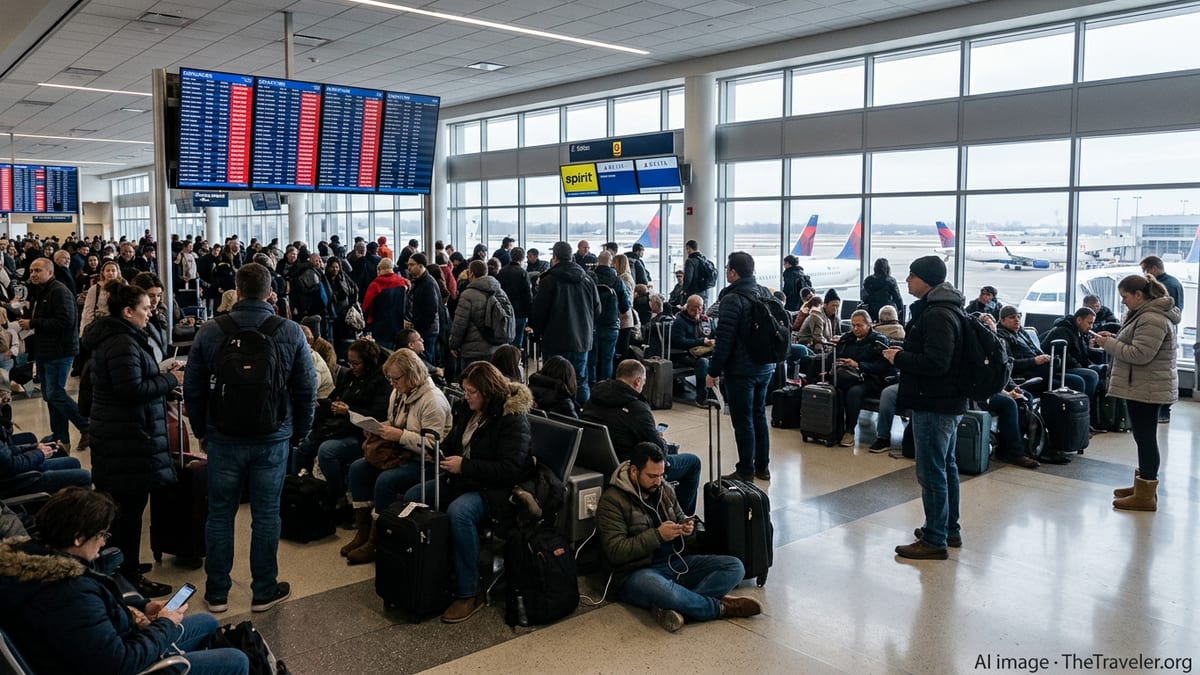
For passengers, the immediate consequences at Detroit Metro are showing up as crowded gate areas, longer lines at customer-service counters and a scramble for alternative itineraries. People booked on early flights to New York, Chicago, Philadelphia and Miami are contending with the possibility of missed afternoon meetings, events and cruise or tour departures, as their original itineraries unravel.
Recent consumer-focused coverage of airline delays highlights how missed connections can quickly turn a short hop into a full-day journey. A 30- or 60-minute delay out of Detroit can mean missing a narrow domestic connection window elsewhere, forcing travelers onto evening departures or overnight stays. On days with heightened disruptions, same-day rebooking options can be limited, especially on heavily traveled routes.
At the same time, not all disruptions are immediately visible in airline apps. Technology analyses published this month describe systemic lags in how delay and cancellation information flows from operational systems to passenger-facing notifications. That can leave travelers learning of significant schedule changes only after they have already arrived at the airport or passed through security, adding to frustration and reducing the time available to adjust plans.
For those flying on low-cost carriers such as Spirit, seating flexibility may be constrained because of fuller aircraft and fewer daily frequencies on some routes. This can make it harder to secure same-day alternatives to or from Detroit when a flight is canceled outright, particularly to leisure-heavy destinations like Miami or other Florida gateways.
How Airlines Are Managing the Disruptions
Airline operations teams appear to be leaning on a mix of preemptive and same-day schedule changes to stabilize Detroit operations. Recent industry reporting on major U.S. carriers indicates that pre-canceling a portion of flights in anticipation of weather or staffing issues can reduce the number of stranded aircraft and crews later in the day, even though it creates immediate inconvenience for affected passengers.
For a carrier with a large presence at Detroit, such as Delta, this can involve strategically cutting select frequencies on routes with multiple daily departures to cities like New York, Chicago or Atlanta. By consolidating passengers onto remaining flights, airlines can free up aircraft and crews to protect long-haul or high-priority services, including flights feeding international connections.
Regional partners like SkyWest typically coordinate closely with mainline airlines on these decisions, since their aircraft and crews are assigned to specific branded networks. When a mainline carrier adjusts its hub schedule, regional feeders into that hub often see parallel revisions, leading to cancellations or time changes on shorter routes that connect smaller cities with Detroit.
In the case of ultra-low-cost carriers, schedule recovery can look different. Publicly accessible analyses of the sector note that point-to-point networks have fewer backup aircraft and less redundancy. As a result, a single mechanical issue or crew-scheduling complication on a Spirit flight into Detroit can have outsized effects on the next sectors for that aircraft, especially late in the day.
What Affected Travelers Can Do Now
Travel and aviation advisories issued in early 2026 consistently encourage passengers flying through major hubs on disrupted days to monitor their flight status closely and use multiple information sources. Checking airline apps and websites, along with airport departure boards and independent flight-tracking tools, can provide a more complete picture of delays and potential rebooking options.
Experts in consumer travel guidance recommend that Detroit-bound and Detroit-originating travelers look ahead at connecting flights and backup routings before arriving at the airport. When cancellations and long delays appear likely, same-day alternatives may be available through different hubs or at different times of day, but they often disappear quickly as more passengers seek changes.
Some published advice also emphasizes the value of proactive communication with airlines during irregular operations. Rebooking tools on airline websites and apps can sometimes secure seats on alternative flights faster than waiting in line at an airport counter. At the same time, travelers are encouraged to review their tickets and travel insurance for provisions related to extended delays, overnight stays and missed connections.
With Detroit Metro Wayne County Airport experiencing elevated cancellations and delays across multiple carriers, passengers heading to or from New York, Chicago, Philadelphia, Miami and other key U.S. cities may face longer and less predictable journeys. Planning extra time, keeping itineraries flexible where possible and closely tracking live updates remain essential steps for navigating the current wave of disruptions.