

More news on this day
Spring travelers at Newark Liberty International Airport faced fresh uncertainty this weekend as a cluster of nine flights operated by Spirit Airlines, Delta Air Lines, Alaska Airlines and United Airlines was suspended amid a wider web of delays stretching to Houston, Austin, Los Angeles, Atlanta, Toronto and other major destinations across North America.
Get the latest news straight to your inbox!
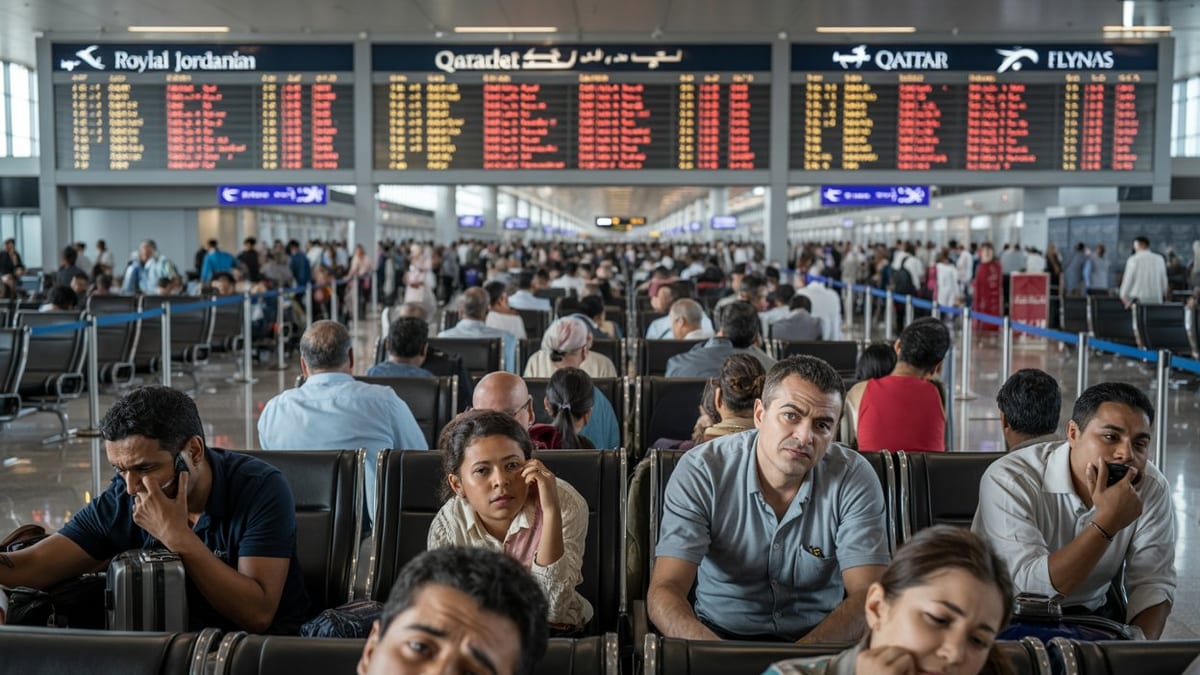
Targeted Flight Suspensions at Newark as Disruptions Mount
Publicly available flight-tracking tallies for early April indicate that Newark Liberty International Airport has again emerged as a pressure point in the national air-travel system, with nine departures and arrivals involving Spirit, Delta, Alaska Airlines and United suspended in a single operating window. These targeted cancellations come on top of dozens of delayed movements, underscoring how vulnerable the New York-area hub remains when storms, staffing constraints and airspace flow programs converge.
Operational data reviewed from airline and airport dashboards show that the suspended flights were largely short to medium haul services connecting Newark with other major hubs. Carriers concentrated the cuts in time bands already hit by congestion and rolling delays, a strategy analysts describe as an attempt to preserve core bank structures while freeing up aircraft and crew for later rotations.
The decisions at Newark align with a broader pattern observed across the United States in recent days, in which airlines have opted to scrub a smaller number of flights outright while allowing a much larger group to operate with extended delays. Industry commentary suggests this approach can limit the number of passengers who need full rebooking, but it can also heighten uncertainty for travelers holding tight connections.
While nine suspended flights represent a small fraction of Newark’s daily schedule, the timing and destinations involved have amplified their impact. Many of the affected routes feed into high-demand domestic and transborder networks, meaning a single cancellation can ripple outward through multiple onward connections.
Ripple Effects for Houston, Austin, Los Angeles, Atlanta and Toronto
According to aggregated disruption statistics published over the first days of April, Houston, Austin, Los Angeles, Atlanta and Toronto are among the cities feeling the downstream impact of Newark’s constrained operations. These airports were already contending with their own weather and staffing challenges, leaving limited slack in the system when an upstream hub trims capacity or suffers extended ground delays.
Recent nationwide tallies compiled by aviation and travel outlets point to hundreds of cancellations and several thousand delays across the United States as spring storms swept over Texas and the Southeast, while low clouds and construction projects slowed operations at other hubs. In that context, each Newark suspension touching key markets such as Houston or Los Angeles adds incremental strain, especially on days when passenger loads remain at or above pre-pandemic levels.
In Texas, publicly available data show both Houston George Bush Intercontinental Airport and Austin-Bergstrom International Airport logging notable numbers of delays and a smaller set of cancellations in the latest disruption cycle. Flights linking those cities with Newark have been among those affected, contributing to missed connections for travelers heading onward to the Northeast, Midwest and international destinations.
To the west, flights between Newark and Los Angeles have been caught at the intersection of two challenged hubs. Los Angeles International Airport has endured steady waves of late departures in recent days, according to travel-industry reporting, as weather systems and traffic management programs constrained arrivals from multiple regions. When Newark-originating services into Los Angeles encounter additional delays or cancellations, passengers can find it more difficult to secure same-day alternatives on already crowded transcontinental routes.
Canada and the Northeast Feel the Strain
Newark’s role as a key gateway to Canada and the broader Northeast has also sharpened the impact of the latest disruptions. Connections to Toronto Pearson International Airport feature prominently in recent delay and cancellation tallies, reflecting both direct Newark services and itineraries routed through other congested hubs such as Chicago and Boston.
Travel and aviation outlets tracking the early April turmoil report that Toronto-bound flights from multiple U.S. cities have faced knock-on disruptions as aircraft and crew rotations fell out of sync. For itineraries beginning or ending at Newark, a suspended or heavily delayed sector can jeopardize same-day cross-border connections, particularly in peak afternoon and evening periods when schedules are densest but standby options are limited.
Within the U.S. Northeast corridor, the turbulence at Newark has come on the heels of elevated delay counts at New York’s other major airports, including LaGuardia and John F. Kennedy. Coverage of recent performance metrics notes that the broader New York airspace has been operating under sustained stress, exacerbated by a prolonged federal funding lapse that has affected staffing levels in some security and air-traffic functions. In such an environment, even a modest number of targeted cancellations can quickly translate into longer queues and busier customer-service desks.
For regional markets that rely heavily on Newark for connectivity, such as smaller cities in New England and the Mid-Atlantic, the latest disruption wave has reinforced concerns about schedule reliability during the volatile spring weather season. Travel advisers note that these communities may have only a handful of daily departures to a major hub, meaning a single suspended flight can wipe out time-sensitive business or leisure plans.
Airlines Balance Operational Stability and Customer Impact
The cluster of suspensions involving Spirit, Delta, Alaska Airlines and United at Newark reflects diverging network strategies that converge at a shared challenge: how to maintain operational stability when weather, staffing and infrastructure constraints collide. Publicly available on-time performance data for recent months show that some carriers have expanded schedule buffers and reduced peak-hour flying at congested airports, while others have leaned more heavily on rolling delays instead of larger waves of outright cancellations.
Analysts observing the latest disruption period suggest that low-cost and network carriers alike are recalibrating their playbooks. Spirit and Alaska, with comparatively smaller Newark footprints, appear to be focusing on protecting their most profitable or strategically important routes when conditions deteriorate. Delta and United, each with broader exposure at the hub and across the New York area, face more complex decisions as they weigh hub bank integrity, crew duty limits and aircraft positioning.
Reports from aviation-data firms indicate that nationwide cancellation totals have remained lower than some peak disruption events of recent years, even as delay counts once again reach into the thousands. This pattern is visible in the Newark figures, where a limited number of canceled flights can still correspond to a much larger pool of late departures and arrivals that push crews closer to regulatory duty-time ceilings.
The tactics carry trade-offs for passengers. Fewer cancellations can mean more travelers ultimately reach their destination on the same day, but the experience may involve extended tarmac waits or hours-long connection gaps. At tightly banked hubs such as Newark, a delayed arrival from Houston or Atlanta can quickly cascade across a network if the same aircraft is scheduled to continue to Toronto, Los Angeles or another long-haul destination.
What Travelers Can Expect in the Coming Days
Travel forecasters and industry observers caution that the conditions driving Newark’s latest turmoil are unlikely to resolve immediately. Seasonal storm patterns in the central and eastern United States typically remain active through April, and ongoing construction and airspace management initiatives at several major hubs continue to limit flexibility when surprise weather cells emerge.
In practical terms, travelers booked on Spirit, Delta, Alaska Airlines or United through Newark in the coming days may continue to see schedule adjustments, particularly on routes linking the airport to other busy hubs such as Houston, Austin, Los Angeles, Atlanta and Toronto. Schedules published in advance can shift on relatively short notice as airlines respond to updated forecasts, crew availability and changing ground-delay programs.
Consumer-focused travel publications consistently recommend that passengers build extra time into itineraries connecting through Newark and other congestion-prone hubs, especially when international segments are involved. Advisers also encourage travelers to monitor airline apps and third-party tracking tools closely on the day of departure, since rebooking options tend to be more plentiful earlier in the disruption cycle.
For now, the nine suspended flights at Newark serve as a pointed reminder of how quickly strain at a single hub can spread outward across national and transborder networks. With passenger demand still running high and operational margins thin, even localized disruptions can leave travelers from Houston to Toronto navigating last-minute gate changes, rolling departure times and the unwelcome prospect of unexpected overnight stays in already crowded terminals.