

More news on this day
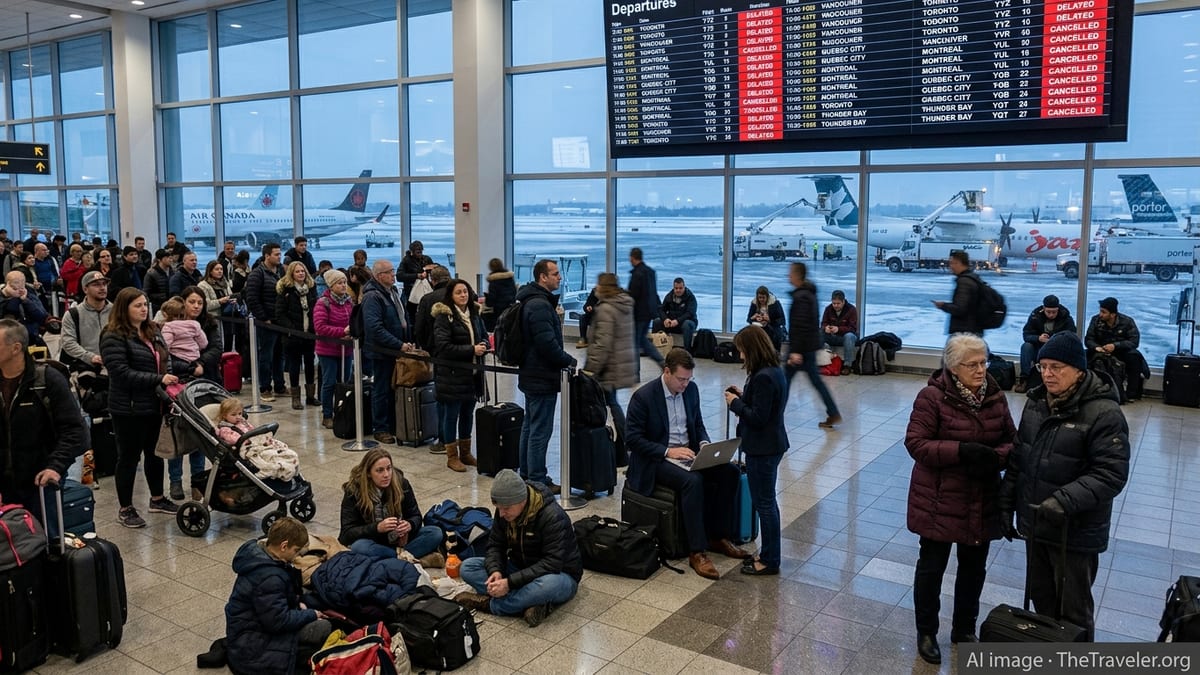
Hundreds of airline passengers across Canada are facing long waits and disrupted travel plans after a new round of winter weather and operational constraints triggered dozens of cancellations and hundreds of delays at major hubs including Toronto, Vancouver and Montreal, as well as smaller centers such as Quebec City and Thunder Bay.
Get the latest news straight to your inbox!
Fresh Disruptions Across Canada’s Busiest Airports
Publicly available flight-tracking data and airport status boards on Thursday indicate that at least 35 additional flights were cancelled and more than 370 departures and arrivals delayed across Canada’s major gateways. The latest disruption is concentrated at Toronto Pearson, Vancouver International and Montreal–Trudeau, but knock-on effects are also visible at airports in Quebec, Thunder Bay and other regional centers.
Air Canada, WestJet, Jazz, Porter and several smaller carriers are all listed among the operators affected, with a mix of domestic and transborder routes impacted. The pattern reflects a broader trend this winter in which storms, low visibility and ground-handling constraints have combined to limit capacity on some of the country’s most heavily used corridors.
Operational data and recent weather summaries suggest the current wave of disruption is tied to the same unstable pattern that has already produced several major winter storms across North America in 2026. Earlier systems brought record or near-record snowfall to Toronto and other parts of southern Ontario, contributing to repeated slowdowns in airport operations and extended recovery periods once runways and taxiways were cleared.
In the latest episode, flight boards at the busiest Canadian hubs show clusters of delayed departures during early morning and late afternoon peaks, when air traffic and de-icing demands are highest. As aircraft and crews fail to arrive on time from earlier segments, subsequent services are pushed back or cancelled, stranding passengers far from their intended destinations.
Air Canada, WestJet, Jazz and Porter Under Pressure
Major Canadian airlines are again bearing the brunt of the disruption. Schedules show Air Canada cancelling and delaying a significant number of flights touching Toronto, Vancouver and Montreal, while WestJet, regional affiliate Jazz and expanding competitor Porter are also reporting interrupted services. The carriers are balancing safety requirements related to winter conditions with the limits of available aircraft, crew and ground resources.
Recent publicly available documents about this winter’s operations highlight how a combination of severe weather, staffing challenges and tight scheduling has left little margin for error. When storms or cold snaps roll through key hubs, the resulting chain reaction can quickly ripple across national networks, affecting travelers on routes that are not directly in the path of heavy snow or freezing rain.
Industry analyses published in recent weeks indicate that on-time performance for several North American carriers, including major Canadian brands, has fallen compared with typical winters. Canadian operators have been especially exposed because many of their core routes pass through airports that have repeatedly activated major snow-response plans and ground-delay programs since January.
According to recent regulatory and industry reports, airlines are also navigating evolving passenger-protection obligations. Past enforcement actions and policy debates have put a spotlight on how carriers communicate with travelers about delays, provide rebooking options and handle hotel or meal support when disruptions stretch overnight, particularly when the cause is within airline control rather than weather-related.
Passengers Stranded from Vancouver to Thunder Bay
The latest round of cancellations and delays has translated into crowded terminals and strained patience from the Pacific Coast to northern Ontario. Social media posts and traveler reports describe passengers sleeping in chairs or on the floor at Toronto Pearson and Vancouver International as they wait for rebooked flights, with some facing missed connections to smaller communities served by limited daily frequencies.
In Montreal and Quebec City, delayed inbound aircraft have led to disrupted connections to Atlantic Canada and regional Quebec destinations. Thunder Bay and other mid-sized airports are experiencing their own challenges as flights arriving late from Toronto or other hubs force schedule adjustments, sometimes leaving travelers with extended layovers or unexpected overnight stays.
Publicly available information from airport authorities and aviation observers suggests that airlines are attempting to consolidate lightly booked services, reroute passengers through alternative hubs and, in some cases, upgauge aircraft to move more people once weather windows open. However, the finite number of available seats, particularly to smaller communities, means that some travelers are being rebooked one or more days after their original departure date.
Transport and consumer-advocacy information resources continue to advise affected passengers to check flight status frequently, use airline apps or self-service tools when possible, and keep receipts for out-of-pocket expenses. With many flights categorized as affected by weather or air traffic constraints, compensation and support obligations can vary, adding another layer of complexity for stranded travelers trying to understand their options.
Weather, Ground Operations and Tight Schedules Converge
Meteorological summaries for this winter season describe a series of powerful storm systems and extended cold spells sweeping across large parts of Canada. These conditions have repeatedly slowed ground operations at major airports, limiting the number of flights that can safely depart and arrive in given time windows. Heavy snow, strong winds, freezing rain and low visibility all contribute to ground stops, runway closures or reduced arrival rates.
Even when skies clear, the aftermath of a storm can linger. Runways and taxiways must be fully cleared, de-icing pads experience backlogs and ground crews work in difficult conditions, sometimes at reduced staffing levels. In these periods, airlines often pare back schedules to create buffers, focusing on key trunk routes and trimming lower-priority or more delay-prone segments.
Industry commentary this season has also emphasized how interconnected modern airline networks have become. A storm or operational slowdown at one major hub can affect flights thousands of kilometres away as aircraft and crews fail to position where they are needed for subsequent legs. For Canadian travelers, that means a weather event in Toronto or Montreal can ultimately disrupt flights in cities such as Vancouver, Quebec City or Thunder Bay, even if local conditions appear relatively calm.
Observers note that airlines are increasingly using data tools to decide which flights to cancel preemptively in order to preserve the reliability of the remaining schedule. While this approach can reduce last-minute chaos and allow some passengers to adjust plans in advance, it also results in more people learning days ahead of time that they will need to be rebooked or rerouted.
What Travelers Can Expect in the Coming Days
With winter weather patterns still active across much of Canada, aviation analysts expect continued volatility in flight operations over the coming days. While the scale of cancellations and delays may fluctuate, travelers using Toronto, Vancouver and Montreal as gateways are being urged by widely shared travel advisories and consumer guides to allow extra time, build flexibility into itineraries and avoid tight connections where possible.
Publicly available guidance from airlines and airports stresses the importance of monitoring flight status up to departure, checking in online and ensuring contact information is current so that rebooking notifications can be delivered quickly. Many carriers are also promoting self-service rebooking tools during mass disruption events, though these options can become congested during peak periods.
Travel-planning resources recommend that passengers keep essential items such as medication, chargers and a change of clothes in carry-on baggage in case they are separated from checked luggage during an unplanned overnight stay. For those flying to or from smaller communities that rely on a limited number of daily services, experts suggest considering earlier departures in the travel window to preserve backup options if the first flight is cancelled.
As Canadian airlines, airports and regulators continue to assess this winter’s operational record, the latest disruptions underline the ongoing vulnerability of tightly scheduled networks to extreme weather and resource constraints. For travelers, the immediate priority remains navigating a patchwork of cancellations and delays that have left hundreds temporarily isolated in terminals from Vancouver to Montreal and beyond.