

More news on this day
Passengers traveling through CFB Goose Bay in Newfoundland and Labrador are facing prolonged disruption after a cluster of delays and cancellations stranded travelers on regional links to St. John’s and major hubs including Halifax, Montreal and Toronto.
Get the latest news straight to your inbox!
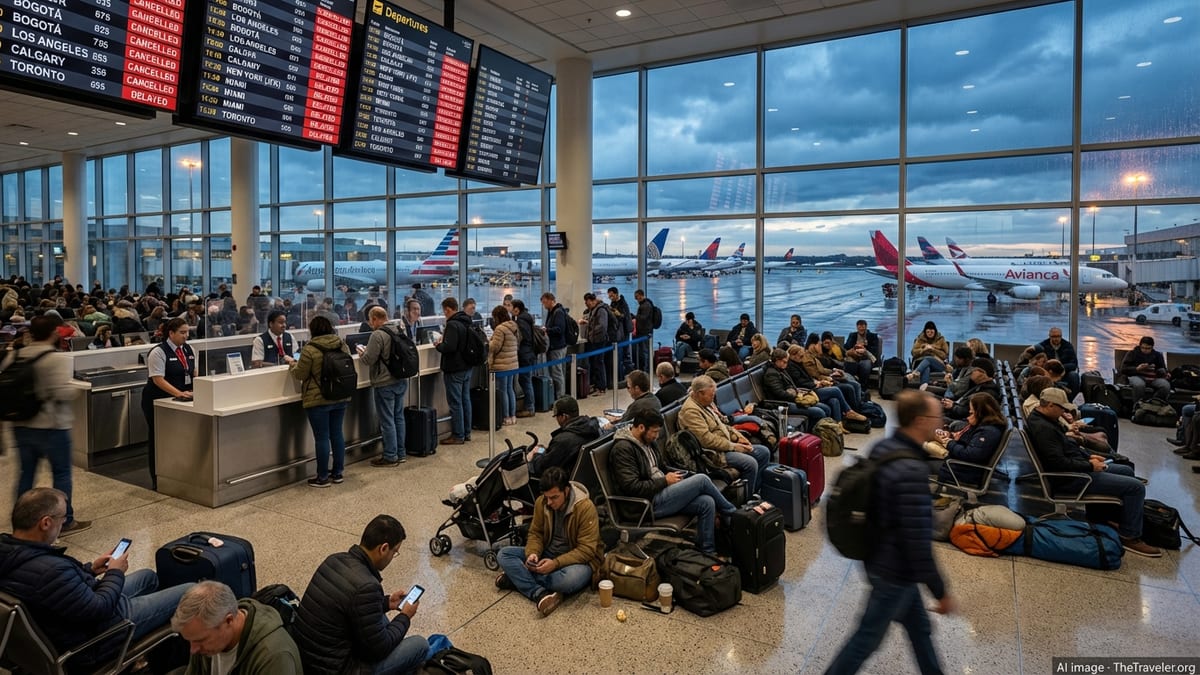
Wave of Delays and Cancellations Hits Remote Labrador Hub
Reports from aviation tracking platforms and regional travel coverage indicate that operations at Goose Bay have been severely curtailed, with at least eight departures and arrivals delayed and six flights canceled. The disruptions are affecting a mix of regional and national routes, cutting direct links between central Labrador and key connection points across Atlantic Canada and central Canada.
Air Borealis and PAL Airlines, the primary commercial operators serving Goose Bay, appear to be among the most heavily impacted. Both carriers play a central role in linking Labrador’s remote communities with St. John’s and Halifax, while also feeding passengers into larger networks that reach Montreal, Toronto and beyond. When schedules contract at Goose Bay, options for stranded travelers rapidly diminish, particularly during busy travel periods.
The problems at Goose Bay are unfolding against a broader backdrop of flight disruption across Canada in early April, where winter weather lingering into spring has already produced significant systemwide delays and cancellations. Recent national tallies have highlighted hundreds of affected flights at major hubs, with regional operators such as PAL Airlines frequently mentioned among those adjusting schedules.
Weather and Aircraft Positioning Complicate Recovery
Publicly available weather data for Newfoundland and Labrador this week shows periods of snow, low cloud and gusty winds, conditions that can quickly trigger delays at smaller airports with limited runway and de-icing infrastructure. As has been observed in other Canadian cities during recent storms, deteriorating visibility and slick surfaces can force temporary ground stops, compress departure banks and disrupt crew duty plans.
Once initial flights are delayed or canceled, aircraft and crews may fall out of position, particularly on thinner routes typical of Labrador and coastal Newfoundland. Industry analysis of similar disruption events across Canada this month notes that knock-on effects from storms at busier hubs can ripple outward to regional airports. When aircraft destined for Goose Bay are held or diverted elsewhere, subsequent legs to St. John’s, Halifax, Montreal or Toronto may be postponed or removed from the schedule entirely.
In smaller markets, the recovery window can be lengthy. Unlike large hubs that can sometimes draw on spare aircraft, Goose Bay depends on tightly scheduled turboprop and regional jet operations. If one or two aircraft are delayed by many hours, or a crew reaches its regulated duty limit before operating a final leg, the result can be the cancellation of multiple flights and an overnight backlog of passengers with few alternative options.
Stranded Travelers Face Limited Alternatives and Full Flights
The combination of canceled flights and constrained seating on remaining services has left many passengers at Goose Bay facing extended waits. Travel reports from other Canadian airports in recent days describe similar patterns, with scarce empty seats as airlines contend with one of the busier travel windows of the year and tight fleet utilization across their networks.
At a remote gateway such as Goose Bay, where road and ferry alternatives are limited or impractical for reaching St. John’s or mainland hubs, travelers often rely entirely on air links. When multiple departures are removed from the schedule in quick succession, same-day rebooking may not be possible, and passengers can find themselves waiting until the next available flight with open seats, sometimes 24 hours or more later.
Regional carriers serving Labrador have previously highlighted the essential nature of air service for residents, businesses and medical travel. Disruptions of the scale now reported at Goose Bay can therefore have knock-on social and economic impacts, from missed specialist appointments in St. John’s to interrupted cargo and mail deliveries along the Labrador coast.
What Passengers Can Expect From Carriers
According to publicly available tariffs from Air Borealis and PAL Airlines, as well as widely cited consumer guidance on Canadian air passenger rules, travelers affected by delays or cancellations are generally entitled to rebooking or refunds, with the specifics depending on the cause of the disruption and the type of ticket purchased. When weather is responsible, airlines are typically required to provide assistance and a new itinerary, although cash compensation is often excluded.
Recent guidance on flight disruptions in Canada stresses that, in cases where flights are canceled close to departure and passengers are already at the airport, carriers commonly provide basic support such as meals, access to communications and, in some cases, hotel accommodation if an overnight stay becomes unavoidable. The exact level of care can vary by airline, routing and the degree to which the disruption is considered within or beyond the carrier’s control.
Travel analysis of recent nationwide disruption events also suggests that many airlines have been issuing flexible change policies, allowing customers to adjust travel dates without standard change fees. For passengers at Goose Bay, such measures may help some travelers voluntarily shift itineraries away from the worst-affected dates, slightly easing pressure on heavily booked rescue flights.
Broader Strain on Canada’s Regional Aviation Network
The situation at Goose Bay underscores the fragility of regional air networks in Canada when confronted with prolonged spells of severe weather and congested schedules. National coverage this month has pointed to more than 400 to 900 affected flights on individual storm days, with Toronto, Montreal and Halifax among the hardest hit. As those hubs struggle to recover, their regional spokes, including Goose Bay, often experience amplified disruption.
Observers following these patterns note that regional carriers like PAL Airlines can find it especially difficult to maintain reliability when operating in harsh climates with small fleets and long, sparsely populated routes. Any single aircraft removed from service by weather, maintenance or crew constraints can affect a chain of communities across Atlantic Canada.
For now, passengers at CFB Goose Bay are advised by published travel advisories and consumer advocates to monitor flight status frequently, remain in close contact with their airline, and make use of rebooking and refund options where available. With weather forecasts across eastern Canada still signaling unsettled conditions, further short-term disruption remains possible on routes linking Goose Bay with St. John’s, Halifax, Montreal and Toronto.