

More news on this day
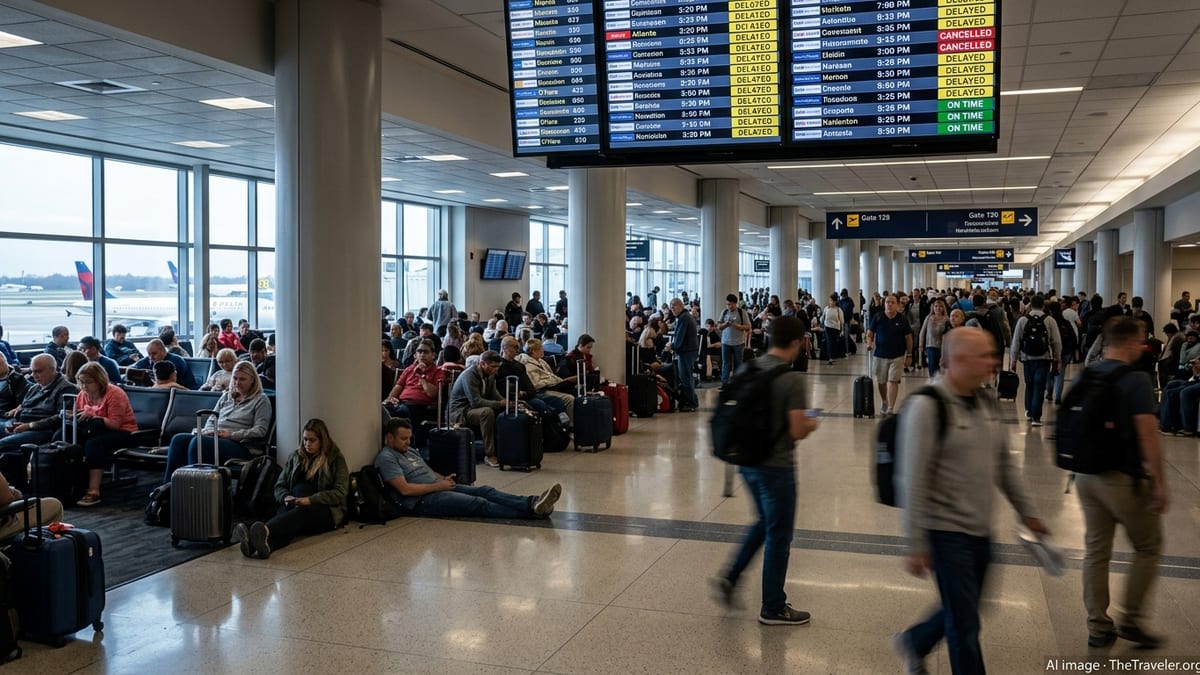
Hundreds of air travelers across the United States faced extended delays and unexpected overnight stays as nearly 50 flights were canceled and more than 460 delayed at major hubs in Atlanta, New York, and Chicago, according to real-time flight tracking data and published reports on Thursday, March 19, 2026.
Get the latest news straight to your inbox!
Severe Weather and a Stressed System Snarl Flight Operations
The latest disruptions come on the heels of a powerful mid-March storm system that swept across large parts of the country this week, bringing blizzard conditions to the Upper Midwest and high winds and thunderstorms to the East and Southeast. Publicly available information from meteorological services and news coverage links this broader weather pattern to days of cascading delays at key airports.
Hartsfield-Jackson Atlanta International Airport, John F. Kennedy International Airport, LaGuardia Airport, and Chicago O’Hare International Airport all saw elevated disruption levels as the system moved east and gradually weakened. Flight-tracking dashboards on Thursday showed a combined total of 49 canceled flights and 468 delays associated with operations at these four hubs alone, affecting travel plans nationwide as aircraft and crews fell out of position.
While the number of cancellations is lower than peak disruption earlier in the week, the timing coincides with the busy March travel period, when spring break trips and major sporting events increase passenger volumes. The combination of lingering weather effects, congested airspace, and already high demand amplified the impact on individual travelers trying to move through Atlanta, New York, and Chicago.
Industry and government data show that weather remains the dominant cause of significant delays across the National Airspace System, and the events of recent days reflect that pattern. Strong crosswinds, low visibility, and thunderstorms all led to traffic management initiatives that slowed takeoffs and landings, reducing capacity at some of the nation’s most important hubs.
Atlanta, New York, and Chicago Bear the Brunt
At Hartsfield-Jackson in Atlanta, widely recognized as the world’s busiest airport by passenger volume, operations have been recovering from repeated disruptions since the start of the week. Published coverage notes that thousands of flights into and out of Atlanta have been canceled or delayed in recent days as storms and staffing pressures converged. On Thursday, the airport was still reporting a significant number of delayed departures and arrivals, reflecting residual congestion in both the terminal and on the airfield.
New York’s John F. Kennedy International Airport and LaGuardia Airport experienced their own waves of disruption as high winds and low clouds moved through the region. Air traffic control programs imposed to manage safety in these conditions often require increased spacing between aircraft, which in turn slows the rate of departures and arrivals. This ripple effect contributes to delays that can extend for hours, even after the most intense weather has passed.
In Chicago, O’Hare International Airport continued to grapple with the aftermath of earlier storms in the Midwest, which brought heavy snow and gusty winds to the region. According to flight-tracking data and local reporting, O’Hare has faced periodic ground delays and cancellations over multiple days, with airlines still working to re-align aircraft rotations and crew schedules on Thursday.
Because all four airports serve as major domestic and international hubs, problems at these locations quickly spread through the broader network. Flights elsewhere in the United States may be delayed even in clear skies if their aircraft or crew are arriving late from Atlanta, New York, or Chicago.
Hundreds of Travelers Left Stranded or Re-Routed
The cumulative effect of 49 cancellations and 468 delays across these hubs on Thursday left hundreds of travelers stranded overnight or facing substantial re-routing. Social media posts and firsthand accounts describe passengers sleeping in gate areas, navigating long customer service lines, and scrambling for scarce hotel rooms in airport-adjacent districts.
In Atlanta, travelers reported ongoing backlogs from earlier cancellations, with some rebooked flights already heavily delayed before boarding. At New York airports, passengers described rolling departure times that shifted repeatedly as weather-driven traffic restrictions were updated throughout the day. In Chicago, travelers referenced prolonged waits on the tarmac and crowded terminals as airlines attempted to work through the queue of delayed flights.
These local experiences align with broader transportation data showing that a relatively small number of canceled or heavily delayed flights can affect a much larger population of passengers. When disruptions occur at banks of connecting flights, missed connections can multiply quickly, stranding travelers far from their intended destinations.
Published analyses of recent travel seasons indicate that passengers without flexible tickets or elite status may be especially vulnerable to extended disruptions, as available seats on later flights fill quickly. Once weather takes a hub far off its normal schedule, options for same-day alternative travel can narrow within hours.
Airlines Adjust Schedules As Recovery Continues
Airlines operating at Hartsfield-Jackson, JFK, LaGuardia, and O’Hare have been in recovery mode since earlier in the week, trimming schedules, consolidating lightly booked flights, and repositioning aircraft to restore normal rotations. Publicly available airline advisories show multiple carriers issuing weather-related travel waivers for affected regions, allowing some passengers to change itineraries without additional fees within specified date ranges.
Recovery operations on Thursday focused on clearing the most heavily backlogged routes and restoring reliability on core domestic connections. Some carriers reduced frequencies on select routes to create additional breathing room in schedules, especially at peak times when control towers and ramp operations were already running near capacity.
For some passengers, however, the recovery meant additional waiting. With limited spare aircraft and crews, even minor mechanical issues or staffing shortfalls risked triggering new delays. Industry reports note that staffing constraints at both airlines and security checkpoints can magnify the impact of poor weather, turning what might have been a brief disruption into a multi-day challenge.
Air traffic management programs issued for New York and Atlanta earlier in the week also contributed to a staged recovery, as flights were metered into constrained airspace in order to maintain safety. This methodical approach improves predictability for operations but can lengthen individual delays while the system resets.
What Travelers Can Expect in the Coming Days
Looking ahead to the remainder of the week, weather forecasts point to gradually improving conditions for much of the country as the mid-March storm complex continues to dissipate. Aviation and meteorological data suggest that, barring new systems developing, the worst of the widespread weather-related disruption may be past.
However, the lingering effects of the recent cancellations and delays may still be felt for another day or more, particularly on heavily traveled routes that rely on tight connection banks at the four affected hubs. Airlines may continue to adjust schedules, swap aircraft, or reassign crews as they close remaining gaps created earlier in the week.
Travel analysts routinely advise passengers to monitor their flight status closely on days following major disruptions, arrive at the airport earlier than usual, and be prepared for schedule changes even after boarding. The recent events at Hartsfield-Jackson, JFK, LaGuardia, and O’Hare underscore how quickly conditions can change when weather, high demand, and operational constraints intersect.
For travelers planning to pass through Atlanta, New York, or Chicago in the coming days, publicly available information indicates a gradual return to more typical operations. Even so, the experience of hundreds of stranded passengers this week serves as a reminder that these critical hubs remain highly sensitive to severe weather and system-wide strain, with relatively small disturbances capable of rippling across the national air travel network.