

More news on this day
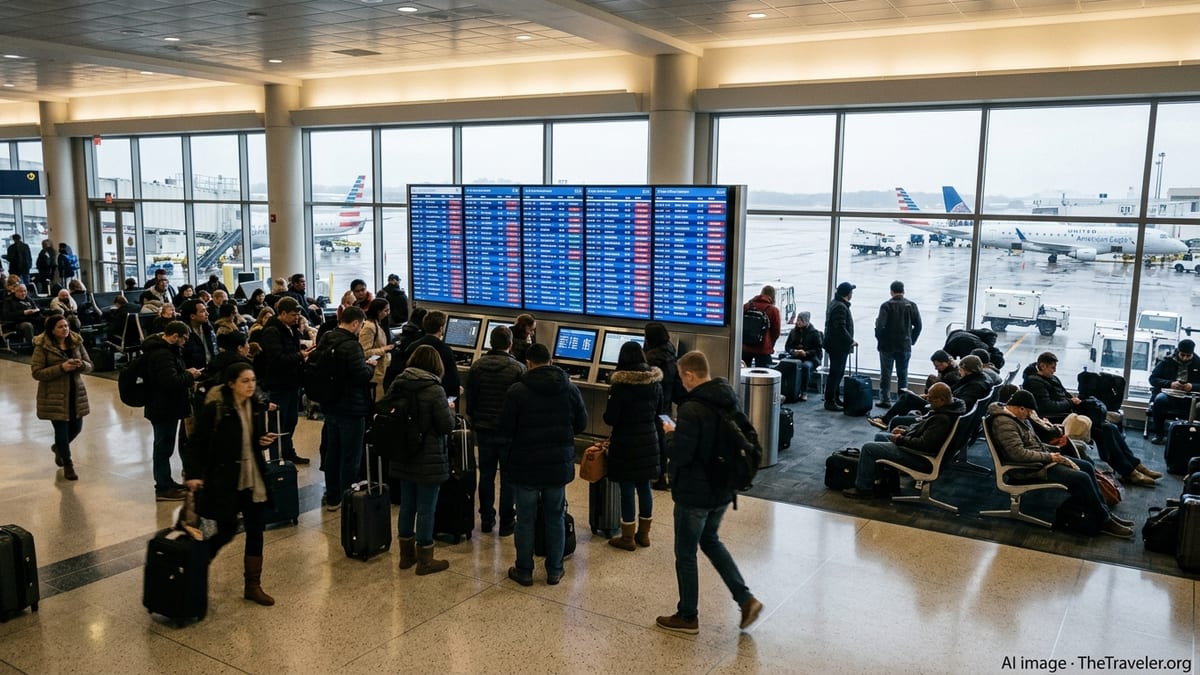
Travelers moving through Ronald Reagan Washington National Airport on Thursday faced a cascade of disruptions, with more than 120 delays and multiple cancellations rippling across flights to New York, Boston, Philadelphia and other major U.S. cities.
Get the latest news straight to your inbox!
Storm’s Ripple Effect Hits Key Northeast Corridors
Flight status boards at Reagan National showed a dense pattern of late departures across much of the day, with regional carriers PSA Airlines and Jazz, along with American Airlines and other domestic operators, posting dozens of delayed services. Publicly available tracking data indicated that more than 120 flights were pushed back and at least four were canceled on routes connecting Washington to New York, Boston, Philadelphia and several large Midwest and Southern hubs.
The disruption followed a stretch of severe winter weather that has unsettled air travel across the Northeast and Mid Atlantic during late winter 2026. Recent storms have triggered widespread ground stops, de-icing backlogs and runway capacity constraints at major hubs, leaving downstream airports such as Reagan National vulnerable to rolling schedule changes even after skies begin to clear.
As aircraft and crews rotated through storm-affected cities including Boston Logan, New York airports and Philadelphia, delays accumulated through the day at Reagan National. Flights that depended on inbound regional jets operated by American Eagle affiliates such as PSA or on codeshare services with Jazz arrived late or required additional time on the ground, contributing to missed departure windows and extended waits for passengers already at the gate.
Operational summaries shared by airlines and airport status dashboards showed that connections along the Northeast corridor were particularly hard hit. Shuttle-style services to LaGuardia, Newark and Boston, which typically support business and government travel, recorded some of the longest rolling hold times, while secondary routes to mid-sized markets in the Midwest and Southeast also experienced knock-on effects.
Passengers Face Hours-Long Waits and Limited Options
For travelers at Reagan National, the practical impact was long stretches in terminal seating areas as departure times slipped in small increments. Many passengers bound for New York, Boston and Philadelphia saw their flights initially classified as on time, only to be rescheduled by 20 to 45 minutes several times in succession, a pattern that ultimately extended some waits to several hours.
Once a small number of flights crossed the threshold from delay to cancellation, rebooking challenges intensified. With regional aircraft already heavily committed across the Northeast network and many late-day departures fully booked, options for same-day travel became scarce. Some passengers were redirected to later flights via hubs such as Charlotte and Dallas Fort Worth, while others were advised to travel the following day.
Reports from recent operational summaries show that, during major winter events, airlines often prioritize keeping a high percentage of the schedule technically active while they reposition aircraft and crews. At Reagan National, this translated into a series of short rolling delays for certain departures rather than immediate, longer posted waits, leaving some travelers uncertain about when to seek alternative plans.
Families connecting through Washington to reach final destinations in the Caribbean, the Midwest or the Deep South were particularly exposed. Missed connections in New York or Philadelphia often meant forfeiting long-haul or evening flights that operate only once daily, forcing overnight stays or extended layovers far from home.
Airlines Cite Weather, Crew Positioning and Congested Airspace
Publicly available airline operations updates and industry analyses attribute the disruptions at Reagan National to a combination of lingering weather impacts, tight crew scheduling and constrained airspace along the busy East Coast corridor. After repeated winter storms this season, many carriers have been working to normalize their schedules while also managing crew duty limits and aircraft maintenance cycles.
Regional affiliates such as PSA Airlines, which operate under the American Eagle banner, are a critical link in this system. When storms or high winds slow operations at large Northeast airports, the delay of even a few key regional flights can limit the availability of aircraft and qualified crews for subsequent legs to and from Reagan National. Similar dynamics apply to partner operations involving Jazz services, which connect into U.S. networks through Canadian and cross border routes.
Analysts note that congestion in the Washington to New York air corridor can magnify relatively minor delays. When traffic management initiatives reduce the flow rate into LaGuardia, Newark, JFK or Boston, departures from Reagan National may be held at the gate or on the taxiway, and even small schedule cushions can evaporate. The result is a stacking effect that turns what might have been a short hold into a broader wave of late operations.
In some cases, airlines have adjusted by upgauging aircraft on popular routes or consolidating lightly booked flights to free up capacity. However, these strategies can be difficult to apply in the tightly slot-controlled environment at Reagan National, where gate space, runway access and curfew considerations limit last-minute changes.
Broader Pattern of Winter Disruptions Across U.S. Airports
The situation at Reagan National fits into a wider pattern of winter 2026 travel headaches in the United States. Recent government and industry statistics show that severe weather episodes this season have produced some of the highest cancellation and delay totals since the early years of the pandemic, with particular pressure on East Coast and Midwest hubs.
Earlier storms in January and February temporarily halted or sharply curtailed operations at airports from Washington and Philadelphia to New York and Boston, leading to tens of thousands of delayed flights nationwide over several days. Although Thursday’s disruptions at Reagan National were more localized, they were shaped by the same set of vulnerabilities: complex route networks, dependency on regional carriers, and limited slack in schedules during peak periods.
Travel advocates emphasize that these compounding effects can be especially challenging for passengers whose journeys involve multiple connections or who are traveling for time-sensitive events such as medical appointments, family emergencies or international departures. Even when only a handful of flights are formally canceled, widespread delays can leave many travelers effectively stranded far from their intended destination.
Transportation analysts suggest that, as climate variability contributes to more frequent and intense winter storms, airlines and airports may need to revisit how much buffer they build into winter schedules. Reagan National’s experience this week underscores how quickly a combination of weather and operational strain can isolate travelers, even at one of the country’s most centrally located and politically significant airports.
What Travelers Can Expect in the Coming Days
Looking ahead, schedules at Reagan National are expected to stabilize gradually as aircraft and crews return to planned rotations and as weather systems move off the East Coast. Nevertheless, operational planners caution that residual delays are likely to persist on some Northeast and Midwest routes, particularly during morning and evening peaks when traffic volumes are highest.
Public travel alerts from airlines serving Reagan National encourage passengers to monitor their flight status closely, use mobile apps for rebooking where available, and allow additional time to navigate potential security and boarding bottlenecks. Same day standby options may remain limited on heavily traveled corridors to New York, Boston and Philadelphia while carriers work through backlogs from the latest disruptions.
Analyses of past winter events indicate that performance often improves within 24 to 48 hours once the worst of the weather passes, but that recovery timelines can lengthen when storms arrive in quick succession. With several weeks of winter still remaining, aviation observers note that airlines operating through Reagan National and other East Coast gateways may continue to face sporadic operational stress, even on days when local conditions in Washington appear relatively calm.
For travelers, the experience of being stranded this week at Reagan National serves as another reminder of how interconnected the modern air travel system has become. A delay or cancellation hundreds of miles away can quickly translate into a missed connection or an unexpected overnight stay in Washington, especially when multiple carriers are simultaneously adjusting to the same weather pattern and airspace constraints.