

More news on this day
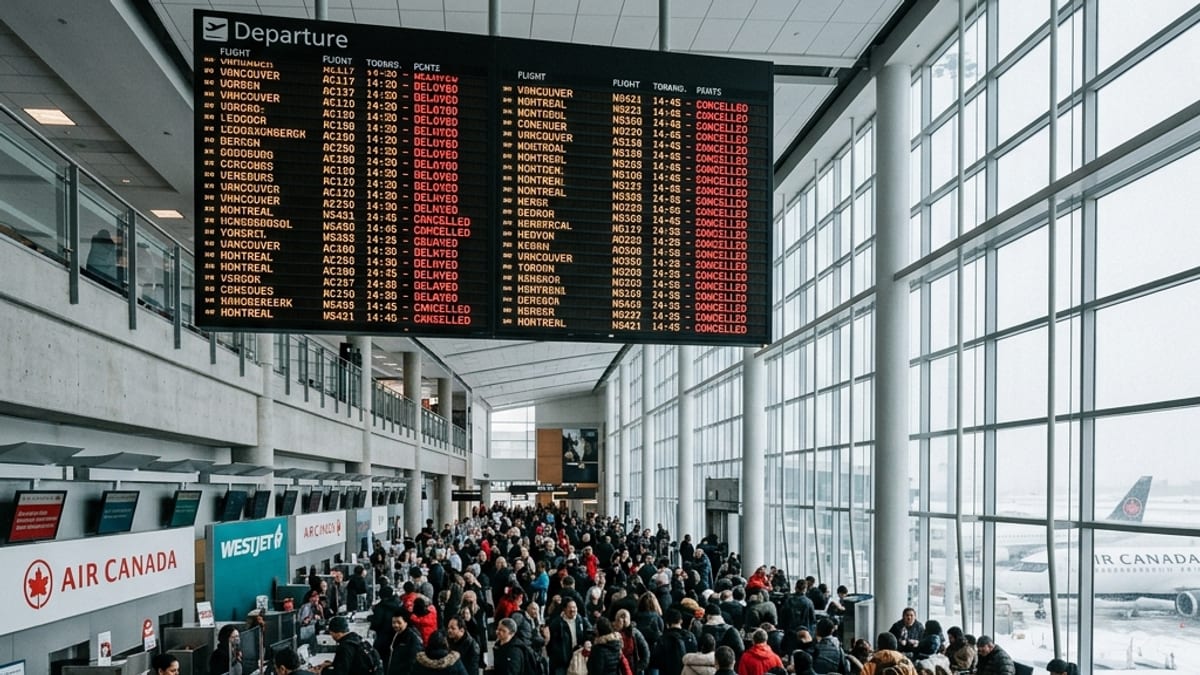
Travel plans for hundreds of passengers collapsed into confusion at Québec City Jean Lesage International Airport this week as 27 flights were delayed and six cancelled, with disruptions affecting key services operated by Air Canada and WestJet.
Get the latest news straight to your inbox!
Wave of Disruptions Hits Regional Hub
Operational data and local media reports indicate that Québec City Jean Lesage International Airport experienced an unusually high level of flight disruption over a short period, with a combined 33 arrivals and departures either delayed or cancelled. Air Canada and WestJet, the country’s two largest carriers, accounted for a significant share of the problems, leaving travellers facing extended waits in departure halls and crowded customer service lines.
The disturbance in Québec City formed part of a wider pattern of irregular operations across Canada in early April, as late-season winter weather and a series of spring storm systems strained airline schedules. National tallies published by aviation and passenger rights trackers show several hundred flights delayed or grounded across major hubs including Toronto, Montreal and Calgary over the same timeframe, placing additional pressure on aircraft and crew rotations.
At Québec City, a mix of delayed turnarounds, cancelled regional links and missed connections created a ripple effect. Passengers reported missed holidays, business trips and family gatherings as they attempted to rebook or reroute journeys through other Canadian airports already struggling with their own backlogs.
Publicly available airport information suggests that recovery was gradual rather than immediate, with some flights returning to schedule while others continued to show knock-on delays into subsequent rotations.
Air Canada and WestJet Under Scrutiny
The latest problems at Québec City add to growing scrutiny of Air Canada and WestJet, which have faced repeated criticism over punctuality in recent years. Industry performance tables released before the current disruption ranked both carriers near the bottom of North American airlines for on-time arrivals, highlighting systemic challenges in managing complex networks subject to harsh weather and congested airspace.
In the current episode, Air Canada’s mainline and regional services appear to have borne much of the strain, with several key Québec City links to Montreal and Toronto affected. WestJet services connecting western Canada and transborder destinations have also seen schedule changes, cancellations and extended delays, compounding difficulties for passengers relying on tight connections.
Consumer advocates note that the combination of high load factors, lean spare aircraft capacity and tight crew scheduling leaves little room for recovery when storms, air traffic control constraints or mechanical inspections interrupt operations. When flights into a regional hub like Québec City are disrupted, there are fewer alternative departures available than at larger airports, which can quickly translate into overnight stays and multi-day rebookings.
Airline operational updates and public advisories in recent days have urged customers throughout Canada to monitor flight status closely and consider flexible travel dates where possible, reflecting uncertainty about how long elevated disruption levels will persist.
Passengers Face Long Waits and Limited Options
For travellers caught in the Québec City disruptions, the practical impact has been measured in hours and, in some cases, days. Accounts shared on social media describe long queues at airline counters, limited same-day rebooking options and difficulty securing hotel rooms near the airport as cancellations accumulated.
Some passengers have reported being offered itineraries rerouting them through multiple hubs or rebooked several days later, a pattern that has also been documented during recent disruption spikes at other Canadian airports. Those able to afford it sometimes opted to purchase entirely new tickets on less affected carriers to avoid extended delays, while seeking refunds or credits for the original bookings.
Publicly available guidance from airlines indicates that meal vouchers and hotel accommodation may be offered in certain circumstances when disruptions are within a carrier’s control, but weather-related problems and air traffic control restrictions are generally treated differently. This distinction often leaves travellers uncertain about what assistance they can reasonably expect when faced with an unexpected night on an airport bench.
Local tourism operators and ground transport providers around Québec City report a short-term surge in demand for last-minute accommodations and intercity bus and rail tickets, as stranded passengers seek alternative ways to complete their journeys.
Regulatory Rules and Passenger Rights in Focus
The episode at Québec City is once again drawing attention to Canada’s Airline Passenger Protection Regulations, which define compensation thresholds for delays and cancellations, as well as standards of treatment such as food, accommodation and rebooking obligations. Legal filings, regulator guidance and consumer rights analyses stress that eligibility depends heavily on whether a disruption is within an airline’s control, related to safety requirements, or entirely outside the carrier’s control.
In practice, this framework can be difficult for passengers to navigate while they are in the middle of a disrupted journey. Documentation such as boarding passes, written notices of disruption and receipts for out-of-pocket expenses are often required to pursue claims after travel is completed. Industry observers note that many travellers do not fully understand their rights or give up on the process due to its complexity and time demands.
Recent enforcement actions against major Canadian carriers over previous disruptions have underscored regulators’ willingness to impose financial penalties when they determine that airlines have not met their obligations. Advocacy groups argue that the latest wave of delays and cancellations across the country, including at Québec City, should be closely examined to ensure compliance with existing rules.
Travel experts recommend that passengers affected by delays or cancellations at Québec City and other airports review current federal guidance on passenger rights, keep careful records of all communications and expenses, and submit formal complaints where warranted.
Looking Ahead to Spring Travel
The disruptions at Québec City come as the spring travel season begins to ramp up, with airlines adding capacity for school breaks, long weekends and early summer holidays. Aviation analysts warn that if operational buffers remain thin, even routine spring storms could trigger new cascades of delays and cancellations.
In response to previous periods of severe disruption, Canadian airlines have periodically adjusted schedules, slowed expansion plans or added longer connection times to improve reliability. Whether similar strategies will be used more aggressively this year remains an open question, particularly as carriers balance operational resilience against pressure to capture strong travel demand.
For now, publicly available forecasts and industry commentary suggest that travellers using regional hubs such as Québec City Jean Lesage Airport should budget extra time, monitor flight status frequently and consider travel insurance options that cover delays and missed connections. With 27 flights delayed and six cancelled in the latest incident alone, the margin for error remains slim for anyone with tight itineraries.
As airlines and regulators review performance data from this latest disruption, passengers across Canada will be watching closely for signs that lessons are being learned and that future storms and system shocks will be met with stronger contingency plans.