

More news on this day
Hundreds of passengers across Canada are facing another day of disrupted travel as a powerful winter system triggers 39 flight cancellations and 342 delays at major hubs including Toronto, Montreal, Calgary, Ottawa and St. John’s, with airlines from Air Canada and WestJet to Jazz, PAL Airlines and Air Inuit struggling to keep schedules moving.
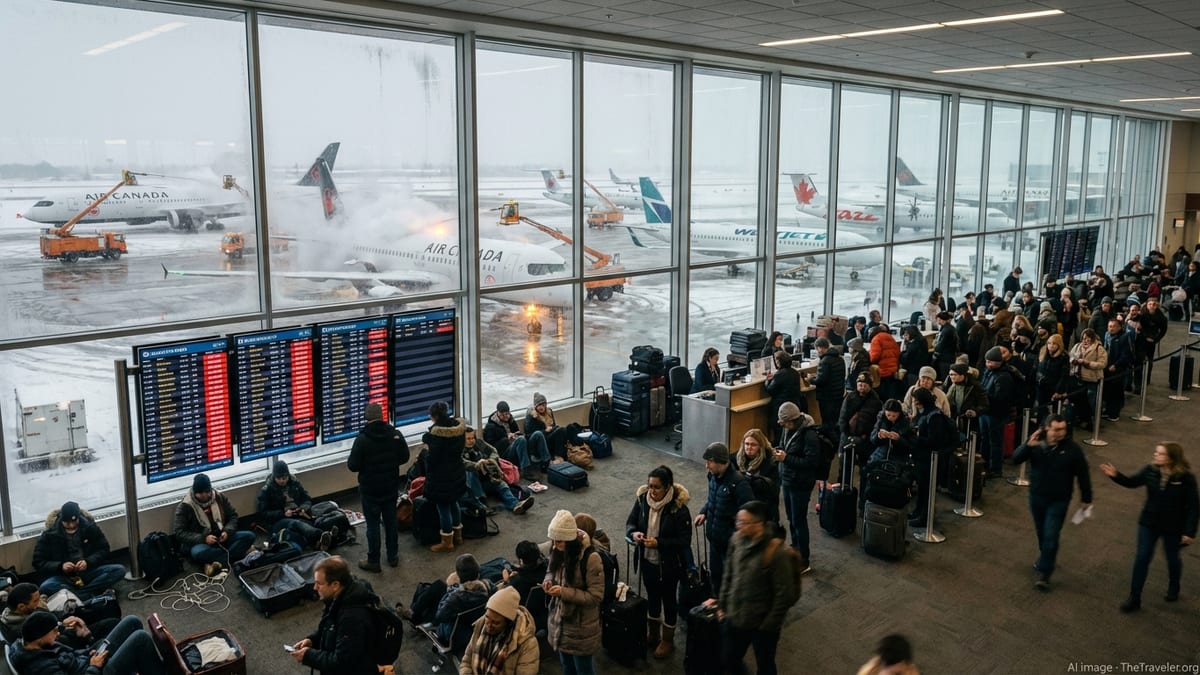
Latest Wave of Disruptions Sweeps Canadian Airports
The latest round of operational turmoil unfolded on February 20, 2026, as a broad winter pattern of snow, freezing rain and poor visibility choked off punctual operations at airports from the Pacific coast to Atlantic Canada. Data compiled from flight-tracking services and airport operations reports shows 39 flights cancelled outright alongside 342 services delayed, reflecting the lingering effects of a multi-day storm system that first hit Southern Ontario earlier in the week.
While these figures are lower than the massive disruption reported on February 18, when hundreds of cancellations and delays were logged across 13 airports, today’s totals underscore how long-running weather systems can continue to erode reliability even after the heaviest bands of snow and ice have moved through. For travelers, that has meant another day of missed connections, long lines at customer service counters and extended waits on tarmacs as aircraft queue for deicing and runway clearance.
The worst impacts are concentrated at major hubs where capacity is already tight: Toronto Pearson, Montreal–Trudeau and Calgary International continue to serve as flashpoints, with spillover at regional gateways including Ottawa, Vancouver, Halifax and St. John’s. Smaller airports in Atlantic Canada and northern Quebec are also feeling the strain as regional carriers adjust schedules to cope with changing runway and weather conditions.
Airport authorities and airlines alike emphasize that many flights are still departing and arriving, but with schedule buffers eroded and crews stretched thin by earlier disruptions, even modest operational hiccups are cascading into wider delays. For many passengers, the challenge is less about whether they will eventually reach their destination and more about when, and under what conditions.
Major Carriers Bear the Brunt Across the Network
As with previous days of disruption this winter, Canada’s largest carriers are absorbing the bulk of the operational pain. Air Canada and its regional affiliate Jazz Aviation, operating as Air Canada Express, continue to shoulder the largest share of cancellations and late departures, particularly on trunk routes linking Toronto, Montreal and Calgary with secondary cities. Air Canada flights are being pushed back as ground crews work to deice wings and clear taxiways, while Jazz’s regional turboprops and regional jets have been especially vulnerable to crosswinds, blowing snow and reduced visibility at smaller fields.
WestJet is also contending with a heavy slate of delayed flights, especially on tightly timed transcontinental services linking Toronto Pearson and Calgary International. On widely used routes such as Toronto to Calgary, departures have frequently pushed off more than an hour behind schedule as incoming aircraft arrive late and turnarounds take longer in icy conditions. Each delayed departure can trigger a domino effect through an aircraft’s entire day of rotations, resulting in missed connections and crew duty-time challenges at downline airports.
Regional and niche carriers are not immune. PAL Airlines, which serves a mix of Atlantic Canada and remote communities, has reported multiple cancellations and extended delays as conditions fluctuate rapidly around Newfoundland and Labrador and the Gulf of St. Lawrence. Air Inuit, which connects far northern communities to hubs in Quebec, has also seen a cluster of cancellations and delays as extreme cold and low ceilings make certain approaches and landings unsafe.
Although some international airlines have encountered isolated delays into and out of Canada’s biggest gateways, it is the domestic operators that face the most acute challenges. Their networks rely heavily on tight connections and short ground times, so any weather-driven slowdown tends to reverberate quickly, particularly during the busy early morning and late afternoon peaks.
Toronto, Montreal and Calgary Remain Key Trouble Spots
Toronto Pearson International remains the single most critical pressure point in Canada’s air-travel system. Even after the most intense phase of freezing rain earlier this week, runway operations and deicing capacity have been under strain, leading airlines to proactively trim some frequencies and accept rolling delays on others. Flights bound for and arriving from Eastern and Western Canada frequently have to wait for available gates or deicing trucks, extending total journey times far beyond what is printed on boarding passes.
Montreal–Trudeau is facing a different but related mix of challenges. Periods of heavy, blowing snow have limited visibility and required repeated runway clearing, especially during overnight and early-morning hours. That has had knock-on effects for the first bank of departures, some of which have gone out late enough to cause missed connections later in the day. Airlines at Montreal are also juggling aircraft and crews that were displaced by earlier cancellations this week, leaving fewer spare planes available to plug gaps when new disruptions appear.
In Western Canada, Calgary International’s role as a major hub for both domestic and transborder flights means that any slowdown there is quickly felt across WestJet’s western and central Canadian network. Even when runways remain open, ground conditions in bitter cold and intermittent snowfall slow baggage handling, fueling and boarding, pushing departure times later into the day. Flights arriving from Toronto and Montreal that are already delayed often land during peak times, adding congestion to an airport that is already running close to capacity on busy winter evenings.
Other major hubs such as Vancouver and Ottawa are also reporting pockets of disruption, though not on the same scale as the hardest-hit airports. In Vancouver’s case, the main challenges have arisen from schedule knock-ons tied to delayed arrivals from other parts of the country rather than local weather alone. At Ottawa, freezing precipitation and low cloud have forced occasional ground holds and deicing queues, particularly for regional flights operated by Jazz and PAL.
Harsh Weather Compounds Operational Strain
Weather is at the heart of the current disruption cycle. The same storm system that produced freezing rain and snow across Southern Ontario earlier this week has continued to influence conditions over central and eastern Canada, with fresh rounds of snow, gusty winds and Arctic wind chills moving through major population centers. While Canadian airlines and airports are accustomed to winter conditions, the specific mix of freezing rain, rapidly changing temperatures and strong crosswinds experienced this week has proved especially difficult to manage.
Freezing rain poses particular challenges because it can quickly coat aircraft surfaces with ice, requiring extensive deicing and anti-icing procedures before takeoff. Deicing pads operate at finite capacity, and when traffic is heavy, queues build fast. Each aircraft requires a carefully timed treatment, and if holdover times expire before the plane can depart, the process must be repeated. That adds minutes, and sometimes hours, to the turnaround of a single flight, compounding delays for every subsequent leg that aircraft is scheduled to fly.
High winds and blowing snow further complicate matters by reducing visibility and temporarily closing certain runways or approaches. At airports like St. John’s and Regina, where crosswinds can be fierce, even modest snow squalls can force pilots and air traffic controllers to adjust arrival and departure patterns, spreading delays across the schedule. In the North, extreme cold intensifies maintenance demands on aircraft and ground equipment, increasing the risk of technical faults that can tip a flight from delayed to cancelled.
Behind the scenes, airline operations centers are engaged in a delicate balancing act: deciding which flights to delay, which to cancel in advance and how best to reposition aircraft and crews to protect the broader network. With no single weather event responsible for the entire pattern of disruption, managers are forced to make rolling decisions as forecasts evolve by the hour.
Passengers Face Long Lines, Tight Connections and Limited Options
For travelers, the operational decisions and meteorological complexities translate into a straightforward reality: longer and less predictable journeys. At hubs like Toronto, Montreal and Calgary, lines at check in and customer-service desks have lengthened as passengers seek alternate routings, overnight accommodation or compensation under Canada’s air-passenger protection rules. Even those whose flights are still operating often find themselves boarding late or racing through terminals to make tight connections.
Families travelling with children and older passengers have been particularly affected as they navigate crowded terminals and shifting information. Some travelers report being rebooked onto flights departing the next day or routed through secondary hubs, extending what was meant to be a short domestic hop into an overnight trip. Others have opted to abandon air travel altogether, renting cars or trains where available to complete their journeys overland.
In Atlantic Canada and the North, options can be even more limited. Communities served primarily by PAL Airlines, Air Inuit and other regional carriers may only see a small number of flights per day, meaning a single cancellation can strand residents and essential workers for 24 hours or more. Medical appointments, school schedules and supply shipments are all affected when weather and operational constraints converge to shut down a small airport for even part of a day.
Passengers are increasingly turning to airline apps and third-party flight trackers to stay informed, but the speed of change during active weather events often outpaces notification systems. At times, departure boards and mobile alerts have shown different information, adding to confusion as travelers try to make quick decisions about rebooking or seeking refunds.
Airlines Roll Out Flexible Rebooking and Waivers
In response to the multi-day storm and persistent disruption, major carriers have extended or expanded flexible rebooking policies designed to give passengers more control over their travel plans. Air Canada has issued change-fee waivers for itineraries touching key storm-affected airports, allowing customers to shift their travel by several days without incurring standard penalties, provided origin and destination remain the same. Similar waivers have been activated for departures from other weather-exposed cities, including Regina, Saskatoon and St. John’s, in anticipation of further volatility.
WestJet has also introduced a no-fee one time change policy on select dates for flights to and from Southern Ontario and other impacted regions. The carrier is encouraging passengers to move their trips outside the worst of the weather window, both to reduce frustration at the airport and to help smooth demand across the schedule. Where fare differences apply due to changes in travel dates or times, airlines are generally requiring customers to pay the difference, but are waiving the separate administrative fees that would normally apply.
Porter Airlines and other regional operators have taken similar steps, signaling in travel advisories that passengers on eligible flights can change or cancel their bookings online without penalty when specific weather waivers are in place. Airlines are urging customers to make use of self service tools rather than waiting in line at airport counters, where staff are focused on same day issues such as reaccommodating passengers whose flights have already been cancelled.
Despite these efforts, not all travelers are satisfied. Some report difficulties finding alternative seats on the days they wish to travel, especially on popular routes where aircraft are already flying near capacity. Others note that while change fees may be waived, higher fares on rebooked dates can still add significantly to the cost of a trip that was carefully budgeted months in advance.
Regional Communities Feel Outsize Impact
While the headline numbers on cancellations and delays naturally focus on large hubs, the effects of even a relatively modest disruption can be magnified in remote and smaller communities. Airlines such as PAL Airlines, Air Inuit and Air Borealis provide critical links for residents of northern Quebec, Labrador and coastal Atlantic Canada, carrying not just leisure passengers but also medical professionals, technicians, students and government workers.
In these regions, weather-related delays are a familiar part of life, but extended periods of poor conditions can quickly overwhelm fragile schedules. A day that brings only a handful of cancellations in Toronto or Montreal can equate to most of the day’s departures scrubbed at a smaller airport served by a single carrier. That can mean empty clinic appointments, postponed community meetings and delays in delivering time sensitive cargo ranging from medications to mechanical parts.
Airlines operating in these markets have been attempting to preserve at least a skeleton schedule, sometimes consolidating lightly booked flights into single rotations to ensure essential travel can continue. However, safety remains the overriding constraint, and pilots are obliged to divert or cancel when crosswinds, visibility or runway conditions fall outside strict operating limits. For residents, that means uncertainty can persist even after conditions appear to improve on the ground.
Local officials in some affected areas are urging travelers to plan additional buffer days around critical journeys, particularly during the heart of winter. They also stress the importance of keeping contact information up to date with airlines and travel agents so that rebooking offers and schedule changes can be communicated quickly when disruptions arise.
What Travelers Can Do as Winter Disruptions Continue
With forecasts pointing to continued unsettled weather in parts of Canada through the weekend, travel experts say passengers should brace for the possibility of further cancellations and delays, even if the total number of affected flights fluctuates from day to day. They recommend that travelers monitor their flight status closely in the 24 hours leading up to departure and again on the day of travel, as schedules can change rapidly when storms shift or intensify.
Arriving early at the airport remains prudent, particularly for those departing from major hubs or connecting through multiple cities. Extra time allows for navigating longer lines at security and check in, and provides a buffer in case gate assignments or departure times shift repeatedly. Travelers are also advised to pack essential medications, chargers and basic toiletries in carry on bags in case their checked luggage is delayed or they are forced to spend an unplanned night away from home.
Understanding the basics of Canada’s air passenger protection rules can also help travelers advocate for themselves, whether they are seeking meal vouchers during long delays or refunds when flights are cancelled. While not all weather related disruptions trigger compensation, especially when airlines can demonstrate that safety concerns are involved, passengers are still entitled to clear communication and assistance in being rebooked at the earliest opportunity.
Looking ahead, airlines and airports will be hoping for a sustained break in the wintry pattern so they can reset schedules, clear backlogs and restore confidence among passengers who have already endured weeks of weather-fueled uncertainty. Until then, Canadians planning to fly should assume that winter remains an unpredictable and often unforgiving travel companion.