

More news on this day
Severe winter weather sweeping across parts of France, the Netherlands and Sweden has led to at least 30 flight cancellations and 16 significant delays, stranding passengers at major airports and adding fresh turmoil to an already difficult winter for European air travel.
Get the latest news straight to your inbox!
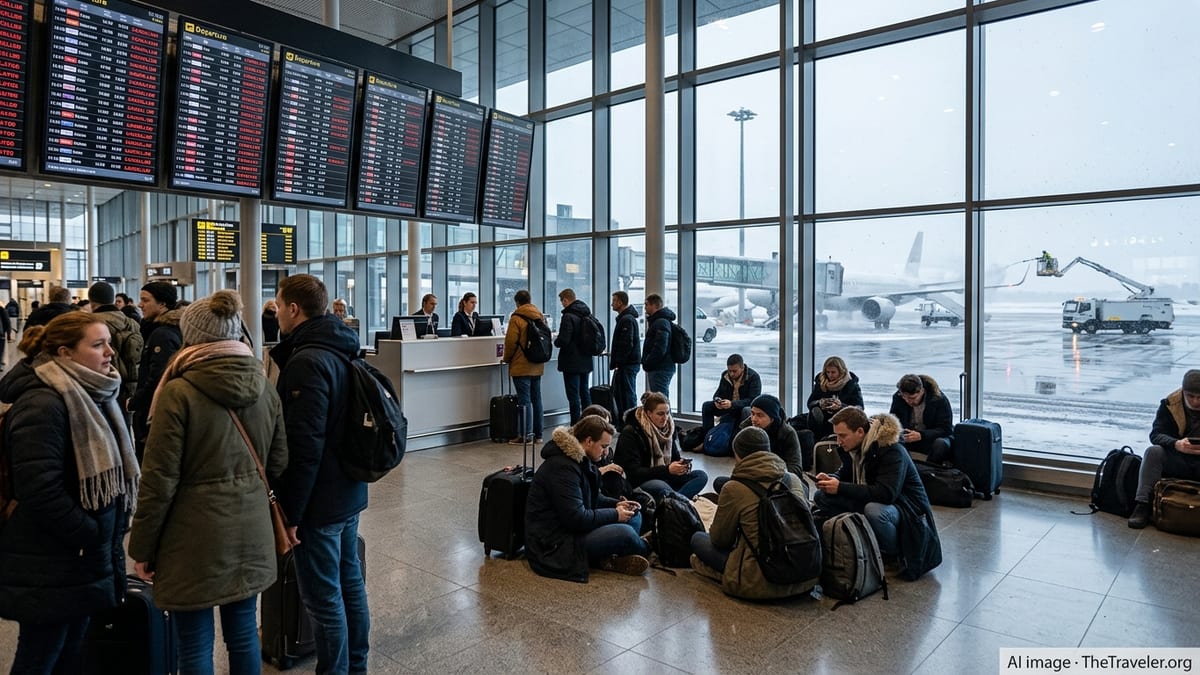
Storm System Adds to a Difficult Winter for European Aviation
Publicly available weather and aviation data indicate that a series of intense winter storms affecting Western and Northern Europe this season has repeatedly disrupted flight operations, with the latest episode centered on France, the Netherlands and Sweden. Strong winds, heavy snow and freezing rain have reduced visibility, complicated de-icing operations and limited runway capacity, forcing airlines to pare back schedules.
Recent reporting on Europe’s 2025–26 storm season describes a pattern of back-to-back low-pressure systems bringing severe conditions to France and the Low Countries, as well as Arctic air plunges into Scandinavia. The resulting combination of crosswinds, ice and low cloud ceilings has created conditions under which aviation regulators and airport operators typically restrict movements, prioritizing safety over schedule integrity.
In this context, the cancellation of around 30 flights and postponement of 16 more on a single day is consistent with a broader trend of weather-related disruption this winter rather than an isolated anomaly. Industry observers note that even well-equipped hubs can see rapid knock-on effects when storms coincide with peak travel periods, particularly in tightly scheduled European networks.
For travelers, the latest wave of interruptions underscores how vulnerable cross-border journeys remain to fast-changing meteorological conditions, especially in regions like Northern France, the North Sea coast and Scandinavia where storm tracks have been unusually active.
Where Travelers Are Most Affected
The current disruptions are concentrated at major international gateways in France, the Netherlands and Sweden, which serve as key transfer points for traffic across Europe and beyond. Airports in the Paris region, including Charles de Gaulle and Orly, have faced recurring operational challenges this winter when snow and freezing rain coincide with strong gusts, prompting periodic ground holds and runway closures.
In the Netherlands, Amsterdam’s Schiphol Airport has been particularly sensitive to heavy snowfall and ice. Earlier in the season, publicly available coverage described days when a large share of departures were canceled or delayed due to limited de-icing capacity and constraints on runway use. The latest round of severe weather has again forced airlines there to trim schedules, and the additional 30 cancellations and 16 postponements reported across the region appear to align with similar operational decisions.
Farther north, Swedish airports from Stockholm to regional hubs have had to manage episodes of blowing snow and very low temperatures. Under such conditions, aircraft often require repeated de-icing, and ground handling can slow markedly, reducing the number of flights that can safely operate in a given hour. Even a modest cut in capacity can cascade into cancellations and extended delays, especially for evening departures and inbound long-haul flights relying on tight turnaround windows.
Because many European journeys involve at least one connection, problems at these three national hubs can ripple across the continent. Travelers connecting from smaller cities in Southern or Central Europe through Paris or Amsterdam, for instance, may find their onward flights to Scandinavia or other Northern destinations canceled or significantly delayed.
How Airlines Are Managing Cancellations and Delays
According to published coverage of recent winter disruptions, airlines typically respond to severe weather by proactively canceling a portion of their schedules, especially short-haul rotations, to keep the remainder of flights more manageable. This strategy reduces the risk of aircraft and crews becoming badly out of position and helps limit the length of delays for flights that do depart.
In France and the Netherlands, publicly available information shows that carriers have previously coordinated with airport authorities and air traffic managers to cut schedules in advance of major snow or wind events. By removing some flights from the timetable, airlines can concentrate resources on fewer departures, ensuring adequate de-icing, maintenance checks and crew duty-time compliance. The 30 cancellations reported in the latest episode appear to follow this familiar pattern of preventive action.
Delayed flights, including the 16 now postponed, are often those that can still operate once conditions marginally improve. They may face waiting times for de-icing trucks, inbound aircraft and crew clearances. While these flights ultimately spare passengers from outright cancellation, they can still produce missed connections and overnight stays, particularly for travelers heading to long-haul destinations or remote regional airports with limited onward options.
Low-cost and network carriers alike rely heavily on aircraft utilization, meaning a disruption at one hub can quickly affect flights later in the day elsewhere in Europe. This explains why passengers on routes far from the immediate storm zone sometimes encounter disruptions that can be traced back to weather-related problems in France, the Netherlands or Sweden earlier in the schedule.
What Stranded Passengers Are Experiencing
Reports from earlier winter weather episodes in Amsterdam, Paris and Scandinavian airports describe scenes that will be familiar to travelers caught up in the latest disruptions: crowded terminals, long queues at customer-service desks, and difficulty securing hotel rooms near major hubs when large numbers of passengers need overnight accommodation at once.
Publicly available information from prior storms indicates that airports and airlines often set up additional help desks, distribute meal vouchers and, in some cases, provide basic sleeping arrangements in terminal areas when hotels are fully booked. Despite these measures, many travelers report uncertainty about rebooking options and limited real-time information about changing departure times.
In the current situation, stranded passengers in France, the Netherlands and Sweden are likely facing similar challenges. Even when flights are only postponed rather than canceled, rolling delays can make it difficult to plan onward travel or adjust rail and hotel reservations. Travelers on multi-leg itineraries may also find that while their initial flight eventually departs, their connecting segment has already been canceled or significantly delayed, forcing further changes.
Families with children, older travelers and those with tight time-sensitive commitments such as business meetings or medical appointments are often the most affected. Accounts from previous winters suggest that some passengers resort to alternative modes of transport, such as long-distance trains or rental cars, when available, to bypass congested hubs and reach nearby cities less affected by the storm system.
Key Steps and Rights for Affected Travelers
Consumer-rights organizations and government transport portals emphasize that travelers facing weather-related cancellations in the European Union should first check the status of their flights through airline apps or official airport information boards, then review the specific terms of carriage and applicable passenger-rights regulations. Weather is often categorized as an extraordinary circumstance for compensation purposes, but passengers may still be entitled to assistance such as meals, refreshments and hotel accommodation depending on the length of the delay and the nature of the disruption.
For journeys involving France, the Netherlands and Sweden, publicly available guidance highlights that rebooking on the next available flight is typically offered at no additional fare when a service is canceled. During large-scale disruptions like the current one, however, capacity on subsequent flights can be extremely limited, so travelers may need to consider alternative routes or dates. Some airlines also allow free changes to other nearby airports when operationally feasible.
Travel advisors recommend that passengers retain all receipts for food, transport and accommodation incurred due to disruption, as these may support later claims with airlines or travel insurers. Written confirmation of the cause of disruption, when made available by the carrier, can also be useful for clarifying whether the delay was purely weather-related or involved additional operational factors.
With storm systems expected to remain active in parts of Europe during late March, travelers planning to transit through major hubs in France, the Netherlands or Sweden in the coming days are urged by public travel advisories to build flexibility into their itineraries. Allowing longer connection times, monitoring forecasts closely and maintaining up-to-date contact details with airlines can help reduce the stress of sudden cancellations and lengthy postponements if severe weather again affects flight operations.