

More news on this day
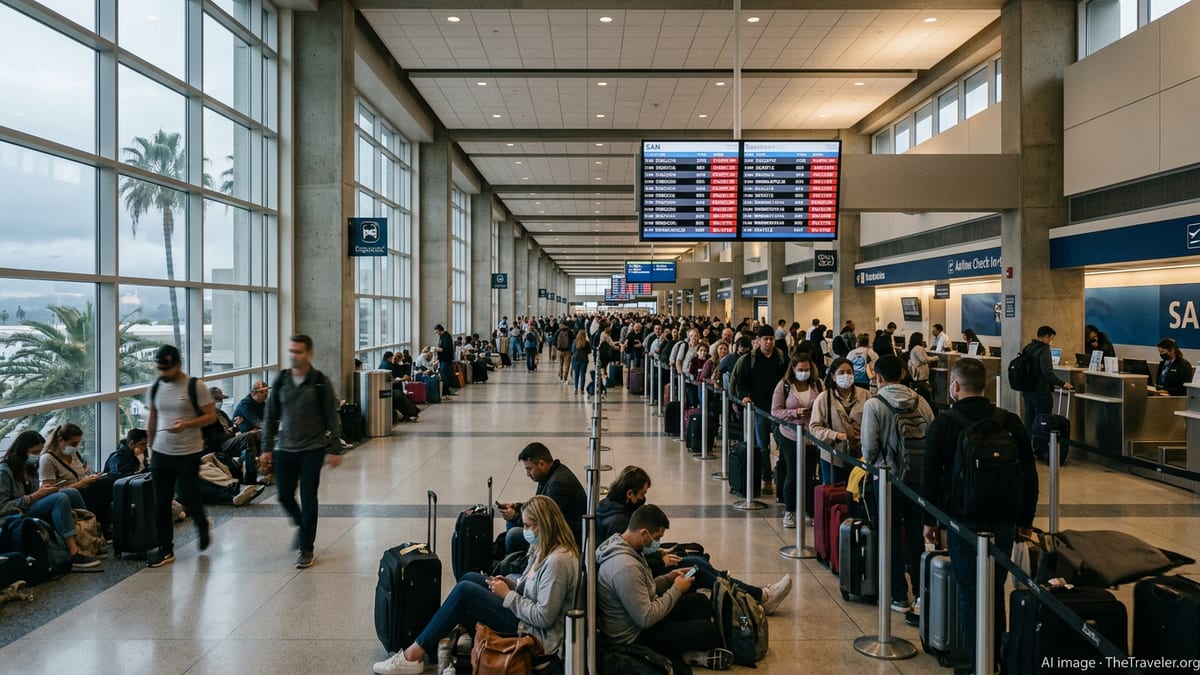
San Diego International Airport passengers bound for major Midwest and Pacific Northwest hubs faced a wave of cancellations and delays on March 15 and 16 as a powerful storm system disrupted airline operations in Chicago, Seattle, Minneapolis and other key connection points.
Get the latest news straight to your inbox!
Storm System Ripples Across the Airline Network
Publicly available weather and aviation data indicate that a large late-winter storm affecting the Pacific Northwest and Upper Midwest over March 13 to 16 has triggered widespread air travel disruption across the United States. Heavy snow, high winds and low visibility in cities such as Seattle and Minneapolis, combined with thunderstorms and capacity constraints in Chicago, have sharply reduced the number of arrivals and departures that airlines can safely operate.
Even though skies over San Diego have remained largely free of severe conditions, the airport’s role as a West Coast origin and destination point for long-haul domestic routes means it is deeply exposed to cascading impacts elsewhere. When aircraft and crews are unable to reach hub airports on schedule, flights into and out of San Diego that rely on those same assets are frequently delayed or canceled.
Published coverage of the storm’s path shows that snow and ice significantly slowed operations at Seattle-Tacoma International Airport, while blizzard conditions and accumulating snow in Minnesota reduced capacity at Minneapolis-Saint Paul International Airport. Thunderstorms and ground stops in the Chicago region have further constrained traffic flows, especially at Chicago O’Hare, amplifying pressure on already stretched airline schedules.
Operational snapshots from national flight-tracking dashboards on March 15 and 16 show elevated cancellation and delay rates at these hubs, with knock-on effects across the country. Flights linking San Diego to Chicago, Seattle and Minneapolis are among those most exposed, given their reliance on these weather-affected airports.
Routes and Airlines Facing the Greatest Impact
Based on real-time airline status boards and flight-tracking platforms, the most affected services at San Diego International Airport over the March 15 to 16 period appear to be medium- and long-haul domestic flights to the storm-battered hubs. Routes to Chicago O’Hare, Chicago Midway, Seattle-Tacoma and Minneapolis-Saint Paul show clusters of cancellations, significant departure delays and equipment swaps.
Major U.S. carriers that operate hub-and-spoke systems through these cities are adjusting their schedules as the storm evolves. Publicly accessible schedules and status pages indicate selective preemptive cancellations on some San Diego departures, particularly morning and evening flights designed to feed tight connection banks in Chicago, Seattle and Minneapolis. Midday flights have in some cases operated with delays as airlines search for available aircraft and crews.
Point-to-point carriers with fewer connections at the affected hubs appear somewhat less exposed, although they are not immune. When aircraft arrive late from weather-impacted airports earlier in the day, downstream departures from San Diego can still face rolling pushbacks. Some carriers are consolidating lightly booked flights or rerouting aircraft through less congested hubs to keep portions of their networks moving.
Secondary disruptions are emerging on other San Diego routes as carriers reposition aircraft and staff. Flights to additional Midwest destinations and select East Coast cities are showing increased delay risk where schedules depend on aircraft rotations through Chicago, Seattle or Minneapolis earlier in the operating day.
What Passengers Flying From San Diego Need to Know
For travelers departing San Diego over the next 24 to 48 hours, publicly available airline guidance emphasizes the importance of monitoring flight status frequently and making use of digital tools. Airline apps and websites are updating departure times, gate assignments and cancellation notices, often before information appears on terminal displays.
Many carriers have introduced temporary travel waivers for journeys touching affected regions, allowing passengers to change flights without standard change fees or fare differences within specified date and routing windows. These waivers typically apply to itineraries involving hubs such as Chicago, Seattle and Minneapolis, and in some cases can be used by travelers starting or ending their trips in San Diego when their original routing crosses the storm zone.
Check-in cutoffs and boarding times are becoming more critical as airlines attempt to depart during short weather or traffic-control windows. Travelers are being advised, through published airline communications and airport updates, to arrive earlier than usual, complete check-in on mobile devices when possible and proceed promptly through security to their gates. This is particularly important for early morning and late-night departures, when staffing levels and rebooking options may be more limited.
Passengers with onward connections in the Midwest or Pacific Northwest may want to consider routings through alternative hubs that are currently less affected by the storm system. Rebooking options are typically easier to secure before a flight is officially canceled, so travelers who see extended or repeatedly shifting delay estimates may benefit from proactively contacting their airline through apps, call centers or airport customer-service desks.
Managing Missed Connections, Vouchers and Overnight Stays
The wave of disruption affecting San Diego-linked flights into storm-hit hubs is creating a familiar set of challenges for passengers: missed connections, overnight stays and questions about compensation. Current U.S. regulations and airline customer-service commitments, as summarized in consumer-facing government and airline resources, distinguish between controllable disruptions and those caused by weather or air-traffic control constraints.
When weather is the driving factor, carriers are generally not obligated to provide hotel accommodations or meal vouchers, though many will offer assistance with rebooking on the next available flight at no additional cost. Some airlines also provide limited vouchers or discounts as a goodwill gesture, a practice described in several carriers’ publicly available customer-commitment documents.
Travelers stranded in connecting hubs after departing San Diego are being encouraged by consumer advocates to keep documentation of expenses, boarding passes and delay notifications. These records can be helpful if airlines later offer reimbursement options, or if passengers seek to submit feedback once operations stabilize. For trips purchased with certain credit cards, card benefits may also cover some costs related to delays and missed connections, subject to each issuer’s terms.
Those who no longer wish to travel because of extensive disruptions can, in some cases, pursue refunds instead of credits when flights are canceled outright. Airline policy pages and U.S. transportation guidance indicate that if a carrier cancels a flight and a passenger chooses not to travel, the customer is typically entitled to a refund of the unused portion of the ticket, regardless of cause, although processing times may vary.
Outlook for San Diego Travelers in the Days Ahead
Forecasts for the storm system suggest that while conditions in the Upper Midwest and Pacific Northwest should gradually improve after March 16, residual impacts on schedules may linger for several days. Aircraft and crew imbalances created during the disruption period often take time to resolve, and airlines must rebuild normal rotations across their networks, including at San Diego International Airport.
Published aviation data from previous major weather events show that even after airports reopen fully, elevated delay levels can persist as carriers work through backlogs of displaced passengers. Same-day standby lists lengthen, and popular routes such as San Diego to Chicago, Seattle and Minneapolis can remain tight on available seats, limiting rebooking options for several operating days.
Travelers with flexible schedules may find that shifting nonessential trips out of the immediate post-storm window reduces the risk of disruption. Those who must travel soon are likely to have the best experience if they build in longer connection times, favor earlier departures in the day, and maintain real-time awareness of changing conditions at both their origin and connecting airports.
As airlines and airports across the storm-affected regions work back toward normal operations, San Diego International Airport is expected to remain busy with rebooked passengers and full flights. Careful planning, close monitoring of flight status and familiarity with airline policies will be key for anyone navigating the network in the aftermath of this latest round of late-winter weather.