

More news on this day
Travelers heading in and out of Cancun International Airport are facing a fresh round of schedule upheavals, as 42 delays and four cancellations tied to services from Toronto, Montreal, New York and Miami ripple across WestJet, Air Canada, Southwest and Spirit Airlines.
Get the latest news straight to your inbox!
Late-Season Weather and Staffing Squeeze North American Hubs
The latest disruption comes at the tail end of a turbulent early April for North American aviation, with a series of late-season winter systems and localized thunderstorms already straining operations at major hubs. Publicly available flight data and industry reports show Toronto Pearson and Montreal Trudeau among the hardest hit in Canada, while New York and Miami have both contended with weather-driven ground delays and air traffic flow restrictions.
In Canada, recent coverage notes that storms and icy conditions have repeatedly slowed ground handling, extended de-icing times and prompted capacity limits at busy airports, triggering knock-on effects for outbound leisure routes to Mexico. Airlines including Air Canada and WestJet have responded at various points with flexible rebooking options and travel advisories, reflecting the scale and persistence of the disruption.
On the United States side of the border, Miami and New York area airports have been grappling with a mix of thunderstorms, heavy traffic and crew-availability challenges. Operational analyses indicate that rolling ground stops, staffing gaps and delayed inbound aircraft have combined to create lengthy queues, with ripple effects that extend to international services into Cancun.
This week’s tally of 42 delays and four cancellations on routes linking Cancun with Toronto, Montreal, New York and Miami underscores how pressure at northern hubs can quickly spill over to one of the Caribbean’s busiest gateways.
WestJet and Air Canada Struggle to Keep Cancun Leisure Schedules on Track
For Canadian travelers bound for Cancun’s resorts, the most visible impacts have been on WestJet and Air Canada operations out of Toronto and Montreal. Flight tracking records over recent days show multiple services between these cities and Cancun departing substantially behind schedule, with some pushed back by several hours and a small number cancelled outright as aircraft and crews failed to arrive in position.
Reports from Canadian travel outlets highlight that these carriers are still contending with residual congestion from earlier weather events, including backlogs in aircraft rotations and crew duty-time limitations. When an inbound flight from Toronto or Montreal lands late in Cancun, the turnaround to operate the return leg can be compressed or rendered unworkable, sometimes forcing same-day rescheduling or cancellation.
The leisure-heavy nature of these routes amplifies the human impact. Many passengers are tied to rigid resort check-in and checkout windows, as well as pre-arranged ground transfers along the Riviera Maya corridor. Even relatively short delays can cascade into missed shuttles, extra hotel nights or forfeited bookings, particularly for families traveling over school holidays.
Industry commentary also notes that Cancun’s high seasonal demand leaves limited spare capacity for reaccommodating passengers. When a flight is cancelled between Toronto or Montreal and Cancun, options for same-day rebooking on alternative departures are often scarce, lengthening the disruption for affected travelers.
Southwest and Spirit Delays Tie Cancun to Miami and New York Turmoil
Low-cost carriers Southwest and Spirit have also been caught in the latest bout of turbulence, particularly on links feeding Cancun from Miami and New York. Operational summaries from recent days point to weather-related initiatives at East Coast airports, combined with tight staffing and high holiday traffic, as prime drivers of the timetable slippage.
Southwest, which relies on high aircraft utilization and quick turnarounds, is particularly exposed when storms or congestion force extended ground holds at New York area airports. A delayed aircraft departing New York can arrive into a connecting hub or destination, such as Cancun, behind schedule, triggering further delays across the rest of its daily rotations.
Spirit shows a similar pattern, with publicly available disruption trackers documenting elevated delay counts at Miami International in recent days, especially on short-haul leisure routes. Because many Spirit flights into Cancun are part of complex multi-leg itineraries, a single late turn in Miami or New York can reverberate throughout the network and contribute to the tally of delayed arrivals and departures at Cancun.
The current cluster of 42 delays and four cancellations illustrates how even modest schedule perturbations at a handful of East Coast airports can have disproportionate consequences for sun destinations, where aircraft and crew slack is minimal during peak seasons.
Passenger Experience: Crowded Terminals and Tight Connections
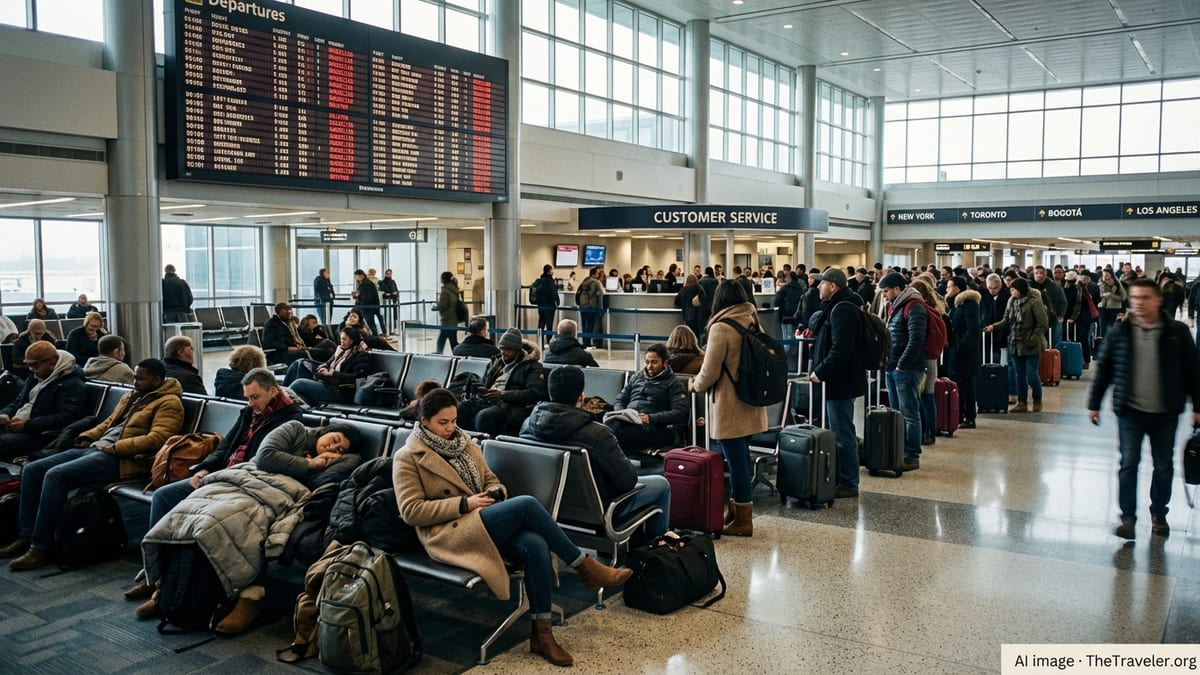
Within Cancun International Airport itself, travelers caught up in the disruptions are contending with crowded departure halls, busy airline counters and irregular wait times at security and immigration. News and social media posts from the past week describe lines swelling during banked departure waves to Canada and the United States, especially when multiple delayed flights attempt to board at once.
For inbound passengers, staggered yet persistent delays have also affected ground transportation and onward connections. Tour operators and shuttle providers serving the hotel zones around Cancun and the Riviera Maya report, through publicly available updates, stretched schedules and occasional bottlenecks when several late flights arrive in close succession.
The operational strain is compounded by infrastructure works and road congestion around the airport corridor, which can extend travel times between terminals and resort areas. When a flight from Toronto, Montreal, New York or Miami lands significantly behind schedule, passengers may face both a late-night arrival and a protracted transfer, increasing fatigue and the likelihood of missed activities or early-morning tours.
Travel advisories from consumer-focused organizations continue to emphasize the importance of allowing generous buffers for connections, transfers and check-in formalities when flying through congested hubs on the way to or from Cancun.
What Travelers Can Do as Disruptions Persist
With weather patterns and operational constraints still fluid across North America, aviation analysts suggest that the current wave of delays and cancellations affecting Cancun services may not dissipate immediately. Passengers booked on WestJet, Air Canada, Southwest or Spirit flights linking Cancun with Toronto, Montreal, New York or Miami in the coming days may therefore want to prepare for possible schedule changes.
Consumer advocacy groups and travel-rights platforms advise checking flight status frequently on the day of departure, using airline apps or airport information channels, and enabling notifications for last-minute gate or time changes. Where flexible rebooking policies or fee waivers are available, some travelers may find it advantageous to shift to off-peak departure times that are less vulnerable to cascading delays.
Experts also recommend building in longer connection windows when traveling via New York or Miami, especially for itineraries involving separate tickets or tight transfers to regional flights. Allowing extra time between arrival in a hub and departure for Cancun can reduce the risk of misconnecting if an upstream leg encounters delays.
For now, the situation at Cancun International Airport serves as another reminder of how tightly interlinked the North American air travel system has become. A combination of late-season storms, heavy holiday demand and finely tuned low-cost carrier schedules has proven enough to generate 42 delays and four cancellations across just a handful of key city pairs, with thousands of vacationers feeling the effects on both sides of the Gulf of Mexico.