

More news on this day
Severe late-winter weather sweeping across the Midwest on March 16, 2026, has left hundreds of travelers stranded at Detroit Metropolitan Wayne County Airport, as publicly available flight-tracking data show 127 cancellations and 273 delays affecting Delta Air Lines, SkyWest Airlines and Spirit Airlines services to major hubs including New York, Los Angeles and Atlanta.
Get the latest news straight to your inbox!
Weather System Paralyzes a Key Midwestern Hub
The disruption at Detroit Metro is unfolding as a powerful March storm complex brings heavy snow, ice and high winds across large parts of the central and eastern United States. Meteorological summaries describe a sprawling extratropical system impacting the Upper Midwest and Great Lakes region from March 13 to March 16, producing blizzard conditions in some areas and hazardous icing in others. The combination has created difficult operating conditions for airlines attempting to maintain their schedules through one of the country’s busiest midcontinent gateways.
Flight-tracking dashboards widely used by the public indicate that Detroit has emerged as a focal point of the latest round of nationwide disruptions, with a wave of cancellations and rolling delays radiating outward across airline networks. With runways and taxiways periodically impacted by snow and ice, and visibility fluctuating through the day, crews and aircraft have been left out of position, compounding the operational challenges.
Publicly accessible arrival and departure boards early Monday show Detroit handling a fraction of its typical traffic as the storm’s effects linger. Some terminals have seen clusters of flights listed with multi-hour delays, while waves of cancellations have removed entire blocks of regional services, particularly on routes operated by smaller jets and regional affiliates.
Delta, SkyWest and Spirit Bear the Brunt
The largest share of affected passengers appears to be on Delta, SkyWest and Spirit, all of which maintain significant operations at Detroit Metro. Delta, the airport’s dominant carrier, relies on Detroit as a primary hub for domestic and transborder routes, meaning disruptions there quickly echo across its broader network. When flights into Detroit are delayed or canceled, subsequent legs to cities such as New York, Los Angeles and Atlanta are frequently pushed back or removed from the schedule.
Regional operator SkyWest, which flies under major-brand flags including Delta Connection, has also seen wide-ranging impacts. Publicly available delay and cancellation logs suggest a high concentration of affected SkyWest-operated services on shorter routes into and out of Detroit, where smaller aircraft are often the first to be grounded when crosswinds, low ceilings or runway conditions deteriorate. These cancellations can strand passengers in smaller Midwestern and Great Lakes cities that depend on Detroit for onward connections.
Spirit Airlines, which uses Detroit as an important spoke within its point-to-point network, has likewise experienced a wave of schedule changes. According to consumer-facing tracking tools and recent online discussions among travelers, a combination of weather, tight crew availability and aircraft rotations has forced Spirit to cancel or significantly delay multiple departures. The impact is being felt on popular leisure routes as well as on flights linking Detroit with major domestic markets.
Ripple Effects From New York to Los Angeles
The operational difficulties at Detroit are sending shockwaves far beyond Michigan. Network maps and live-tracking services show delayed and canceled Detroit departures feeding directly into knock-on delays at downline airports across the country. Eastbound services from Detroit to New York City area airports have seen clusters of late departures, while westbound connections to Los Angeles and other West Coast gateways have been pushed deeper into the evening or scrubbed entirely.
Atlanta, another major Delta hub, is also experiencing secondary impacts as Detroit-based aircraft and crews fail to arrive on time, compressing already tight schedules. Publicly available data on flight-status boards indicate that some services between Detroit and Atlanta have faced multi-hour delays, increasing the risk of missed onward connections for passengers heading to the Southeast, the Caribbean and Latin America.
The disruption is not confined to large hubs. Smaller and midsized cities that rely on Detroit for connectivity, including regional centers in the Upper Midwest and Great Lakes, are reporting gaps in service where multiple Detroit-linked flights have been canceled in succession. Travelers who expected to complete short one-stop itineraries through Detroit are instead facing overnight stays and circuitous reroutings through alternative hubs, where seats are limited by the broader nationwide weather-related disruption.
Stranded Travelers Confront Long Waits and Limited Options
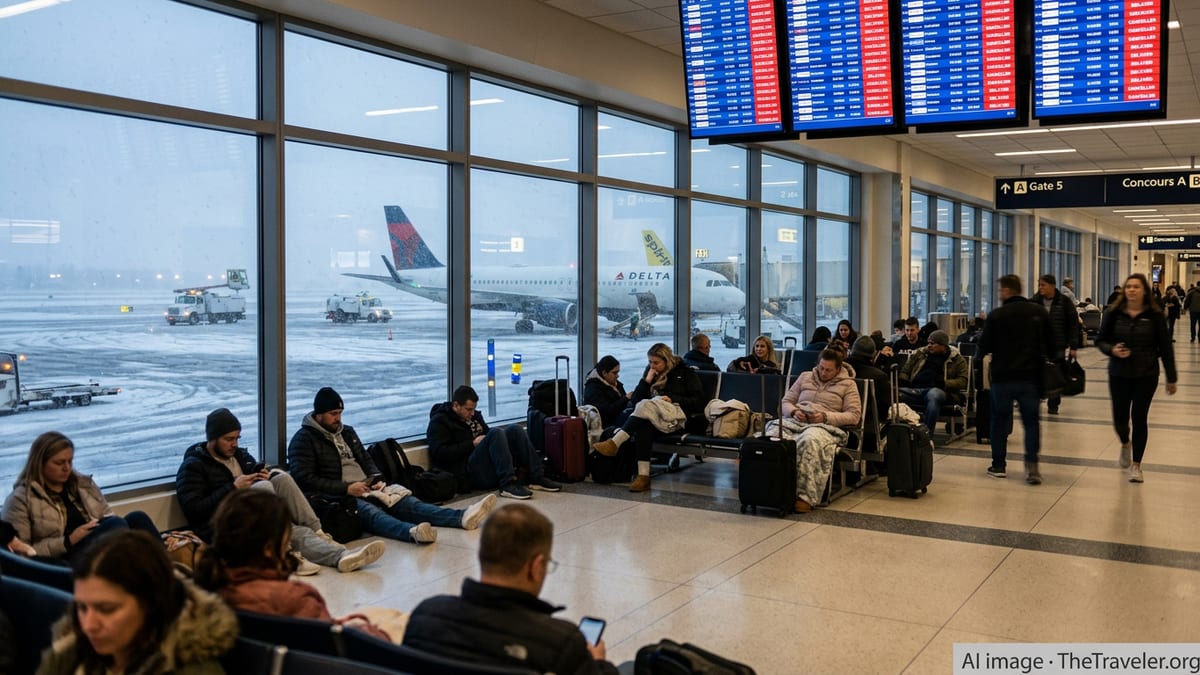
Inside Detroit Metro’s terminals, the operational picture on March 16 translates into long lines at customer service counters, busy gate areas and crowds gathered around departure boards refreshingly little but bad news. Social media posts from the airport depict passengers camped out with luggage and blankets, suggesting that some have already spent one or more nights at the terminals as they await rebooked flights.
With the number of cancellations and delays far outstripping available seats on remaining departures, rebooking options are becoming increasingly constrained. Publicly visible inventory on airline booking engines shows many Detroit departures on affected carriers listed as sold out or nearly full for the rest of the day, forcing some travelers to accept itineraries that depart a day or more later, or to connect through alternative cities that are themselves vulnerable to weather and congestion.
Travel forums and user-generated reports indicate that some stranded passengers are turning to rental cars, intercity buses or even rail where available, especially for trips within the broader Great Lakes and Midwest region. While these options can shorten overall travel time compared with waiting for an available flight, road conditions remain variable across the storm-affected zone, adding another layer of uncertainty for those attempting to bypass the airline system entirely.
Airlines Adjust Schedules as the Storm Slowly Moves On
Across the industry, publicly accessible operational updates show airlines trimming schedules in anticipation of continuing weather impacts rather than attempting to operate full timetables through compromised conditions. Delta, SkyWest and Spirit all appear to have engaged in preemptive cancellations at Detroit, removing flights before boarding to create more buffer in their operations and reduce the risk of extended tarmac delays once aircraft push back from the gate.
Historic performance data published by federal transportation authorities illustrate why carriers take such steps during major storms. Records show that when severe weather collides with already congested airspace, the percentage of flights delayed or canceled can climb sharply, placing additional strain on crews, aircraft maintenance and airport infrastructure. By thinning schedules at key hubs such as Detroit, airlines aim to preserve some degree of reliability for remaining flights, even as many passengers experience significant disruption.
As the March storm system gradually weakens and moves out of the Great Lakes region, flight-tracking projections suggest that Detroit’s operations could begin to stabilize over the next 24 to 48 hours. However, the depth of Monday’s cancellations and delays means that recovery is unlikely to be immediate. Aircraft and crews will need time to return to their usual positions, and passengers facing missed connections and stranded luggage will continue to feel the effects of the disruption long after the last snow band passes over the airport.