

More news on this day
St. John’s International Airport is facing a fresh wave of weather-related disruption as PAL Airlines, Air Canada, Porter Airlines and WestJet cancel 14 flights and delay six more, temporarily severing or reducing air links between Newfoundland and key Canadian hubs including Toronto, Halifax, Ottawa and Calgary.
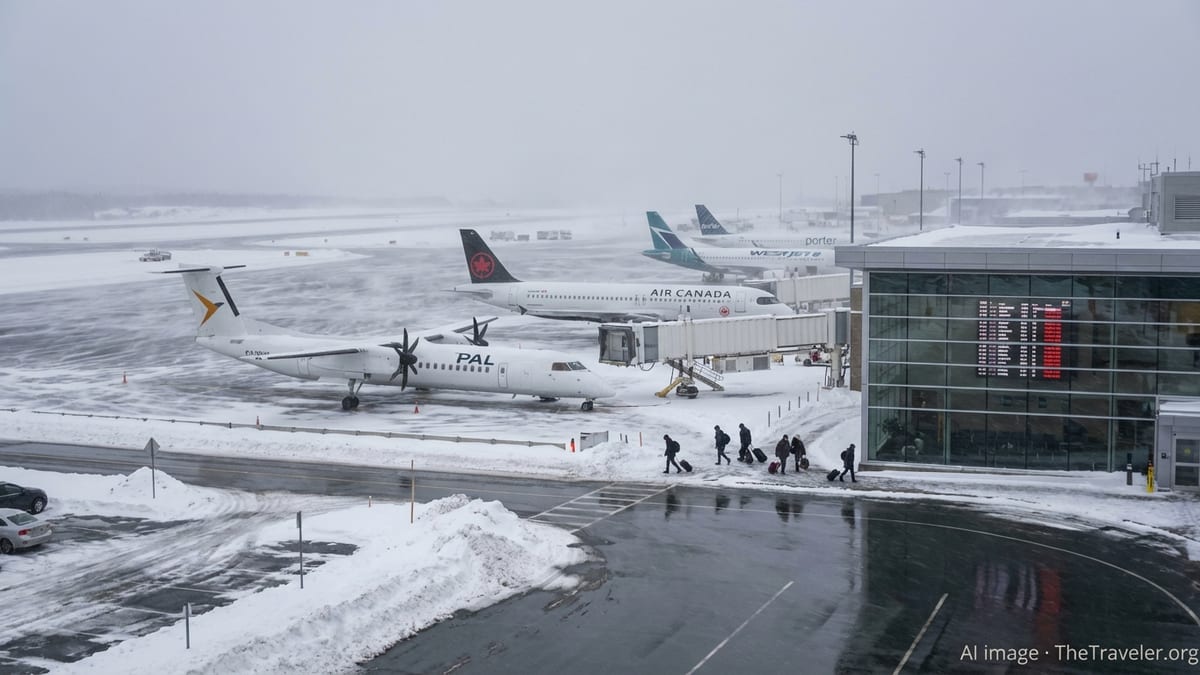
Severe Winter Storm Brings Operations to a Near Standstill
Airport authorities in St. John’s confirmed that a powerful winter system sweeping Atlantic Canada has forced airlines to significantly curtail operations on Tuesday, February 24. Blowing snow, poor visibility and challenging crosswinds combined to push St. John’s International Airport close to an operational standstill through much of the morning.
The wave of disruption follows a wider pattern across Canada and the northeastern United States, where a major blizzard has led to thousands of cancellations and delays over the past 48 hours. While some major hubs have begun to gradually recover, conditions at St. John’s remain difficult, with airport crews working continuously to keep runways, taxiways and aprons clear.
Officials have not formally closed the airport, but airlines have opted to proactively cancel and consolidate flights in anticipation of ongoing weather challenges. Carriers have warned that additional schedule changes remain possible if winds strengthen or visibility deteriorates again later in the day.
Travellers booked on affected services are being urged to verify their flight status before heading to the airport and to prepare for extended wait times should they already be at the terminal.
Key Routes to Toronto, Halifax, Ottawa and Calgary Disrupted
The 14 cancellations and six delays are concentrated on some of Newfoundland’s most critical domestic routes, affecting passengers bound for major Canadian cities including Toronto, Halifax, Ottawa and Calgary. These hubs serve as primary connecting points for both domestic and international travel, amplifying the impact of the disruptions well beyond the region.
Morning and midday departures to Toronto and Halifax have seen the heaviest cancellations, as airlines seek to avoid positioning aircraft into an active storm system with limited visibility and deteriorating surface conditions. Several inbound services destined for St. John’s from Ottawa and Calgary have also been scrubbed, forcing travellers to overnight at those hubs or rebook onto later services once conditions improve.
For many travelers, the cancellations have broken carefully timed connections to flights onward to Western Canada, the United States and Europe. Airline call centers and airport desks in St. John’s reported a surge in rebooking requests, with some passengers being rerouted through alternative Atlantic gateways such as Halifax, while others are being reprotected on flights in the coming days.
With aircraft and crews now displaced across multiple cities, schedule recovery is expected to take time even after the storm’s immediate effects subside. Passengers with nonessential travel have been encouraged to consider postponing trips where flexible fare policies allow.
Airlines Activate Flexible Policies as Passengers Face Uncertainty
PAL Airlines, Air Canada, Porter and WestJet have all introduced or extended flexible travel policies for customers affected by the St. John’s disruptions. These measures typically allow passengers to change their travel dates or routes without change fees, and in some cases to request refunds if flights are canceled outright or experience lengthy delays.
Air Canada and WestJet have indicated that they are prioritizing rebooking for stranded passengers on the next available flights while also adding capacity where possible once the weather window improves. Porter Airlines and PAL Airlines, both with significant regional operations in Atlantic Canada, are working to reschedule shorter-haul flights that connect smaller communities to St. John’s and other hubs.
Despite these measures, many travelers remain in limbo, particularly those who were due to connect to international departures or important events. Airport seating areas and check in halls in St. John’s were noticeably more crowded than usual as families, business travelers and vacationers monitored airline apps, departure boards and weather forecasts for signs of improvement.
Airport staff and airline agents on site have been advising passengers to ensure they have access to digital boarding passes, notifications and email updates, as last minute gate changes and rolling delays remain a possibility throughout the day.
Local Authorities Race to Clear Snow as More Weather Looms
The disruption at St. John’s International Airport is part of a broader struggle across the region to manage exceptional snowfall and drifting. Municipal crews in St. John’s have been working around the clock to keep key roads open, with officials acknowledging that the sheer volume of snow has complicated access to the airport and surrounding areas.
City leaders have signaled that extraordinary snow removal steps are being taken in an effort to restore mobility before the next system moves in. These efforts are aimed at ensuring that emergency services, essential workers and airport staff can reach the terminal complex safely, even as conditions remain challenging for the general public.
For travelers, the combination of flight cancellations and treacherous road conditions has meant that some have been unable to reach the airport in time for the few flights that are operating. Hotels near the airport and in downtown St. John’s reported an uptick in last minute bookings from passengers opting to stay put until skies and streets clear.
Local tourism operators warn that continued weather related disruption could weigh on late winter and early spring visitation to Newfoundland, particularly for travelers who rely on tight weekend or holiday windows to visit friends and family in the province.
What Travelers Should Do If Their Flight Is Affected
Travel experts are urging passengers caught up in the St. John’s disruptions to stay flexible and proactive. The first step is to monitor airline notifications closely and make use of official mobile apps, which typically update faster than airport departure boards. Customers whose flights show as canceled are advised to initiate rebooking requests as soon as possible, as available seats on later departures can fill quickly during widespread weather events.
Passengers already at St. John’s International Airport are being encouraged to seek assistance from airline customer service desks only after checking digital options, in order to reduce congestion in terminal queues. Many carriers now allow same day or next day rebooking to be completed entirely online, which can save time and preserve limited agent capacity for more complex itineraries.
Those with time sensitive commitments, such as cruises, business meetings or medical appointments, should inform their airline of the urgency, as agents may be able to prioritize certain rebookings or suggest alternative routings via other Canadian hubs. Travel insurance providers can also play a role, with some policies covering accommodation, meals and incidental expenses tied to severe weather disruptions.
With forecasts suggesting gradual improvement in conditions later this week, airlines are expected to rebuild their schedules and reposition aircraft and crews. However, the ripple effects of today’s cancellations and delays may linger for several days, and travelers planning to transit through St. John’s or connect via Toronto, Halifax, Ottawa or Calgary should continue to factor extra time and contingency plans into their journeys.