

More news on this day
Winter Storm Hernando has unleashed severe disruption across the North Atlantic corridor, forcing airlines to cancel hundreds of flights between major UK and US airports and leaving thousands of passengers stranded on both sides of the ocean.
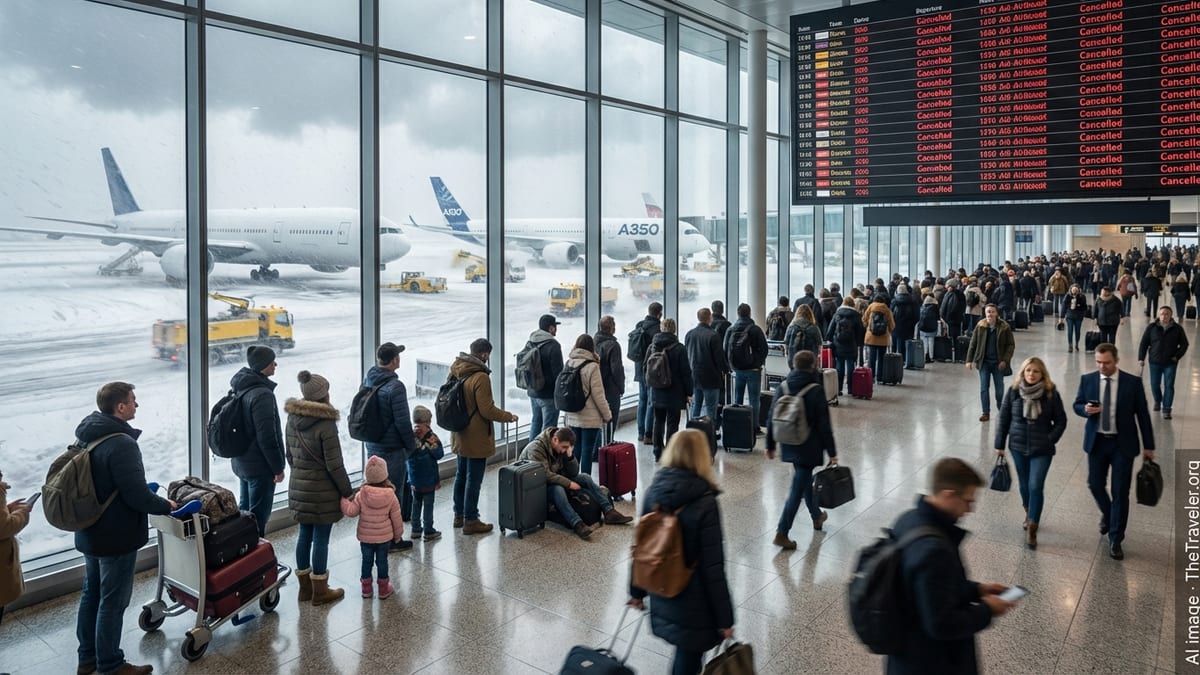
Major UK and US Hubs Hit by Mass Cancellations
Transatlantic air travel between the United Kingdom and the United States has been thrown into turmoil as Winter Storm Hernando batters the US northeast with heavy snow, gale-force winds and blizzard conditions. Airlines have preemptively scrapped hundreds of services in and out of New York, Boston and other key gateways, severing some of the world’s busiest long-haul routes.
In the UK, London Heathrow has seen all services to New York suspended for much of Monday, including flights to John F. Kennedy, Newark and other New York–area airports. Dozens more departures and arrivals have been grounded at Gatwick and Manchester as carriers respond to airfield closures and reduced capacity across the Atlantic.
On the US side, New York’s JFK, LaGuardia and Newark, along with Boston Logan, have experienced widespread shutdowns as runways are buried in snow and visibility plummets. Aviation data cited by industry outlets indicates that more than 8,000 flights into, out of and within the United States have been cancelled since Sunday, with a significant portion involving transatlantic links.
Airlines including British Airways, Virgin Atlantic, American Airlines, Delta Air Lines, United Airlines and JetBlue have all cancelled multiple UK–US rotations, warning customers that disruption is likely to last into Tuesday and potentially beyond as the storm continues to track along the eastern seaboard.
Heathrow, Gatwick and Manchester See Schedules Slashed
Heathrow, Europe’s busiest international hub, has borne the brunt of the UK disruption. On Monday, all scheduled Heathrow departures to New York were cancelled, affecting dozens of services operated by British and US carriers. Return legs from JFK, Newark and other east coast airports were also shelved as airfields across the region halted operations or sharply curtailed movements.
Gatwick, a major base for long-haul leisure and business routes, has reported cancellations and significant delays on flights bound for the US northeast, particularly services to New York and Boston. Manchester, the primary long-haul gateway for northern England, has also seen its transatlantic programme heavily cut back, with several departures to the US cancelled outright and others delayed as airlines juggle aircraft and crew availability.
Airports have advised passengers to arrive only if their flight is confirmed as operating and to monitor airline communications closely. Ground handling teams are contending with knock-on congestion from stranded aircraft, displaced crews and passengers needing rebooking across already busy half-term schedules.
While UK weather remains comparatively benign, operators emphasize that they are bound by conditions and air traffic restrictions at destination airports. When US hubs close, aircraft and crews cannot position as planned, triggering a cascade of cancellations that ripple through the wider European network.
US Northeast Airports at a Standstill
Storm Hernando has hammered the US mid-Atlantic and northeast corridor from Philadelphia through New York and up to New England, creating what forecasters describe as “impossible travel conditions” on the ground and in the air. Blizzard warnings are in force across a broad swathe of the region, with up to two feet of snow reported in some locations and wind gusts exceeding 60 miles per hour.
New York’s three main airports have been among the hardest hit. JFK and LaGuardia have seen extended runway closures as snowplows struggle to keep up with the intensity of the storm, while Newark has faced a combination of strong crosswinds, low visibility and heavy snowfall. Many airports have imposed temporary ground stops, limiting departures and arrivals to essential movements only.
Boston Logan has reported similar conditions, with airlines cancelling many transatlantic and domestic services as crews reach duty time limits and de-icing queues stretch for hours. The result has been a near-freeze in the flow of traffic across the North Atlantic, one of the world’s busiest aviation corridors, with knock-on impacts reaching as far as Dublin, Shannon, London and other European hubs.
US carriers have responded by issuing broad travel waivers, allowing passengers booked to and from affected airports to change dates without standard fees. However, limited seat availability on alternative dates, combined with the sheer scale of cancellations, means many travelers still face lengthy delays before they can be re-accommodated.
Ireland’s Key Transatlantic Gateways Also Disrupted
The disruption has extended beyond the UK to Ireland’s major transatlantic airports. Dublin Airport has confirmed that at least 13 flights to and from the United States have been cancelled on Monday, primarily services to New York JFK, Newark and Boston operated by Aer Lingus, Delta Air Lines and United Airlines. A transatlantic flight from Shannon to Boston has also been grounded.
Officials at Dublin have warned that further cancellations are possible if conditions in the US do not improve. The airport has urged passengers due to travel to the US east coast in the coming days to check the status of their flight before leaving home, as schedules remain in flux and last-minute changes are common.
Irish carriers are offering flexible rebooking options similar to those announced by US and UK airlines, although passengers have been advised that fare differences may apply on some new itineraries. Some travelers are choosing to delay their trips entirely, rather than risk being stranded at a connecting hub while the storm continues.
With Ireland serving as a major connecting point for transatlantic traffic between Europe and North America, the cancellation of multiple daily flights has a disproportionate impact on travel patterns. Tourists, business travelers and those making family visits all face uncertainty as airlines attempt to rebuild schedules around the evolving weather picture.
Stranded Passengers Face Long Delays and Limited Options
For passengers caught in the middle of the disruption, the human impact is immediate and often stressful. At Heathrow, Gatwick and Manchester, long queues have formed at airline service desks as travelers seek rebooking, hotel vouchers or alternative routings. Some passengers have been offered journeys that involve multiple connections or departures several days later, reflecting the limited capacity available once operations resume.
In the US, images from New York and Boston show terminal concourses filled with travelers sitting on luggage and sleeping on benches as they wait for new flight options. Hotels near major airports are reporting high occupancy, and last-minute room rates have surged in some locations as stranded passengers compete for accommodation.
Families returning from school holidays, business travelers racing to make meetings and tourists reaching the end of winter breaks have all been affected. Many have described difficulty reaching customer service lines, with call centers overwhelmed by the volume of queries and online rebooking tools struggling to keep pace with rolling cancellations.
Consumer advocates are advising travelers to document all out-of-pocket expenses, such as meals and emergency accommodation, in case they are eligible for reimbursement under airline policies or travel insurance. However, they caution that compensation rules differ between jurisdictions and, in many cases, extreme weather is treated as an extraordinary circumstance, limiting automatic payouts.
Airlines Activate Waivers and Recovery Plans
Airlines on both sides of the Atlantic say they moved early to cancel flights in a controlled manner rather than risk large numbers of aircraft and passengers becoming stranded in the wrong place. Carriers have published extensive lists of affected routes and dates, alongside travel waivers allowing customers more flexibility to change their plans.
British Airways, Virgin Atlantic and other UK-based carriers have introduced date-change options for passengers booked on flights between the UK and affected US airports, often waiving fees for travel within a defined time window. Major US airlines have implemented similar policies, covering a wide network of domestic and international routes tied to the storm’s footprint.
Behind the scenes, operations teams are working to reposition aircraft and crews once conditions permit, a process known in the industry as recovery. Because Hernando has impacted multiple hubs simultaneously, the recovery is expected to be complex, with airlines warning that delays and cancellations may persist into midweek even after snow stops falling.
Industry analysts note that preemptive cancellations, while disruptive, can help protect safety and prevent even more chaotic scenes at airports. By reducing traffic in advance, airlines can free up resources to focus on essential operations and give passengers more predictable options for rebooking.
What Travelers Between the UK and US Should Do Now
With conditions still evolving, travel experts are urging anyone scheduled to fly between the UK or Ireland and the US northeast over the next several days to adopt a cautious, proactive approach. The first step is to confirm flight status directly with the airline before setting out for the airport, as departures can be cancelled or retimed with little notice.
Passengers holding non-essential bookings are being encouraged, where possible, to take advantage of waivers and voluntarily move their travel to later in the week, reducing pressure on already strained operations. Those who must travel are advised to build in generous connection times, carry key essentials in hand luggage and ensure that airline and travel app notifications are enabled.
Travel insurance policies should be reviewed carefully to understand coverage for weather-related disruption. While many policies do not offer cash compensation for delays caused by severe weather, some may reimburse additional accommodation, meals or alternative transport, subject to conditions.
For travellers already stranded at intermediate points, staying flexible about routing can improve chances of getting home. This might involve accepting alternative arrival airports in the UK or US, or routing via less affected hubs elsewhere in Europe or North America, depending on availability and cost.
Outlook: Ongoing Disruption as Hernando Slowly Moves On
Meteorologists expect Storm Hernando to gradually track north-eastward and weaken over the next 24 to 48 hours, but warn that strong winds, low temperatures and lingering snow and ice will continue to affect aviation conditions even after the heaviest bands of snowfall pass.
Airport authorities across the US northeast emphasize that clearing snow, de-icing aircraft and restoring full runway capacity is a time-consuming process. As a result, many carriers have already trimmed schedules for Tuesday and are cautioning that further short-notice changes remain possible. The full resumption of normal transatlantic operations may not occur until later in the week.
For now, the priority for airlines and airports is to move stranded passengers to their destinations, reposition aircraft and crews, and stabilize timetables. With peak winter travel still under way and school holidays in progress in parts of Europe, capacity on key routes is tight, making it harder to absorb disruption of this magnitude.
As Storm Hernando joins the growing list of intense winter systems to batter the North Atlantic region in recent years, questions are again being raised about the resilience of global air travel to extreme weather. For thousands of travellers grounded on both sides of the ocean, however, the immediate focus is simply on when they can finally take off.