

More news on this day
Thousands of air travelers on both sides of the Atlantic are facing cascading disruptions as Storm Hernando lashes the United Kingdom and the northeastern United States, forcing airlines to cancel thousands of flights and leaving terminals at Heathrow, Gatwick, Manchester and key U.S. hubs packed with stranded passengers.
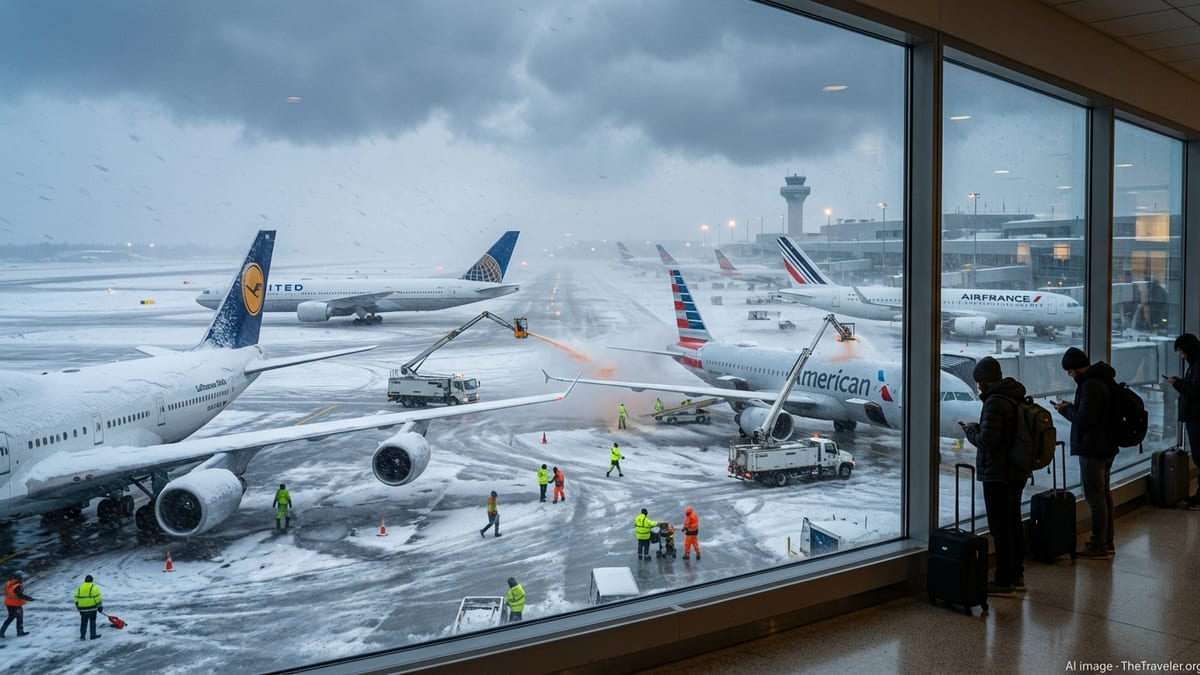
UK Hubs Battered as Storm Hernando Slams Heathrow, Gatwick and Manchester
In Britain, Storm Hernando has pushed the country’s busiest airports into crisis mode, with powerful crosswinds and bursts of heavy rain and sleet disrupting tightly choreographed operations. At London Heathrow, one of the world’s largest international gateways, airlines have axed hundreds of arrivals and departures as low visibility, standing water on taxiways and safety concerns for ground crews slowed the airfield to a crawl. Similar scenes have played out at Gatwick and Manchester, where long queues snaked through terminals on Monday morning while departure boards filled with red “canceled” and “delayed” notices.
Airport operators said they were working around the clock with air traffic control and airline partners to maximize the limited number of movements permitted in the turbulent conditions. Reduced arrival rates, needed to maintain safe spacing in gusty winds, meant even flights that did operate often landed or took off hours behind schedule. Passengers reported crowded gate areas, scarce seating and difficulty reaching airline call centers at the height of the disruption.
Operational managers warned that the backlog would persist long after the most intense bands of wind and rain move through. With aircraft and crew out of position across Europe and the North Atlantic, carriers were forced to consolidate services and rebook passengers on later flights, in some cases several days away. The result has been a rolling wave of cancellations that continued into the start of the workweek, catching even seasoned business travelers off guard.
Thousands Stranded as Cancellations Climb into the Thousands
As Storm Hernando’s footprint widened, aviation data from multiple tracking services showed cancellations quickly climbing into the thousands across Europe and North America. In the UK alone, several hundred flights were scrubbed over the weekend, with knock-on effects rippling to secondary airports that depend on feeder services from London and Manchester. Travelers bound for long-haul destinations found themselves stuck in limbo, unable to begin their journeys until aircraft and crews could be repositioned.
On the U.S. side, the numbers were even more stark, with major tracking platforms reporting well over 8,000 flights canceled or significantly delayed in connection with Hernando’s march up the East Coast. New York’s three major airports, along with Boston and Philadelphia, bore the brunt of the storm-related schedule cuts. With so many aircraft grounded, even routes to sunny, storm-free destinations in Florida, the Caribbean and the U.S. West Coast saw widespread disruption.
For many passengers, the situation was made worse by the sheer scale of the event. Airline apps and websites groaned under record traffic as travelers tried to rebook, while customer-service hotlines had hold times stretching to hours. Some passengers reported sleeping on terminal floors or huddling in cordoned-off seating areas overnight as nearby hotels filled to capacity. Others opted to scrap their trips entirely, seeking refunds or shifting to rail and road alternatives where possible.
Historic Blizzard Conditions Cripple the U.S. Northeast
Across the Atlantic, Hernando has exploded into a full-fledged nor’easter over the weekend, rapidly intensifying off the Mid-Atlantic coast and drawing in enough cold air to unleash blizzard conditions on the nation’s most densely populated corridor. From Washington and Philadelphia through New York and Boston, whiteout conditions, wind gusts exceeding 60 miles per hour and snowfall rates of several inches per hour have brought ground and air transport to a near standstill.
Blizzard warnings and states of emergency stretch across a swath of the Northeast, with forecasters warning that some metropolitan areas could see close to two feet of snow by the time the storm finally pulls away. Authorities in New York and New England have urged residents to stay off the roads, and many schools and government offices remained closed as travel became treacherous. Interstate highways were dotted with jackknifed trucks and stranded vehicles, further complicating efforts to move airport staff and passengers to and from terminals.
Airports from New York’s John F. Kennedy and LaGuardia to Newark Liberty, Boston Logan and Philadelphia International scaled back to skeleton operations or temporarily suspended flights outright as visibility plunged and crosswinds exceeded safe thresholds for many aircraft types. Runway plow teams labored in near-constant rotation, only to see heavy snow quickly erase their progress. Inside the terminals, departure lounges grew increasingly crowded as rolling waves of cancellations left passengers with few options beyond waiting out the storm.
Airlines Ground Fleets and Activate Weather Waivers
Confronted with dire forecasts, airlines on both sides of the Atlantic moved swiftly to trim schedules and introduce flexible rebooking policies. Major U.S. carriers including Delta Air Lines, American Airlines, United and JetBlue announced extensive preemptive cancellations concentrated on Sunday and Monday, particularly at hub airports in New York, Boston and Philadelphia. By Monday morning, some carriers had effectively halted operations for significant portions of the day at LaGuardia, JFK and Boston, planning only a gradual restart once winds eased and snow crews could clear runways.
These airlines and their international counterparts have rolled out weather waivers that allow customers to change their travel dates without the usual change fees, and in many cases without paying a fare difference if they travel within a specified window. For travelers whose flights are canceled outright, consumer advocates have reminded passengers that they are typically entitled to a refund if they choose not to travel, even on nonrefundable tickets. Carriers have urged customers to use digital channels for rebooking, noting that the same options available to call-center agents appear in airline apps and websites.
In Europe, transatlantic services linking the UK to the U.S. East Coast have been particularly hard hit. Airlines flying from London and Manchester to New York, Boston and Philadelphia have canceled numerous crossings in anticipation of the storm’s worst impacts, both at departure and arrival airports. Some long-haul flights have been retimed to steer around the brunt of Hernando’s winds, while others were diverted to unaffected hubs in mainland Europe. Industry analysts say the carefully calibrated choreography of global aircraft rotations will likely remain off balance for days.
Transatlantic Travelers Face Double Disruption
For travelers attempting to cross the Atlantic this week, Storm Hernando represents a rare double blow, simultaneously disrupting departure airports in the UK and arrival airports in the U.S. Northeast. Passengers leaving Heathrow or Gatwick for New York, Boston or Philadelphia have found their flights canceled not only because of conditions in Britain but also due to airfield closures and reduced arrival slots on the American side. In some cases, aircraft that did depart have been forced to divert mid-flight to airports with more favorable weather, such as Toronto, Montreal or mid-continent hubs, prompting complex rerouting efforts.
Travel agents reported a surge in last-minute itinerary changes as those with flexible plans opted to reroute through alternative gateways less affected by the storm, such as Dublin, Amsterdam or Madrid. Yet even these workarounds have been less reliable than usual, as Hernando’s broad geographic reach and the high volume of displaced passengers quickly filled remaining seats. Some travelers have resigned themselves to delays of 48 hours or more, choosing to stay with friends or in city-center hotels rather than endure extended waits at the airport.
For those already in transit when cancellations cascaded through the system, the experience has been particularly challenging. Families on half-term holidays returning from ski trips or winter sun destinations, business travelers caught between meetings and students heading back to universities have all had to improvise. Social media is full of images of packed concourses, queues at airline service desks stretching far beyond the roped-off areas and weary passengers wrapped in airline-issued blankets.
Scenes on the Ground: Long Queues, Full Hotels and Frayed Nerves
Inside major terminals in London, New York and Boston, the human side of Hernando’s disruption has been on full display. At Heathrow’s departure halls, travelers crowded around information screens, craning to see whether their flight might still operate or had joined the growing list of cancellations. Lines for customer-service counters stretched past retail areas as agents tried to rebook whole planeloads of passengers at a time, often with limited options left on the system.
Nearby airport hotels quickly filled to capacity, driven by airline-voucher customers and independent travelers alike. Those unable to find rooms turned to city-center accommodations, pushing up prices across central London and Manhattan. Some airport authorities opened additional waiting areas and encouraged passengers with stable rebooking plans to leave the terminals and return closer to their new departure times, in a bid to ease crowding.
For airport and airline staff, the storm has meant extended shifts and intense pressure. Ground handlers working on exposed ramps faced stinging wind-driven precipitation and slick surfaces, while pilots and cabin crew contended with rapidly changing rosters and duty-time limits. Customer-service teams, both on-site and in remote call centers, have borne the brunt of travelers’ frustrations, attempting to explain complex operational constraints to passengers facing missed holidays, weddings, conferences and family reunions.
Broader Travel Network Feels the Ripple Effects
Hernando’s influence is extending well beyond the immediate storm zone, as aircraft positioning and crew availability issues radiate across global networks. Airports far from the worst weather, including hubs in the U.S. Midwest and South, have reported higher-than-normal numbers of delayed arrivals and departures as they wait for aircraft originating in the Northeast. This in turn affects onward connections to destinations in Latin America, the Caribbean and the U.S. interior.
Rail and road networks are also under strain as travelers seek alternatives. In the UK, intercity rail operators have reported high demand from passengers attempting to bypass affected airports and reach continental Europe by train, while in the U.S. Northeast, long-distance coaches and intercity rail have seen brisk business from those abandoning air travel altogether. However, even these modes face weather-related challenges, as snow-clogged highways and ice on overhead lines have forced speed restrictions and schedule reductions.
Tour operators and travel insurers are bracing for a spike in claims and itinerary changes. Many package holidays scheduled to depart in the coming days have been reshuffled to depart later in the week, while some short-break city trips have been canceled outright as it became clear that travelers would lose most of their planned time at destination. Analysts suggest that February’s disruption could weigh on airlines’ quarterly results, particularly for carriers heavily exposed to transatlantic and Northeast U.S. routes.
What Travelers Need to Know in the Days Ahead
With forecasts showing Storm Hernando slowly easing after Monday but leaving a deep blanket of snow and lingering gusty winds in its wake, aviation experts caution that the disruption is far from over. Clearing backlogs of stranded passengers will take days, not hours, particularly on heavily booked transatlantic services where spare seats are scarce. Travelers with nonessential trips have been urged to consider postponing journeys, especially those involving tight connections through the Northeast or the UK’s major hubs.
Passenger advocates emphasize the importance of knowing one’s rights and staying flexible. In general, if an airline cancels a flight, customers are entitled to choose between a refund and rebooking on a later service, though the exact rules vary by jurisdiction and carrier. Travel insurance policies may cover some additional expenses such as accommodation and meals, but many exclude weather-related disruption, underscoring the need to read policy terms carefully before filing claims.
For those who must travel, experts recommend monitoring flight status obsessively via airline apps, airport alerts and text notifications, arriving at the airport only once a flight shows as expected to operate, and packing extra patience along with essential medications and chargers in carry-on bags. As Hernando’s legacy lingers across the skies of the North Atlantic, flexibility and preparation remain the key tools for navigating one of the most disruptive winter storms in recent memory.