

More news on this day
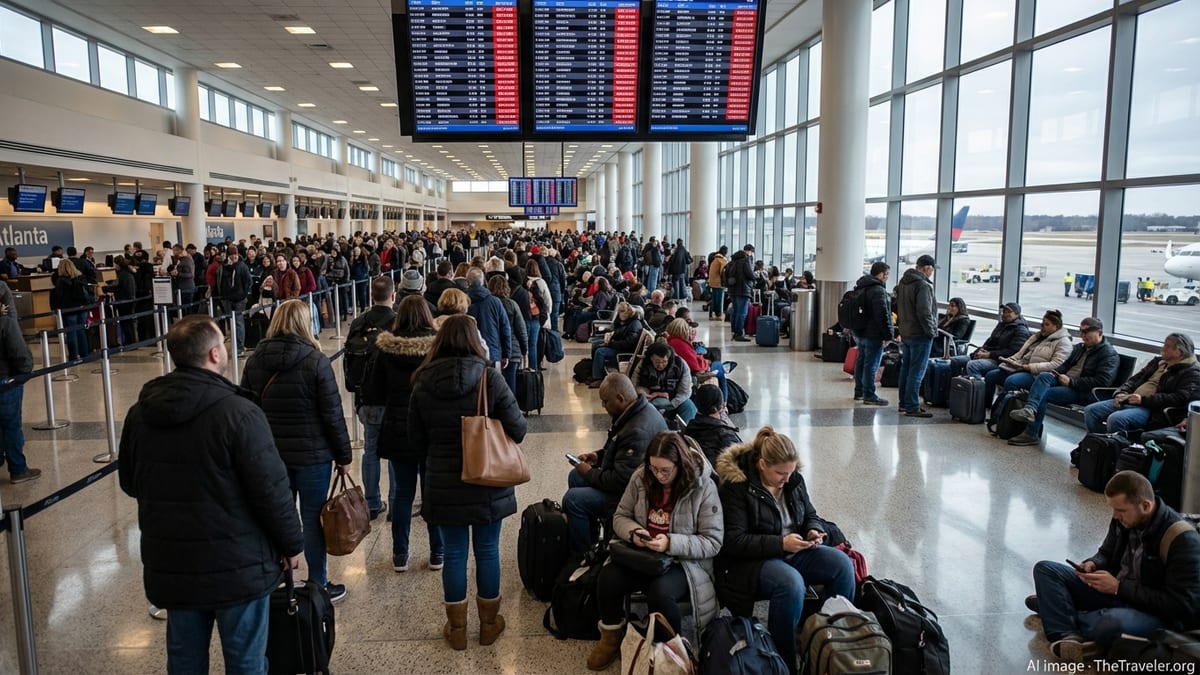
A powerful winter storm battering the Northeast and a cascade of knock-on disruptions across the national air network have triggered 140 delays and 234 cancellations for Delta Air Lines, Southwest, United and Frontier on Monday, snarling travel through Hartsfield-Jackson Atlanta International Airport and rippling out to New York, Chicago and dozens of other U.S. cities.
Storm Hernando Hammers the Network, Not Just the Northeast
The immediate culprit behind Monday’s wave of cancellations and delays is Winter Storm Hernando, a fast-deepening Nor’easter that has all but shut down air travel at key airports in the Northeast and Mid-Atlantic. While the heaviest snow has fallen hundreds of miles from Atlanta, the storm’s reach is being felt deep into the U.S. route map as airlines pull aircraft and crews out of harm’s way and reset schedules.
With major hubs in New York and Boston reporting extremely high cancellation rates, carriers have been consolidating flights, preemptively axing rotations and holding aircraft on the ground to avoid having planes and crew trapped where they cannot operate safely. That has turned a regional weather event into a national operational shock, particularly for large network airlines like Delta and United with extensive connecting banks that rely on precise timing.
Even where local skies are clear, airports across the country are seeing thinner schedules, rolling delays and last-minute gate changes as airlines attempt to rebuild their operations around the storm. Atlanta, the country’s busiest passenger hub, is playing an outsized role in that recovery effort, and the strain is increasingly visible on departure boards and in crowded gate areas.
Atlanta’s Hub Role Amplifies Disruptions
Hartsfield-Jackson Atlanta International Airport, typically one of the most reliable major hubs in the United States, entered the day with largely favorable local conditions. Yet the airport has nonetheless emerged as a flashpoint in Monday’s air-travel disruption, highlighting how a storm several states away can cripple a tightly wound national network.
Delta, which maintains its largest global hub in Atlanta, has absorbed the bulk of the disruption there. A meaningful portion of the 234 cancellations tied to the storm involve flights that either originate or connect through Hartsfield-Jackson, with aircraft and crews rerouted, held back or re-assigned at short notice. That has left some departure banks significantly thinned out, particularly for flights heading toward storm-battered cities like New York, Boston and Philadelphia.
Southwest, United and Frontier, while smaller players in Atlanta than Delta, are also contending with rolling network impacts. Schedule data and airline updates show that several of Monday’s cancellations and dozens of delays involve Atlanta-linked routes on these carriers, especially those connecting to the Northeast and upper Midwest. As planes arrive late from disrupted airports or are reassigned to cover other critical routes, Atlanta’s departure and arrival patterns have grown increasingly choppy through the day.
New York and Chicago Bear the Brunt of Weather Impacts
The worst operational pain remains concentrated in the Northeast, where Winter Storm Hernando has dropped heavy snow, whipped up strong winds and triggered blizzard warnings along parts of the I-95 corridor. New York-area airports, including John F. Kennedy International, LaGuardia and Newark Liberty, reported exceptionally high cancellation rates as carriers scrubbed the vast majority of their Monday departures and arrivals to protect safety and give ground crews time to clear snow and ice.
Those decisions have cascaded into Delta, Southwest, United and Frontier networks. Flights linking Atlanta and other Southern hubs to New York have been among the first to be canceled, with only a skeletal schedule remaining in and out of the region. Passengers booked on those routes have been offered fee waivers and rebooking options, but in many cases are being pushed one or two days out due to limited available seats.
Chicago-area airports, especially O’Hare International, are experiencing their own wave of weather-related disruption, though conditions there are more mixed. Data from the Chicago Department of Aviation shows hundreds of cancellations across arrivals and departures, as airlines adjust to challenging winter conditions in the Midwest and the knock-on effects from the Northeast. For travelers booked on connecting itineraries via Chicago on Delta, United and their regional partners, that has added another layer of delay and uncertainty.
Delta, Southwest, United and Frontier Adjust Schedules in Real Time
Across the country, airline operations centers spent the weekend and early Monday poring over weather models, air traffic constraints and crew-availability charts as they worked to blunt the impact of the storm. For Delta, Southwest, United and Frontier, the result has been a mix of preemptive cancellations, rolling delays and selective route thinning that collectively add up to 140 delays and 234 cancellations across their combined networks.
Delta’s strategy has leaned toward aggressive early cancellations on routes into the most heavily affected cities, especially New York and Boston, while attempting to preserve a reliable skeleton schedule to smaller markets and key domestic connections. That has produced visible gaps in the timetable at Hartsfield-Jackson and other hubs but has allowed operations teams more control over aircraft and crew positioning as the storm evolves.
Southwest, which operates on a point-to-point model rather than a classic hub-and-spoke system, has focused on consolidating flights on corridors where passenger demand can be grouped and crews can be repositioned efficiently. That has translated into clusters of cancellation and delay along popular East Coast and Midwest routes, with particular pressure at airports in Florida, Georgia and the Mid-Atlantic that serve as jumping-off points for connections into the storm zone.
United and Frontier, each with different network structures and customer profiles, have likewise trimmed schedules to and from major storm-affected cities while juggling aircraft rotations across the rest of the country. For Frontier, which runs a lean operation with fewer spare aircraft and crews, even a small number of cancellations can trigger outsized disruption for passengers, particularly on less-frequent routes where alternative same-day options are limited.
Passenger Frustration Mounts Amid Long Lines and Sparse Information
On the ground at Atlanta, New York and Chicago airports, travelers faced the all-too-familiar hallmarks of a major disruption day: long lines at check-in and customer service counters, scarce seating near gates and a constant crackle of public-address updates announcing delays, cancellations and gate changes. For many, the difficulty has been compounded by the national reach of the storm-related disruptions, which limit alternate routing options.
Passengers with early-morning departures often learned of cancellations overnight or upon arriving at the airport, leaving little time to pivot. While mobile apps and airline websites are providing rolling updates and some self-service rebooking options, travelers in busy terminals reported waiting more than an hour to speak with an agent in person in hopes of securing hotel vouchers, meal credits or guaranteed seats on the next available flight.
Families returning from school vacations, business travelers with tightly scheduled meetings and international passengers seeking to make onward connections have all been caught in the bottleneck. Many who managed to rebook have accepted multi-stop itineraries through secondary hubs, or even departures from different airports, in order to reach their destinations by midweek.
For those stranded mid-journey, frustration has been heightened by the sense that local weather does not always match the severity of the disruption. Sunny skies in Atlanta or intermittent snow in Chicago can be hard to reconcile with canceled flights, but operations managers emphasize that aircraft and crews stranded in New York, Boston or Philadelphia can ripple across the network for days.
Airlines Roll Out Weather Waivers and Limited Relief
In response to the rapidly deteriorating conditions brought by Winter Storm Hernando, airlines moved over the weekend to issue broad travel waivers, allowing customers booked on affected dates and routes to change plans without incurring standard change fees. Carriers including Delta, Southwest, United and Frontier have published specific lists of eligible origin and destination airports, with many focusing on the Northeast corridor but extending into the Mid-Atlantic and affected Midwest cities.
Passengers who can postpone their trips or shift to later in the week are being encouraged to do so, both to reduce congestion during the peak of the storm and to improve their chances of finding seats on alternative flights. In many cases, fare differences are being waived for customers willing to travel within a defined rebooking window, although travelers seeking to change origin or destination airports, or extend trips beyond the waiver period, may still face higher costs.
For those already on the road, relief is more limited. Airlines are providing hotel and meal vouchers in a subset of cases, typically when disruptions are not classified as purely weather-related. Because Monday’s chaos is largely driven by extreme conditions beyond carriers’ control, much of the support has focused on helping travelers find alternate routings rather than on compensation. Airport staff and volunteer teams have stepped up to distribute snacks, bottled water and basic assistance in some of the hardest-hit terminals.
Travel insurance and premium credit card benefits are offering a secondary safety net for some passengers. Policies covering trip interruption and delay can reimburse out-of-pocket expenses for hotels and meals, though claims processing often takes days or weeks. For many stranded travelers, the more pressing need is simple clarity about when they will be able to move again.
Broader System Strain Highlights Vulnerabilities
Monday’s disruption comes on the heels of a bruising winter for the U.S. aviation system, which has already weathered multiple storms, repeated bouts of extreme cold and intermittent technical issues affecting air traffic control facilities and airline operations centers. Each new storm layer adds stress to a system that industry analysts say is operating with limited slack in both aircraft availability and staffing.
Despite investments since the pandemic recovery in hiring pilots, flight attendants, mechanics and ground handlers, many carriers still rely on tight crew scheduling and high aircraft utilization to maintain profitability. Those efficiencies can quickly turn into vulnerabilities when weather halts flying at several large airports simultaneously. A wave of cancellations like Monday’s can leave aircraft and crews out of position for days, lengthening the time it takes for normal operations to resume even after skies clear.
Experts note that the country’s air-traffic infrastructure is also feeling the strain. Controllers must juggle reroutes around storm cells, shifting arrival and departure flows and constraints on runway capacity as airports cycle through de-icing operations. When storms coincide with high-demand travel periods, as is the case this week with winter getaways and business travel ramping back up, the result is often protracted delays that extend well beyond the immediate weather footprint.
For travelers, the lesson is that a major storm centered hundreds of miles away can still upend plans at home. The interconnected nature of U.S. airline networks means a blizzard in New York or Boston can cause missed connections in Atlanta, crowded terminals in Chicago and full flights in smaller regional airports that serve as alternates for displaced passengers.
What Travelers Can Expect in the Coming Days
With meteorologists expecting Winter Storm Hernando to linger over parts of the Northeast into Tuesday and potentially spawn additional localized issues as it pulls away, airlines are cautioning that schedule disruptions will not end when the last snowflake falls. Operations teams will need time to reposition aircraft, reassemble full crews and rebuild normal departure banks across hubs like Atlanta, Chicago and major coastal airports.
For passengers whose Monday flights were canceled, the earliest realistic rebooking options in many markets are one to two days out, especially on high-demand routes into New York, Boston and other storm-affected cities. Travelers with flexibility are being urged to consider midweek departures, fly at off-peak times or route through alternate hubs where space remains available.
At Hartsfield-Jackson and other major connecting airports, the next 24 to 48 hours are likely to bring a patchwork of operations, with some banks running close to on time while others see lingering delays as late-arriving aircraft and crews filter back into place. Airlines say they will continue to adjust schedules in real time in an effort to stabilize operations ahead of the next wave of winter weather systems forecast to move across parts of the country later in the week.
For now, the advice from airport officials and airlines is straightforward: check flight status frequently, make use of mobile apps for rebooking where possible, and avoid heading to the airport until a revised itinerary is confirmed. In a winter defined by recurring storms and thin operational margins, informed and flexible travelers will have the best chance of navigating the turbulence ahead.