

More news on this day
Travelers across South Korea and beyond are facing significant disruption as Korean Air and Philippine Airlines cancel multiple long-haul and regional flights linking Seoul with New York, Boston, Manila and other key hubs, after a powerful winter storm sweeping the United States East Coast triggered cascading operational challenges throughout Northeast Asia.
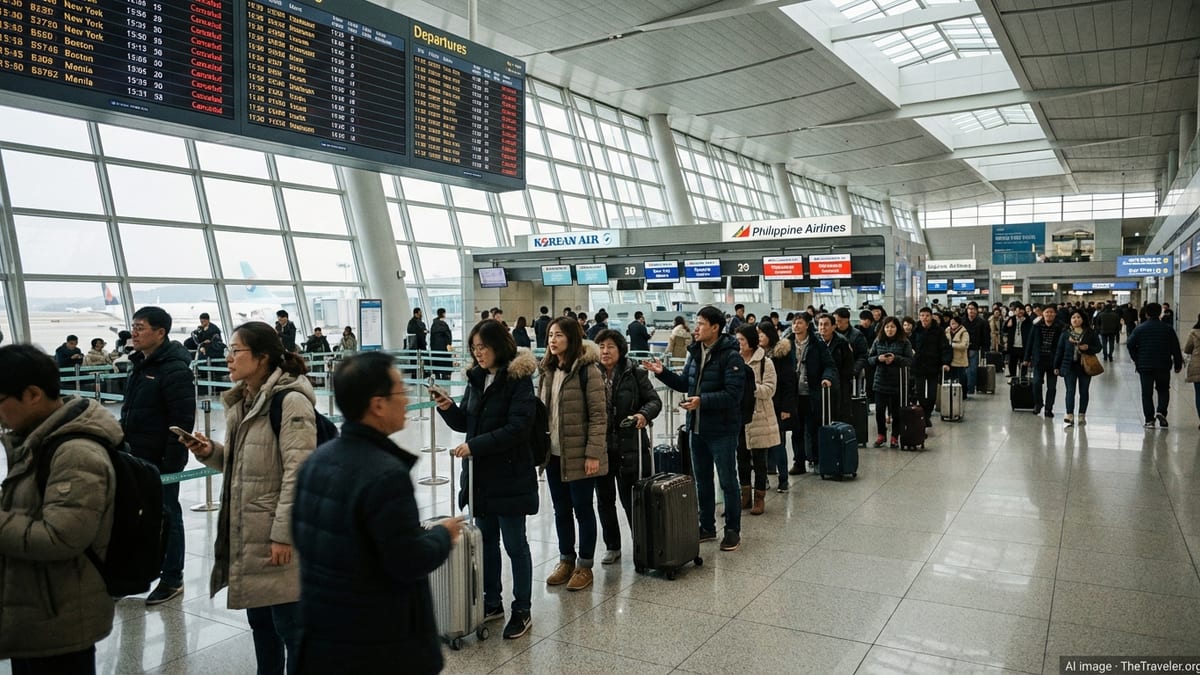
Seoul Travel Plans Upended as Blizzard Ripples Across Networks
South Korea’s main international gateway at Incheon International Airport is feeling the knock-on effects of a fierce blizzard hammering the northeastern United States, with Korean Air canceling several major transpacific departures and returns on its New York and Boston routes. The high-demand links, among the busiest long-haul corridors out of Seoul, have been temporarily pulled from the schedule as visibility, runway conditions and airport operations deteriorate at JFK and Boston Logan.
The cancellations include multiple Korean Air services between Incheon and New York, as well as both directions on the Boston route, affecting travelers who had planned to connect onward to destinations across North America and Europe. The airline has stressed that the decision is driven entirely by safety concerns and by the operational shutdowns unfolding at East Coast airports as the storm intensifies.
With the United States National Weather Service warning of near-impossible travel conditions in parts of New York and New England, carriers around the world have been forced to adjust. For Korean Air, that has meant preemptively grounding flights rather than risking aircraft, crew and passengers in an increasingly volatile environment.
In practice, the move has turned what was expected to be a busy late-February travel weekend into an exercise in contingency planning for thousands of passengers relying on Seoul as a key transpacific gateway.
Five Key Flights Scrubbed as Korean Air Pulls Back From New York and Boston
According to airline and industry updates on Monday, Korean Air has canceled at least five core services tied to its New York and Boston operations, all within a narrow window aligned to the worst of the winter weather. Those include multiple Incheon to New York JFK departures and at least one corresponding return, as well as both legs of its Incheon to Boston rotation.
The affected New York flights include high-profile services that typically carry a mix of business travelers, students and leisure passengers moving between South Korea and the financial capital of the United States. The Boston route, which has grown in importance thanks to strong education and tech-sector links, has also been temporarily suspended, creating acute uncertainty for travelers bound for New England’s universities and corporate hubs.
Passengers holding tickets on the canceled flights are being offered rebooking on later services once the storm passes and East Coast airports gradually reopen to normal operations. Some have been routed through alternative hubs on partner carriers, while others are being asked to push their trips back by several days in anticipation of a prolonged recovery period on the US side.
Even for travelers ultimately able to depart, the immediate cancellations have broken carefully planned itineraries involving tight onward connections, highlighting how vulnerable long-haul networks remain to extreme weather on either end of the route.
Philippine Airlines Adjusts Seoul–Manila Operations Amid Wider Disruption
The chaos is not limited to transpacific flights. Philippine Airlines has also adjusted its schedules on services connecting Seoul with Manila, canceling several Incheon–Manila rotations that were due to feed passengers to its wider Southeast Asia and long-haul network. Though the Philippines itself is not directly in the path of the East Coast blizzard, the ripple effects of aircraft and crew positioning, as well as broader regional congestion, have put pressure on schedules.
The airline’s Manila hub plays a critical role for travelers shuttling between Northeast Asia and destinations across the Philippine archipelago, as well as for those continuing to Australia, the Middle East and North America. The decision to cancel multiple Seoul–Manila flights has therefore impacted not only point-to-point passengers but also those relying on tight connections onward from Ninoy Aquino International Airport.
Philippine Airlines has said its operations teams are working to consolidate passengers from canceled Seoul services onto remaining flights with available seats, while also introducing flexibility around change fees and fare differences. However, with aircraft across the region running close to capacity as winter and early spring travel demand holds strong, finding space is proving challenging for some travelers.
For Filipinos working in South Korea and Korean visitors heading to the Philippines for holidays or family visits, the sudden cancellations have thrown up last-minute hotel expenses, visa timing issues and the risk of missing important events back home.
US East Coast Blizzard Drives Global Airline Cancellations
The cancellations affecting Korean Air and Philippine Airlines are part of a far larger wave of disruption triggered by the severe winter storm now battering the northeastern United States. Airlines operating into New York, Boston, Philadelphia and other major East Coast airports have collectively canceled thousands of flights over the past 48 hours, preempting what forecasters describe as historic snowfall, intense winds and dangerously low visibility.
Major US carriers have signaled temporary halts or dramatic reductions in operations at LaGuardia, JFK and Boston Logan, with additional schedule cuts stretching down the I‑95 corridor. International airlines from Europe, the Middle East and Asia have followed suit, grounding long-haul services that would otherwise be arriving into or departing from airports with limited or no operational capacity.
For Seoul-based travelers, the storm’s reach is being felt most acutely on the flagship Korean Air routes to New York and Boston, which are tightly integrated with US domestic networks. Even if a Korean Air aircraft were able to depart Incheon, the closure of onward connections or airport ground transport in New York and Boston would leave travelers stranded upon arrival, prompting the airline to err firmly on the side of caution.
With weather models suggesting the storm’s effects will linger for several days, recovery is expected to be gradual, meaning continued schedule volatility and potential short-notice changes well into the week.
Passengers Face Long Lines, Rebookings and Unexpected Layovers
Inside Incheon’s terminals, scenes on Monday reflected a now-familiar pattern of modern air travel disruption: long lines at check-in and ticket desks, departure boards dotted with red "canceled" notices, and travelers huddled over phones trying to secure alternative routings. Korean Air staff, supported by ground-handling partners, have been working extended shifts to process rebookings and field questions from anxious passengers.
Some travelers bound for New York or Boston have been offered rerouting through West Coast gateways such as Los Angeles and San Francisco when seats are available, with onward US domestic segments handled by partner airlines. Others have opted to postpone their trips altogether, accepting travel vouchers or open-ended tickets valid once operations normalize.
For passengers on canceled Philippine Airlines services between Seoul and Manila, the experience has been similar. Last-minute hotel stays near Incheon, missed domestic connections in the Philippines and unexpected extra days away from work or school have all added to the stress. In some cases, travelers have tried to salvage plans by shifting to other regional carriers, only to find those options filling rapidly as demand spikes.
The disruptions underscore how even a localized weather event can cascade across global aviation, stranding travelers thousands of kilometers away from the storm itself.
Airlines Roll Out Waivers and Flexible Options for Affected Travelers
In response to the unfolding situation, carriers linked to the storm zone, including Korean Air and Philippine Airlines, have expanded their flexibility policies for affected passengers. Korean Air has published guidance allowing customers on specific New York and Boston departures to change travel dates without incurring standard change fees, and in many cases without paying any fare difference if rebooked within a defined window.
Philippine Airlines, meanwhile, is offering rebooking options and credit vouchers for customers on canceled Seoul–Manila flights, with fees waived for those able to travel before a designated deadline. The airline has also urged travelers to update their contact details to ensure they receive real-time notifications about any additional schedule changes.
Travel agents and online booking platforms have been drawn into the effort, working to interpret each airline’s waiver rules and secure alternative itineraries where possible. However, with seat availability tightening on remaining flights, even generous policies cannot guarantee that affected passengers will reach their destinations on the dates originally planned.
Industry analysts note that while airlines have improved their communication and rebooking tools since the pandemic era, large-scale weather disruptions still expose systemic vulnerabilities around capacity, crew placement and airport infrastructure.
Impact on Tourism, Students and Business Travel Between Asia and the US
The timing of the cancellations is particularly sensitive for South Korea, which has seen a strong recovery in outbound and inbound travel. Routes from Seoul to US East Coast cities and to Southeast Asian capitals such as Manila are crucial arteries for tourism, education and corporate ties, and even a few days of severe disruption can ripple through multiple sectors.
Tourism operators in both South Korea and the United States report clients delaying or shortening trips as uncertainty over flight schedules grows. Group tours, which often rely on fixed long-haul arrivals to sync with local itineraries, have been among the hardest hit, while independent travelers scramble to reconfigure plans on the fly.
For international students commuting between campuses in Boston or New York and families in Seoul, missed flights can mean delayed returns to class or examinations, along with the added expense of last-minute accommodation and rebooking fees. Corporate travelers, too, are facing postponed meetings, canceled pitches and the need to shift sensitive negotiations back to virtual platforms.
Links between Seoul and Manila have also become more strategically important as Filipino workers and Korean businesses move more fluidly between the two economies. The interruption of several Philippine Airlines services, along with potential knock-on adjustments by other carriers, risks temporarily slowing that momentum.
What Travelers From Seoul Should Do Next
With conditions on the US East Coast still evolving and airlines adjusting timetables hour by hour, travelers starting their journeys in Seoul are being advised to monitor their flight status obsessively in the days ahead. Korean Air and Philippine Airlines have both urged customers to check official channels and airline apps before heading to the airport, even if their flights are still showing as scheduled.
Experts recommend that passengers booked on routes touching New York, Boston or Manila build in additional buffer time for connections, particularly if they are relying on separate tickets or low-cost carriers for onward segments. Those with flexible travel dates may wish to push itineraries into later in the week, when the worst of the storm and its immediate operational fallout are expected to have passed.
Travel insurance, often overlooked during routine bookings, is once again proving its value as policies that cover weather-related disruptions help some passengers recoup at least part of their unexpected costs. However, coverage can vary widely, making it important for travelers to review terms carefully.
For now, the picture remains fluid. What is clear is that the combination of a major US winter storm and the tightly interconnected nature of modern aviation has dealt a sharp, if temporary, blow to connectivity between Seoul, the East Coast of the United States and key Southeast Asian hubs such as Manila.