

More news on this day
Portugal and Spain have issued urgent travel alerts as Storm Leonardo sweeps across the Iberian Peninsula, bringing torrential rain, powerful winds and a heightened risk of both river and coastal flooding.
Transport networks, schools and coastal communities are experiencing widespread disruption, and authorities in both countries are urging residents, visitors and transit passengers to review their plans and prepare for rapidly deteriorating conditions.
More News
- Caribbean Travel to U.S. Upended by New Visa Freezes and Expanded Bans
- Mexico Restores E-Visas for Brazilians, Paving the Way for Borderless Tourism
- Philippine Airlines Joins Regional Carriers Powering Southeast Asia’s Tourism Boom
Storm Leonardo Slams Iberia After Deadly Storm Kristin
Storm Leonardo arrived in the region only days after Storm Kristin left a trail of destruction, particularly in Portugal, where six people were reported dead and critical infrastructure was damaged. The back-to-back weather systems have saturated soils, raised river levels and left emergency services stretched as they contend with renewed flooding risks.
Named by Portugal’s meteorological agency on 2 February, Leonardo is associated with an intense Atlantic system feeding moist air toward the Iberian Peninsula. Meteorologists have described it as a multi-hazard event, combining very heavy rainfall, strong winds and dangerous seas along much of the Atlantic coastline. With ground conditions already waterlogged in many districts, even moderate additional rainfall is triggering surface flooding and landslides.
Authorities in Lisbon and Madrid have highlighted the unusual persistence of severe winter storms during the 2025–26 season, warning that the impact of Leonardo could be amplified by the recent succession of weather events. The overlapping damage has complicated repair efforts and lengthened the time required to restore normal services in some communities.
Red Alerts, Evacuations and School Closures Across Spain
Spain’s state meteorological service AEMET has issued red weather alerts for parts of Andalusia, including provinces such as Cádiz, Málaga and Jaén, citing an extreme risk of flooding from rainfall totals that in some locations are expected to exceed 200 litres per square metre in 24 hours. Municipalities in flood-prone valleys and along swollen rivers have ordered preventive evacuations of thousands of residents.
Local authorities in Andalusia report that more than 3,000 people have been moved from high-risk areas including floodplains, riverbanks and low-lying urban districts. Emergency shelters have been opened in sports halls, schools and community centres, while social services coordinate support for elderly residents and those with mobility challenges.
Classes have been suspended across much of the region as a precaution, with regional governments emphasising that keeping pupils at home reduces pressure on already strained road and rail networks. In other parts of Spain, particularly in the north and interior, heavy snow is disrupting transport and has led to restrictions on mountain passes and secondary highways, where chains are mandatory on some routes.
Portugal Faces Multi-Hazard Threat of Flooding, Wind and Coastal Waves
In Portugal, the national weather service IPMA has issued amber and orange alerts across much of the mainland, warning of heavy rain and wind gusts that could reach around 95 kilometres per hour in higher elevations. River basins including the Douro, Tagus and Mondego are being closely monitored as catchments already swollen by Storm Kristin receive another wave of intense precipitation.
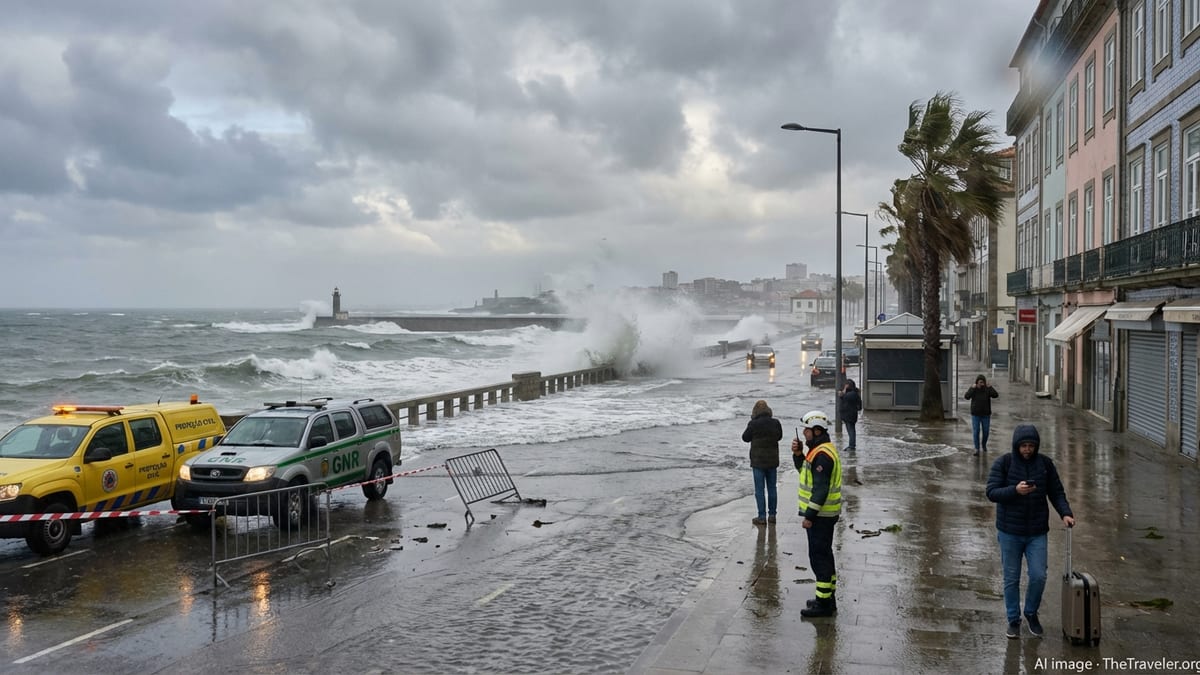
Coastal districts face some of the most dramatic hazards, with authorities warning of very rough seas and waves that could exceed 10 metres offshore. Civil Protection officials have urged the public to stay away from breakwaters, sea walls and exposed coastal promenades, where large waves can sweep people into the water without warning. Harbour masters have restricted access in some ports and advised against recreational sailing and small-boat fishing until conditions improve.
The Portuguese National Republican Guard has issued detailed preparedness guidance, recommending that households assemble emergency kits with at least three days of water, non-perishable food and basic supplies, including flashlights, batteries, power banks and first-aid materials. Residents in at-risk areas have been asked to secure loose objects, check drainage around their homes and identify safe routes away from rivers and slopes vulnerable to landslides.
Transport Disruption Hits Rail, Roads and Flights
Travel across the Iberian Peninsula is being heavily affected as Storm Leonardo intensifies. In southern Spain, regional rail operator services and national high-speed AVE links have been disrupted by flooding, landslips and debris on tracks. Routes connecting Málaga with Antequera and onward to major hubs have seen cancellations and delays, with rail companies advising passengers to defer non-essential journeys.
Road transport is also under significant strain. Traffic authorities in Spain report dozens of closures and restrictions on secondary and some primary routes, particularly in Andalusia where floods, mudslides and damaged road surfaces have been reported. Drivers are being told to avoid unnecessary travel, reduce speed, and never attempt to cross flooded sections of roadway, as water depth and current strength can be deceptive.
In Portugal, sections of national and municipal roads have been temporarily closed due to rising rivers, fallen trees and rockfalls. Landslide risks along hilly corridors have prompted preventative closures in certain high-risk stretches. Long-distance bus operators have adjusted schedules or rerouted services where possible, though some connections have been suspended until conditions stabilize.
Air travel is experiencing localized disruption, with delays and occasional cancellations where crosswinds and low visibility exceed safe operating thresholds. While major airports in Lisbon, Porto, Madrid and Barcelona remain open, airlines are warning of knock-on delays through the network and advising passengers to monitor flight status and allow extra time for their journey to and from terminals.
Coastal Communities and Tourism Hotspots on Alert
Popular tourism destinations along Spain’s southern and southwestern coasts are facing an intense bout of winter weather that contrasts sharply with their usual image of mild, sunny conditions. Resorts in parts of the Costa del Sol, Cádiz province and the Campo de Gibraltar area are under red and orange alerts for torrential rain and coastal hazards, with local officials describing the day as long and worrying.
Strong onshore winds combined with high waves and heavy rain are putting pressure on drainage systems in low-lying coastal towns, where streets have already seen localized flooding. Authorities are using social media, local radio and text alerts to warn residents and visitors to move vehicles away from flood-prone zones, avoid underground car parks and heed cordons around seafront promenades.
On Portugal’s Atlantic coast, communities from the northern districts down through the central shoreline are watching the progression of the storm closely. Boardwalks, beach bars and coastal paths that normally attract walkers and surfers are largely deserted as authorities reinforce barriers and inspect sea defenses. Fishing fleets have been advised to remain in port, and some harbour authorities have restricted movements of larger vessels as wave heights increase.
For the tourism sector, which relies on reliable transport links and a perception of safety, the immediate priority is to safeguard guests and staff. Hotels are updating guests on local conditions, advising them to limit excursions, and working with tour operators to rebook or reschedule excursions that involve coastal or river areas.
Guidance for Travelers Already in or Heading to Iberia
Authorities in both Portugal and Spain stress that travelers do not need to panic, but should take the official alerts seriously and remain flexible. Civil Protection and emergency agencies are urging visitors to stay informed through national meteorological services and local government channels, and to follow any instructions regarding evacuations or temporary restrictions.
Travelers currently in affected regions are advised to check the status of their journeys multiple times on the day of travel, particularly for rail and road routes vulnerable to flooding and landslides. Allowing extra time to reach stations and airports, carrying snacks, water and essential medications, and having alternative routes in mind can help mitigate disruption if services are curtailed at short notice.
Tourists staying in coastal or riverside accommodation should ask hotel staff about local risks, such as potential river overflow or street flooding during peak rainfall. Keeping valuables and travel documents in waterproof bags, charging mobile devices and power banks, and noting emergency contact numbers are sensible precautions during severe weather.
Those planning to travel to Iberia in the coming days should review airline and train policies on changes and cancellations linked to adverse weather. Many carriers offer waivers or flexible rebooking options when official red or orange alerts are in place. Travel insurance policies may provide additional cover for disruption, but travelers are encouraged to check the specific terms that apply to weather-related claims.
Preparedness, Climate Context and What Comes Next
Emergency planners in both countries entered this winter with heightened awareness following a series of recent extreme weather events across Europe. The rapid succession of Storm Kristin and Storm Leonardo has underscored the challenges of coping with repeated impacts on already vulnerable infrastructure, from saturated embankments and weakened sea walls to compromised roads and power lines.
Meteorologists note that while individual storms cannot be directly attributed to climate change without detailed analysis, a warming atmosphere can hold more moisture, increasing the potential for intense rainfall events. Combined with sea-level rise and expanding urban development in floodplains and coastal zones, this raises the stakes when powerful Atlantic storms track toward the Iberian Peninsula.
In the near term, forecasters expect Leonardo to continue affecting large parts of Spain and Portugal over the next 24 to 48 hours, with rainfall and wind intensity varying by region. Even after the heaviest rain bands move on, residual flooding, saturated ground and damaged infrastructure are likely to keep disruption in place for several days. Authorities caution that secondary hazards, such as delayed landslides and renewed river surges, can occur after the peak of the storm has passed.
Officials in Lisbon and Madrid are expected to review preparedness protocols once the immediate crisis eases, drawing lessons on evacuation timing, public communication and the resilience of transport and energy networks. For residents and travelers alike, Storm Leonardo serves as a reminder of the importance of heeding early warnings and adapting plans swiftly when severe weather threatens.
FAQ
Q1. Is it safe to travel to Portugal and Spain while Storm Leonardo is active?
Travel is not completely halted, but conditions are highly variable and can deteriorate quickly, especially in areas under red or orange weather alerts. Authorities advise postponing non-essential journeys to the hardest-hit regions and closely monitoring official updates if you must travel.
Q2. Which areas are currently most affected by Storm Leonardo?
The most significant impacts are being reported in southern Spain, particularly parts of Andalusia such as Cádiz and Málaga, as well as along Portugal’s Atlantic coast and in river basins where water levels are already elevated from previous storms.
Q3. Are airports in Spain and Portugal closed because of the storm?
Major airports remain open, but flights may be delayed or occasionally cancelled due to strong winds and poor visibility. Passengers should check their flight status frequently and allow extra time for check in and security.
Q4. How are rail and road services being affected?
Several rail lines, including some high-speed services in southern Spain, are experiencing cancellations or delays due to flooding and landslips. Dozens of roads have also been closed or restricted, particularly in flood-prone and mountainous areas, so motorists are urged to avoid unnecessary travel.
Q5. What precautions should tourists staying in coastal areas take?
Tourists should stay away from sea walls, breakwaters and exposed promenades, follow any local evacuation or closure orders, keep updated through their accommodation provider, and avoid driving or walking through flooded streets near the shoreline.
Q6. Could Storm Leonardo cause power or communication outages?
Yes, strong winds and flooding can damage power lines and infrastructure, leading to temporary outages. Travelers are advised to keep devices charged, carry a power bank if possible, and note emergency contact numbers in case mobile data coverage is disrupted.
Q7. What should I pack or keep on hand if I am in an affected region?
Authorities recommend having drinking water, non-perishable food for several days, basic medicines, a flashlight with spare batteries, a power bank, warm clothing, waterproof layers and a small first-aid kit, as well as keeping important documents in a waterproof container.
Q8. Does travel insurance cover disruptions caused by Storm Leonardo?
Coverage varies by policy, but many travel insurance plans include provisions for delays, cancellations or additional expenses resulting from severe weather. Travelers should review their policy documents or contact their insurer to confirm what is and is not covered.
Q9. How long is Storm Leonardo expected to affect the Iberian Peninsula?
Forecasts suggest that the most intense impacts will occur over a period of roughly one to two days, but flooding, transport disruption and recovery operations may continue for several days after the heaviest rain and wind have subsided.
Q10. Where can I find reliable updates about the storm and travel conditions?
Reliable information is available from the national meteorological and civil protection services in Portugal and Spain, as well as from regional authorities, transport operators, reputable news organizations and your airline or rail provider’s official channels.