

More news on this day
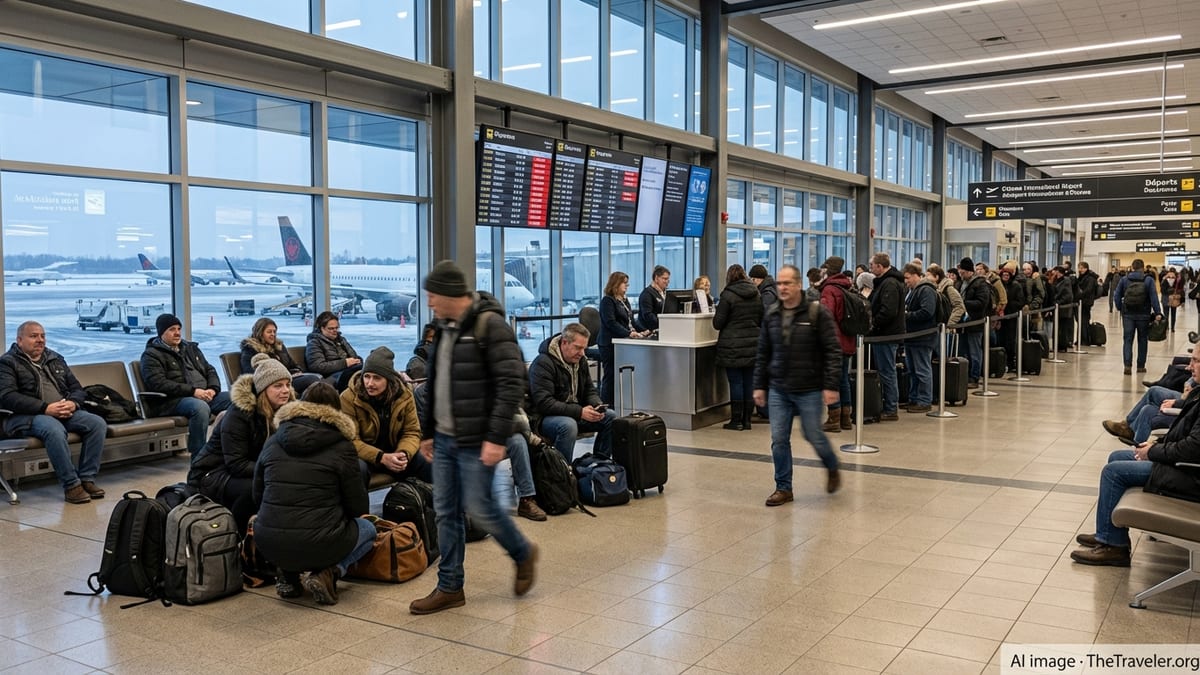
Passengers at Ottawa Macdonald-Cartier International Airport faced long lines and frayed tempers today as a fast-moving winter storm sweeping across eastern Canada left 20 flights delayed and 15 canceled, disrupting services operated by WestJet, Porter Airlines, Jazz and Air Canada on routes to Toronto, Calgary, Montreal, Cancun and several regional destinations.
Winter Weather Turns Routine Travel Day Into Ordeal
What began as a routine midweek travel day quickly deteriorated into an ordeal for hundreds of passengers passing through Ottawa Macdonald-Cartier International Airport, as a winter storm system intensified over southern and eastern Ontario. By late afternoon, departure boards at Ottawa were peppered with delay notices and cancellations, particularly on short-haul services linking the capital with Toronto, Montreal and other key Canadian hubs.
Forecasters had warned that the system moving across the region on February 18 could bring a mix of snow, freezing drizzle and gusty winds, conditions that complicate airport operations even when accumulations remain modest. For airlines, the timing of the weather was especially problematic, sweeping in during one of the busier midweek travel windows and tightening pressure on aircraft rotations and crew assignments.
Ottawa’s disruptions unfolded against a backdrop of broader weather-related turmoil across Canada’s aviation network. Over recent days, winter conditions have repeatedly stressed operations at major hubs including Toronto Pearson, Montreal Trudeau, Vancouver and Calgary, with knock-on effects rippling out to secondary airports such as Ottawa where many flights are fed by those larger centers.
Ottawa Flights Hit as National Network Struggles
While the day’s numbers at Ottawa Macdonald-Cartier were smaller than the chaos seen at some larger hubs, the impact for affected passengers was no less significant. A combined 35 flights on the arrivals and departures boards were either significantly delayed or canceled outright, many of them serving high-frequency routes that business travelers and local residents rely on for same-day trips.
Air Canada and Jazz, which together operate a dense network of connections out of Ottawa to Toronto, Montreal and western Canada, saw multiple rotations disrupted as aircraft and crews were held up elsewhere in the system. WestJet’s schedule linking Ottawa with Calgary and western gateways was also affected as a companion storm hammered the airline’s main base in Alberta, forcing cancellations and extended delays that cascaded into eastern operations.
Porter Airlines, which has been expanding its Ottawa presence with routes to Toronto and select leisure destinations, was not spared either. Even where weather in the Ottawa area appeared manageable, deteriorating conditions at destination or connecting airports made it difficult to maintain the tight turnarounds and slot times that keep regional schedules running smoothly.
Passengers Face Long Queues, Missed Connections and Uncertain Plans
Inside the terminal, the operational challenges translated into long customer service lines and passengers camping out near power outlets, clutching phones and boarding passes as they waited for updated information. Many travelers had already checked in and cleared security before learning their departures would be pushed back by several hours or canceled entirely.
For those connecting through Toronto Pearson, Montreal Trudeau or Calgary, the delays in Ottawa threatened onward itineraries to destinations across Canada, the United States and the Caribbean. Vacationers heading for sun destinations such as Cancun faced a particularly stressful wait, unsure whether rebooked connections would still allow them to start their trips as planned or whether lost nights at resorts would need to be negotiated with tour operators and hotels.
Business travelers and government staffers shuttling between Ottawa and other provincial capitals were forced to rework meeting schedules and, in some cases, shift to virtual participation when it became clear they would not make it to their destinations in time. The unpredictability of rolling delays made it difficult for passengers to decide whether to remain at the airport, head home or seek a nearby hotel.
Airlines Activate Weather Policies and Flex Options
With winter storm advisories in place for Ottawa and other affected cities, airlines moved to implement flexible rebooking policies intended to ease the disruption. Carriers including WestJet and Air Canada offered fee waivers for one-time changes on affected dates, allowing passengers to shift their travel to later in the week or reroute via alternative hubs where space was available.
In practical terms, however, the sudden surge in demand for new seats, combined with aircraft already running at high winter load factors, meant many travelers struggled to find immediate alternatives. Some were rebooked on flights departing a day or more later than planned, while others accepted partial solutions such as being re-routed through Montreal instead of Toronto, or vice versa, to salvage at least part of their itinerary.
At Ottawa Macdonald-Cartier, airline staff worked to prioritize rebooking for passengers with tight international connections or essential travel needs, while urging others with more flexibility to accept later departures. Self-service rebooking via mobile apps and airline websites helped reduce some pressure on airport counters, but slow system updates and shifting weather forecasts left many customers repeatedly refreshing their screens for clearer answers.
Operational Strain Across Toronto, Calgary, Montreal and Beyond
The trouble in Ottawa could be traced in part to the intense strain experienced at larger Canadian hubs over the same 24-hour period. In Calgary, a strong winter system rolling over the foothills generated dozens of cancellations and delays, particularly for WestJet and its regional affiliate, upsetting carefully planned sequences of flights that connect western passengers to Ottawa and other eastern destinations.
Toronto Pearson, Canada’s busiest airport, has been grappling with successive rounds of winter weather and knock-on operational constraints throughout February. Even modest schedule disruptions there can quickly ripple outward, as aircraft that were due to operate Ottawa legs arrive late or are reassigned to cover more heavily impacted routes. Delays in de-icing queues and reduced runway capacity further amplify those effects.
Montreal Trudeau has faced its own share of wintry challenges, with snow and low visibility at times adding to congestion on the ground and in the air. For Ottawa-bound flights, that has meant slower turnaround times and creeping delays that may start at 30 minutes and gradually stretch much longer as the day wears on, squeezing the reliability of evening departures and connections back to the capital.
Even leisure routes to destinations like Cancun have not been immune. When aircraft and crew assigned to those flights are held up elsewhere in the network, carriers are forced to either delay departures or cancel outright, a particularly bitter outcome for passengers who may have planned their holidays months in advance.
Ottawa Airport and Ground Crews Work to Keep Operations Moving
On the ground at Ottawa Macdonald-Cartier, airport operations teams focused on keeping runways, taxiways and aprons clear as bands of snow and mixed precipitation moved through the region. While the storm’s intensity in Ottawa itself was less severe than in some western and central Canadian cities, fluctuating temperatures around the freezing mark created challenging conditions for de-icing and surface treatment.
Ground crews rotated through aircraft stands with glycol de-icing equipment, working under tight safety protocols that cannot be rushed without increasing risk. Each added pass through de-icing extends the turnaround time for a given aircraft, limiting how many flights it can realistically operate during the day and compounding the pressure on already stretched schedules.
Airport authorities emphasized that safety remained the overriding priority, even as they acknowledged the frustration of stranded passengers. With visibility periodically reduced and runway braking conditions shifting as temperatures changed, air traffic controllers and pilots were required to operate under more conservative spacing and performance parameters, slowing the overall flow of arrivals and departures.
Advice for Travelers Navigating Canada’s Winter Flight Disruptions
The day’s events at Ottawa Macdonald-Cartier offered another reminder of how quickly winter weather can disrupt even well-planned journeys across Canada. Travel experts recommend that passengers build extra time into itineraries during the coldest months, particularly if they are connecting through multiple hubs or traveling onward to international destinations where rebooking options may be limited.
Before leaving for the airport, travelers are urged to check their flight status directly with their airline’s app or customer service channels, rather than relying solely on third-party booking sites or generic airport displays that may lag behind. In the event of weather advisories, it can be worthwhile to proactively explore alternative flights or dates, especially for non-essential trips that will be more easily rescheduled earlier in the disruption cycle.
Those already at the airport when delays hit are advised to stay close to their gate, monitor airline notifications and keep essential items such as medications, chargers and travel documents in their carry-on luggage in case of unplanned overnight stays. For passengers heading from Ottawa to connecting hubs like Toronto, Calgary or Montreal, understanding the minimum connection times and potential backup routings can also make the difference between salvaging a trip and seeing it unravel.
Lingering Questions About Resilience in Canada’s Air Network
While winter weather is a fact of life for Canadian aviation, the scale and frequency of recent disruptions have prompted renewed questions about how resilient the country’s air network is to seasonal shocks. Industry observers note that tight aircraft utilization, lean staffing models and high demand leave little margin for error when storms sweep across multiple regions at once.
For passengers in Ottawa and other secondary cities, that can mean disproportionate vulnerability when national operations are stressed. Flights serving major hubs are often prioritized to protect wider network connectivity, leaving thinner regional routes more likely to see cancellations or prolonged delays. The result, as seen today at Ottawa Macdonald-Cartier, is that even a mid-sized airport can quickly become a pressure point when weather and operational challenges converge.
Airlines have defended their handling of the disruptions, pointing to the complex choreography involved in balancing safety, regulatory requirements and customer needs during severe weather. Still, as travelers across Ottawa, Toronto, Calgary, Montreal and routes as far-flung as Cancun absorb another day of upended plans, calls are growing for continued investment in infrastructure, staffing and contingency planning to better weather the storms that are certain to come each Canadian winter.