

More news on this day
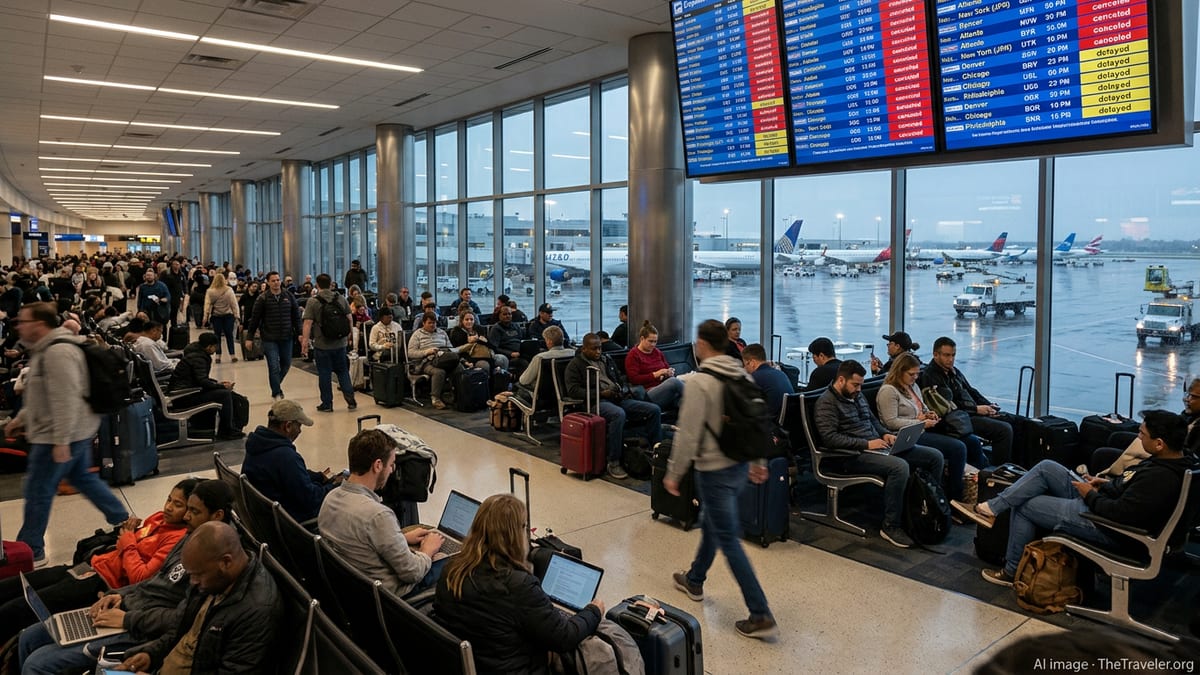
Thousands of travelers across the United States faced cascading disruptions as more than 1,000 flights were canceled and over 5,000 delayed on Monday and Tuesday, with major hubs from Atlanta to New York and Chicago struggling to recover from a powerful storm system and already strained airport operations.
Get the latest news straight to your inbox!
Storm System and Shutdown Combine to Snarl Air Travel
Publicly available information from flight-tracking services shows that airlines scrubbed roughly 1,089 flights and delayed more than 5,175 across the United States as a sprawling storm system swept from the Midwest into the Northeast in mid-March 2026. The latest turbulence comes on top of a partial federal government shutdown that has stretched airport resources, particularly at security checkpoints, intensifying pressure on an already busy spring travel period.
Weather reports describe the system as a powerful mix of heavy snow, high winds and severe thunderstorms that moved from the Central Plains through the Great Lakes and into the Mid-Atlantic. The storms triggered blizzard conditions in parts of the Upper Midwest and dangerous crosswinds along the East Coast, conditions that frequently prompt air traffic managers to reduce arrival and departure rates at major airports.
According to published coverage, the Federal Aviation Administration responded with ground stops and flow restrictions at several large hubs as visibility dropped and winds strengthened. Those traffic management steps, combined with crew and aircraft repositioning challenges, quickly spread delays far beyond the hardest-hit cities.
The timing of the storms has compounded their impact. Airports are already busy with spring break travelers and fans connecting to host cities for college basketball tournaments, leaving less slack in the system to absorb widespread schedule changes.
Major Hubs From Atlanta to New York Bear the Brunt
Flight-disruption data indicates that the worst impacts have been concentrated at major connecting hubs, magnifying the effect for travelers nationwide. Atlanta’s Hartsfield-Jackson, the world’s busiest airport by passenger volume, recorded several hundred cancellations and delays as thunderstorms and low clouds swept through the region, slowing departures and forcing inbound aircraft into holding patterns.
In the Northeast, New York’s airports experienced significant knock-on effects. LaGuardia and John F. Kennedy International saw hundreds of combined cancellations and delays tied to gusty winds and low ceilings over the city, a combination that often leads to reduced runway capacity. Disruptions at these international gateways rippled along the East Coast and deep into domestic networks, affecting connections to and from secondary airports.
Chicago O’Hare and Denver International, both key nodes for transcontinental and regional traffic, also reported elevated disruption levels. Snow and crosswinds across the Midwest limited runway availability in Chicago, while Denver’s high-elevation location and wintry conditions prompted airlines to thin out schedules to preserve safety margins and improve on-time performance for the flights that did operate.
Secondary and regional airports such as Buffalo and Philadelphia were not spared. These facilities rely heavily on inbound connections from larger hubs, so cancellations and delays upstream quickly translated into long gaps between departures, missed connections and longer-than-usual queues at customer service counters as passengers sought alternative routings.
Multiple Airlines Trim Schedules as Networks Struggle
Operational data and media reports show that the disruption has cut across carriers and alliances. Major U.S. airlines including Delta Air Lines, American Airlines, Southwest Airlines and Spirit Airlines have collectively canceled and delayed hundreds of flights as they adjusted schedules around the storm track and worked within crew duty-time limits.
International operators connecting through U.S. hubs have also felt the strain. Qatar Airways and other global carriers that rely on airports such as Atlanta, New York and Chicago for transatlantic and transpacific links have faced schedule disruptions when inbound flights could not secure timely arrival slots or when outbound connections were no longer viable for transferring passengers.
Network-focused airlines with large hub operations are particularly exposed when severe weather hits a central node. A canceled departure from Atlanta or Chicago can cascade into missed aircraft rotations in smaller cities hours later, creating additional cancellations and rolling delays even after local weather has improved. Low-cost carriers that operate point-to-point routes are somewhat less vulnerable to hub-specific bottlenecks, but they still face aircraft and crew imbalances when storms affect multiple regions at once.
The current wave of cancellations comes against a broader backdrop of operational challenges in the industry. Recent years have seen several high-profile meltdowns linked to software outages, staffing shortages and extreme weather, increasing scrutiny of how airlines build resilience into their schedules and technology.
Travelers Confront Long Lines, Overnight Stays and Limited Options
For travelers, the statistics translate into crowded terminals, long customer service lines and, in some cases, unplanned overnight stays on terminal benches or airport hotels. Social media posts and traveler accounts describe passengers sleeping in concourses after late-night cancellations, with rebooking options often pushed one or two days into the future from the most heavily affected hubs.
Disrupted travelers have reported challenges securing alternate routes when multiple airlines are cutting flights simultaneously. With many aircraft already running close to full during peak travel periods, a single canceled flight can leave hundreds of passengers competing for a limited number of remaining seats to their destinations.
Publicly available guidance from airlines and passenger advocates continues to emphasize the importance of early communication and self-service tools in such situations. Travelers are encouraged to monitor their flight status frequently, use airline apps to rebook when possible, and consider flexible routing through less congested airports if their plans allow.
Consumer information from the U.S. Department of Transportation outlines compensation and refund policies that may apply when flights are canceled or significantly delayed. While weather-related disruptions typically limit financial obligations for carriers, passengers whose flights are canceled remain entitled to a refund if they choose not to travel, even when airlines simultaneously offer vouchers or credits.
What Comes Next for the Busy Spring Travel Period
Meteorological outlooks indicate that the storm system responsible for the latest disruptions is expected to move off the East Coast by midweek, which should allow flight operations to gradually stabilize. However, airline operations often lag improving weather because of the time required to reposition aircraft and flight crews to their intended locations.
Past disruption patterns suggest that residual delays and scattered cancellations can continue for 24 to 48 hours after a major weather event as airlines work through backlogs and restore normal rotations. Travelers scheduled to pass through major hubs such as Atlanta, New York, Denver, Buffalo, Philadelphia and Chicago in the next several days may still experience longer lines, tighter connection windows and minor schedule changes.
Industry analysts monitoring publicly available performance data note that U.S. carriers have generally improved on-time metrics since the early pandemic period, but severe weather and infrastructure constraints still regularly expose vulnerabilities in tightly scheduled networks. The current episode underscores how quickly a combination of storms and staffing pressures can lead to nationwide ripple effects.
As the spring travel season accelerates, airlines are expected to face continued scrutiny over how they manage capacity, communicate with passengers and invest in technology and staffing to handle inevitable bouts of extreme weather. For now, the latest wave of cancellations and delays serves as a reminder that even routine trips can require added flexibility when conditions deteriorate across key U.S. gateways.