

More news on this day
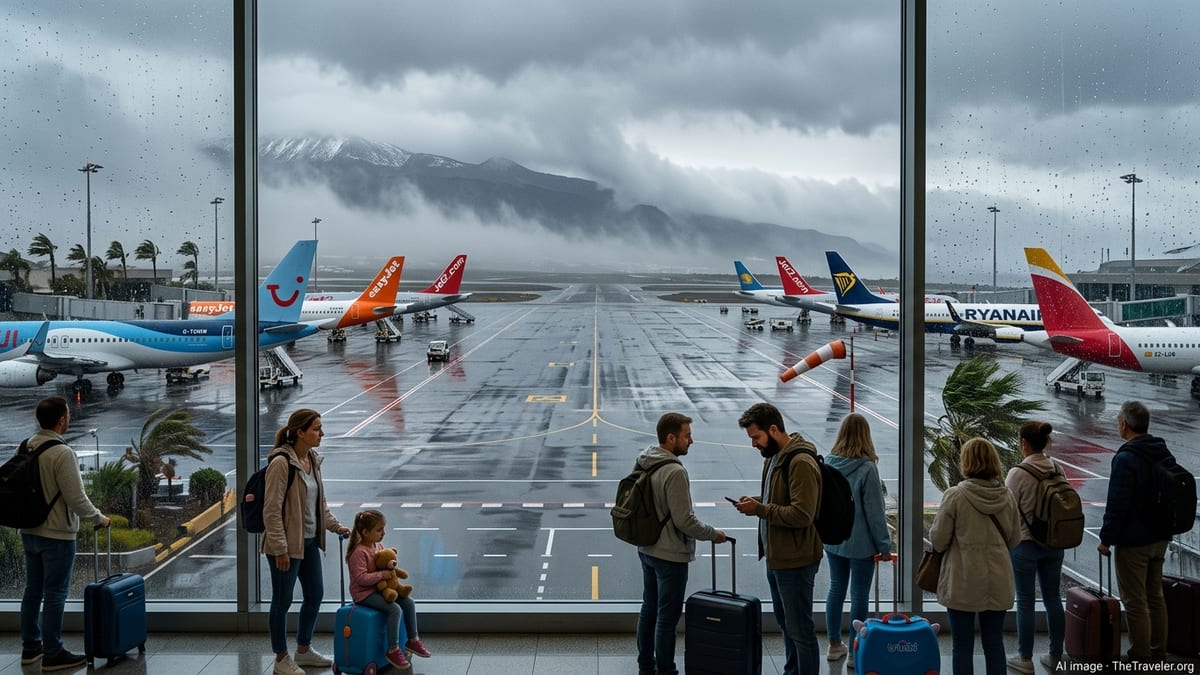
Storm Therese has swept across the Canary Islands with powerful winds, heavy rain and rare low-level snow on Tenerife, disrupting flights, closing mountain roads and leaving hundreds of British holidaymakers facing unexpected extra nights in the sun – and in some cases, in airport terminals.
Get the latest news straight to your inbox!
Unusual Snowfall on Tenerife as High-Impact Storm Arrives
Weather alerts issued by Spain’s state meteorological service ahead of Storm Therese warned of a high-impact system bringing intense rain, strong gusts and snowfall at elevations that are unusual for the subtropical archipelago in late March. Publicly available forecasts indicated that the storm’s cold core would drop snow levels on Tenerife, with accumulations on the upper slopes of Mount Teide and flurries reported on higher inland roads.
According to regional emergency bulletins and local media coverage, the combination of snow, sleet and high winds prompted authorities to close access to Teide National Park and several mountain passes on Tenerife for safety reasons. Images shared by residents and visitors showed snow-dusted lava fields and white-coated pine forests, in stark contrast to the beaches and resort promenades that normally define the island’s late-winter tourism season.
The storm’s arrival followed days of warnings that a vigorous Atlantic system would collide with cooler air over the Canary Islands, intensifying as it passed. Meteorological analyses referenced by Spanish outlets compared aspects of Therese’s impact with previous high-profile storms that have occasionally delivered snow to the Teide massif and caused disruptive weather across the archipelago.
Flights Cancelled and Tourists Stranded Across the Archipelago
As Therese moved over the region, aviation tracking data and airport operator updates showed a growing number of cancellations and delays at key Canary Island gateways, including Tenerife’s North and South airports, Gran Canaria and La Palma. Coverage in local and UK media reported that dozens of flights were grounded or diverted as gusty crosswinds, low cloud and heavy showers made operations increasingly challenging.
Airline updates cited by travel reporters indicated that regional carrier services between the islands were particularly affected, with some operators suspending rotations when visibility deteriorated and wind shear intensified. Several UK-bound flights from Tenerife and other islands were cancelled or significantly delayed, leaving British package holidaymakers and independent travelers facing long queues at airline desks and uncertainty over when they would be able to return home.
Social media posts from passengers described crowded terminals, limited seating and rolling departure boards marked by cancellations. Some shared accounts of being moved between nearby hotels and the airport as airlines worked to rebook passengers on later services or alternative routes via mainland Spain, contributing to a growing sense of disruption across the islands’ normally reliable air links.
British Holidaymakers Face Extended Stays and Itinerary Turmoil
The Canary Islands are one of the most popular winter-sun destinations for UK travelers, and late March continues to attract large numbers of British visitors seeking mild weather and school holiday breaks. According to recent tourism statistics cited in UK travel coverage, several million British holidaymakers visit Tenerife and its neighboring islands each year, making the current disruption especially visible in UK media and on travel forums.
Reports indicate that some British tourists whose return flights were cancelled have been offered hotel extensions and rebooking options by their tour operators, while others who booked flights and accommodation separately have had to negotiate directly with airlines and hoteliers. Travel commentators note that, under European air passenger regulations, weather-related disruption is often treated as an extraordinary circumstance, limiting automatic compensation and shifting the focus to practical support such as meal vouchers and overnight stays.
For travelers due to depart from the UK in the coming days, publicly available guidance from airlines and tour companies has emphasized the importance of checking flight status before leaving for the airport, with some carriers offering free date changes or rerouting options. Travel agents quoted in broadcast and online coverage have advised holidaymakers to maintain close contact with their providers and to ensure they have comprehensive travel insurance that covers weather-related delays.
Road Closures, Power Outages and Local Disruption on Tenerife
Beyond the airports, Storm Therese has affected daily life for residents across Tenerife and other islands. Regional traffic updates and local news reports describe temporary closures of key mountain roads, including routes to Teide’s high-altitude viewpoints, due to snow, ice and the risk of rockfalls triggered by intense rainfall. Coastal promenades and open spaces in some resort areas have also been partially closed as a precaution against strong gusts and heavy seas.
Energy companies operating in the archipelago reported scattered power outages in parts of Tenerife and Gran Canaria as high winds brought down branches and affected overhead lines. Maintenance crews were shown in local coverage working to restore electricity to affected neighborhoods as conditions allowed, while emergency services urged residents and visitors to avoid unnecessary travel in higher and more exposed areas until the worst of the storm passed.
Public transport has also been affected, with some bus routes in the highlands temporarily suspended and ferry timetables between certain islands adjusted to account for rough seas. Despite the disruption, most low-lying coastal resorts have remained accessible, and many businesses have continued to operate with modified hours, catering to travelers who find themselves unexpectedly extending their stay.
What Travelers Need to Know in the Coming Days
Forecasts assembled by meteorological agencies and relayed through local media suggest that Storm Therese’s most intense phase over the Canary Islands will ease as the system tracks away, although residual showers, strong gusts and cool temperatures at elevation may persist for a time. Snow on the upper slopes of Mount Teide is expected to linger, keeping some high mountain access roads closed until crews can safely clear ice and assess for damage.
Travel industry analysts note that flight schedules often take several days to normalize after a period of widespread weather disruption, as aircraft and crew are repositioned and backlogs of stranded passengers are cleared. Holidaymakers currently on Tenerife or other islands are being encouraged, through airline and tour operator bulletins, to monitor official channels frequently, respond promptly to rebooking offers and allow additional time at airports once their flights are confirmed.
For those yet to travel, published advice from consumer travel organizations highlights the importance of flexible booking options, adequate insurance and a willingness to adapt itineraries if disruptive weather patterns affect the Atlantic corridor during the late winter and early spring period. While storms of Therese’s intensity remain relatively rare for the Canary Islands, this week’s events underline that even typically reliable sunny destinations can occasionally experience dramatic and travel-altering weather.