

More news on this day
Severe storms sweeping across Spain in recent days have disrupted flights and rail services across the country, stranding thousands of passengers and forcing widespread cancellations, diversions and delays at key transport hubs.
Get the latest news straight to your inbox!
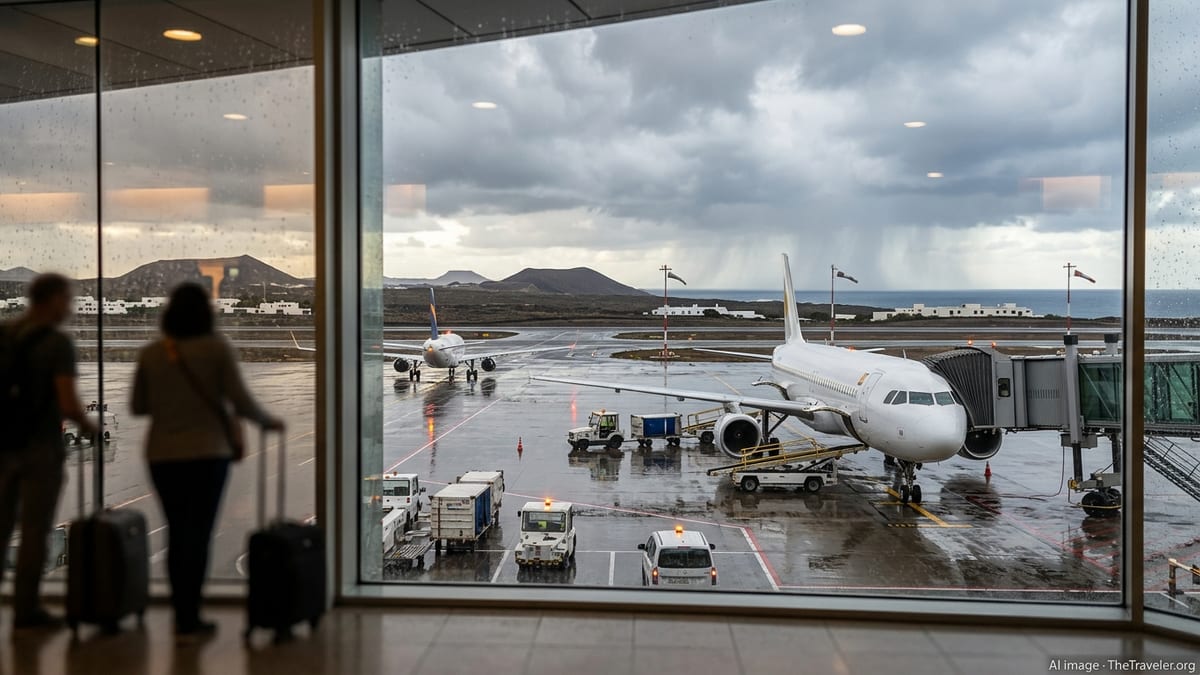
Storm Therese Batters Canary Islands and Mainland Routes
Weather reports indicate that a powerful Atlantic system, identified in regional coverage as Storm Therese, has brought intense winds, heavy rain and turbulent seas to Spain since March 24, with the Canary Islands among the worst affected. The storm’s strongest impacts have been recorded on islands such as Gran Canaria, Tenerife and Lanzarote, where squalls and localized flooding have complicated operations at airports and ports.
Publicly available information shows that several flights serving the archipelago were cancelled or diverted during the height of the storm as crosswinds and poor visibility made approaches unsafe. Ground handling and refuelling were also periodically suspended, contributing to rolling delays that extended through subsequent rotations and onto mainland routes.
On the mainland, rainbands and strong gusts associated with the same system have swept across parts of Andalusia, Valencia and Catalonia, aggravating an already unsettled March pattern for Iberian aviation. While not all airports have issued detailed disruption summaries, data from flight-tracking platforms point to elevated levels of late arrivals and departures at major gateways including Madrid and Barcelona.
The latest episode follows a series of vigorous storm systems affecting Spain during the winter of 2025 to 2026, including named storms that triggered flooding and landslides in previous months. The recurrence of severe weather is raising questions among travel industry observers about the resilience of infrastructure and contingency planning during increasingly volatile seasons.
Flight Cancellations, Diversions and Long Delays
Airline operational updates and independent tracking dashboards indicate that carriers serving Spain have been forced to trim schedules and re-route aircraft as bands of severe weather pushed across key corridors. Short-haul flights linking the peninsula with the Canary Islands and Balearic Islands have been particularly exposed, with some services turning back or diverting to alternative airports when conditions deteriorated en route.
At island airports, periods of runway closure or reduced capacity have led to aircraft queuing on the ground and in holding patterns, adding to fuel burn and crew duty-time pressures. According to published coverage in European aviation outlets, some airlines responded by consolidating departures, rebooking passengers onto later flights and relaxing change-fee policies for those willing to travel on different days.
Travelers connecting through major hubs such as Madrid Barajas have faced missed connections as inbound flights from storm-affected regions arrived late or not at all. Social media posts and local news reports from Spanish broadcasters describe crowded terminals, long lines at service desks and limited availability of same-day alternatives on popular leisure routes.
Although larger airports have continued operating throughout the storms, the combination of adverse weather, air-traffic flow restrictions and knock-on effects from earlier disruptions has resulted in a patchwork of delays that can be difficult for passengers to anticipate. Industry analysts note that, in such conditions, even airports spared the worst of the storms can experience reduced punctuality when they rely heavily on traffic from affected regions.
Rail Networks Hit by Flooding, Landslides and Power Issues
Spain’s rail network has also come under pressure as torrential rain and strong winds have triggered localized flooding, fallen trees and landslip risks along key lines. Publicly available bulletins from infrastructure managers and regional train operators show a series of temporary suspensions and speed restrictions on routes in northern and eastern Spain, where tracks run through river valleys and cuttings that are vulnerable to heavy downpours.
In the Canary Islands, reports indicate that road and tram services in some urban areas have been curtailed or rerouted because of flooded underpasses and debris, complicating transfers for air passengers already coping with flight disruption. On the mainland, media coverage has highlighted instances in which regional and commuter trains were halted while crews inspected embankments and drainage systems for damage after intense bursts of rainfall.
Recent experience with earlier storms this year, including weather-linked derailments investigated in Catalonia and Andalusia, has made rail operators particularly cautious when heavy rain coincides with high passenger volumes. Temporary closures and diversions are increasingly used as a preventive measure when forecasts point to saturated ground and elevated landslide risk along older sections of track.
While many of the interruptions are short-lived, the cumulative effect for travelers can be significant, especially where replacement bus services are constrained by the same weather that prompted the rail suspension. Intercity journey times between major cities have lengthened on certain days, and some night services have been withdrawn or rerouted to avoid exposed sections of line.
Impact on Tourism and Easter Holiday Travel Plans
The timing of the latest storms is particularly sensitive for Spain’s tourism sector, coming just as many European travelers begin Easter and spring break trips. The Canary Islands, in particular, rely heavily on late winter and early spring holiday traffic from northern Europe, and disruptions at island airports can ripple through tour-operator programs and hotel bookings.
According to travel industry commentary in Spanish and international media, some package-tour customers have faced shortened stays or delayed arrivals as airlines worked through backlogs. In a few cases, outbound passengers from Spain have remained in resort longer than planned because their return flights were postponed, creating logistical challenges for both travelers and accommodation providers.
Domestic tourism has also felt the strain. Families heading from inland regions to coastal destinations by high-speed rail or regional trains have reported itinerary changes when services were delayed or replaced with slower alternatives due to weather-related restrictions. Urban weekend breaks in cities such as Barcelona, Valencia and Seville have been affected when late-night or early-morning flights were cancelled, limiting options for short-stay visitors.
Despite the disruption, tourism bodies cited in local coverage stress that Spain’s core attractions remain accessible, with many regions experiencing only minor weather effects. However, the series of recent storms is prompting renewed calls within the sector for clearer real-time information, better coordination between transport providers and more flexible booking conditions during periods of heightened meteorological risk.
Travel Advice: Expect Knock-on Delays and Monitor Updates
For travelers with upcoming trips to or within Spain, publicly available guidance from airlines, rail operators and airports emphasizes the importance of monitoring the latest schedules and weather forecasts. Even as skies begin to clear, residual disruptions often continue for 24 to 48 hours while aircraft and train sets are repositioned and maintenance checks are completed.
Passengers are being advised through official channels to allow extra time for airport check in and security, particularly at major hubs and island gateways that have experienced recent congestion. Flexible tickets and digital boarding passes can help facilitate rebooking when services are cancelled at short notice, while travel insurance policies should be reviewed carefully to understand coverage for weather-related disruption.
On the rail network, journey planners and operator apps remain the primary tools for checking whether services are running to time or subject to speed restrictions and diversions. Travelers heading to smaller stations or rural areas are encouraged to verify connections before departure, as replacement bus services may be limited when road conditions are poor.
With forecasters noting that late-season storms remain possible over the coming weeks, Spain’s experience this March underscores the growing importance of weather-aware trip planning. For many visitors, the key to minimizing disruption will lie in building flexibility into itineraries, staying informed through official information channels and being prepared for conditions that can change quickly across this diverse and geographically varied country.