

More news on this day
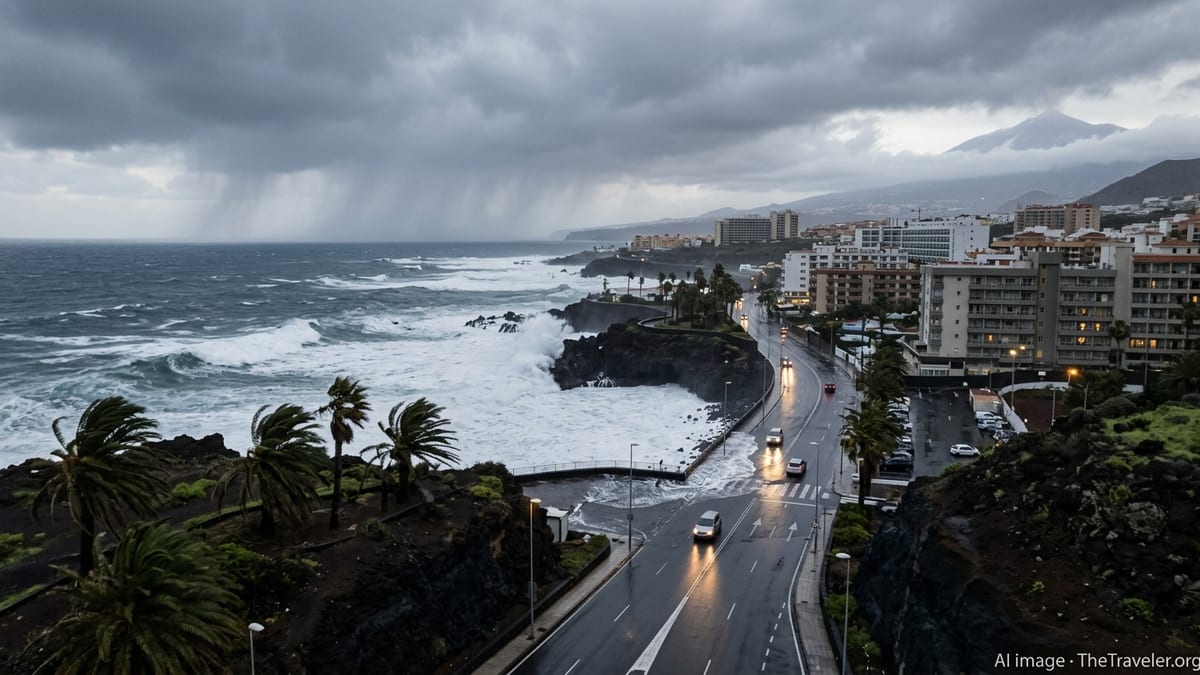
Spain’s Canary Island of Tenerife is facing several days of severe weather as Storm Therese sweeps across the archipelago, bringing heavy rain, powerful winds and hazardous seas that are already disrupting travel, closing schools and forcing the cancellation of major outdoor events through at least March 22.
Get the latest news straight to your inbox!
Severe Weather Alerts in Place Through the Weekend
Publicly available forecasts from Spain’s state meteorological service indicate that Storm Therese will continue to affect Tenerife and the wider Canary Islands from Thursday, March 19, through the weekend, with unsettled conditions expected to ease gradually around Sunday, March 22. The system is forecast to bring bands of intense rain, thunderstorms and strong southwesterly winds, particularly over higher ground and exposed coasts.
Published coverage in Spanish media describes rainfall totals that could exceed typical March levels by a wide margin, with local accumulations on parts of Tenerife and neighboring islands potentially reaching several hundred millimeters over the full episode. This raises the risk of flash flooding in ravines, rockfalls on steep slopes and localized landslides in vulnerable terrain.
Winds are expected to strengthen at times to gale force, with higher gusts over the mountains and along west- and south-facing shores. Rough to very rough seas are also anticipated, with reports citing wave heights of around four meters or more in exposed areas, conditions that may make coastal walks and some maritime excursions unsafe over the coming days.
Although the most intense phases of the storm will vary by location and elevation, forecasts suggest that the period from Thursday night into Saturday, March 21, is likely to see the most disruptive combination of heavy showers, thunderstorms and gusty winds on Tenerife.
Flight Disruptions and Port Operations Under Strain
Travelers heading to or from Tenerife are already encountering knock-on effects from Storm Therese. Aviation tracking data and local reports point to a growing number of delays and cancellations across the Canary Islands as crosswinds increase and visibility deteriorates in heavy rain. One widely shared account from La Palma, northwest of Tenerife, highlighted diversions and cancellations as the first strong gusts and squalls associated with the storm moved in.
At Tenerife’s two main airports, Los Rodeos (TFN) in the north and Reina Sofía (TFS) in the south, operations remain open but subject to weather-related disruption. Crosswinds on approach, low cloud and intense showers can all trigger temporary suspensions of landings or departures. Airlines are adjusting schedules, consolidating flights or rerouting aircraft within the archipelago when operating conditions fall below safety thresholds.
Ferry links between Tenerife and neighboring islands may also be affected as the sea state worsens. Public information from ferry companies and port authorities indicates that services are being reviewed voyage by voyage, with some high-speed crossings especially vulnerable to cancellation if wave heights and wind gusts continue to increase.
Passengers are being advised, via airline and operator communications, to check their flight or ferry status frequently on the day of travel, arrive early in case of congestion at terminals, and expect longer journey times. Flexible ticket policies are being applied on some routes to allow rebooking if conditions deteriorate further.
Schools Closed and Outdoor Events Cancelled
Therese is also reshaping daily life on Tenerife beyond the transport network. According to publicly available notices from the regional education authorities, in-person classes were suspended on Thursday across the province of Santa Cruz de Tenerife, which covers Tenerife, La Palma, La Gomera and El Hierro. Additional guidance indicates an island-wide closure of schools across the Canary Islands on Friday in response to the expected peak of the storm.
The impact is particularly evident in the cancellation of major outdoor events. Local coverage confirms that the Tenerife Bluetrail 2026, a high-profile trail running race scheduled to take place from March 19 to 21 with routes crossing Teide National Park and other high-altitude zones, has been called off due to the severe weather forecast. Organizers cited the risk of heavy rain, strong winds, possible snowfall at altitude and unstable conditions along mountain trails.
Other cultural and sporting activities, including community festivals, training sessions and outdoor matches, are being postponed or moved indoors where possible. In some cases, organizers are waiting for updated forecasts before making final decisions, but the general pattern through March 22 is one of caution and reduced programming, particularly for events in exposed coastal areas or mountainous terrain.
Residents and visitors should anticipate short-notice changes to scheduled activities and follow updates from event organizers and local institutions, especially for any gathering involving large crowds, temporary structures or travel along minor roads.
What Visitors on Tenerife Should Expect Day by Day
For travelers currently on Tenerife or arriving in the next few days, the experience of Storm Therese will vary depending on location and timing. Coastal resorts in the south, such as Costa Adeje and Los Cristianos, typically see somewhat drier and more sheltered conditions than the lush north, yet even these areas are forecast to receive periods of heavy rain, gusty winds and rough seas through at least Saturday.
The north coast, including Puerto de la Cruz and the capital Santa Cruz de Tenerife, is likely to feel the brunt of more frequent showers and thunderstorms as moist air is forced up over the island’s interior. Visitors in these areas should be prepared for low cloud, reduced visibility on higher roads and intermittent downpours that can temporarily flood streets and footpaths.
Inland and at higher elevations, particularly in and around Teide National Park, conditions may be significantly more severe. Forecasts signal the potential for sleet or snow on the highest slopes, combined with very strong gusts and rapidly changing visibility. Authorities have already activated island-level emergency planning for adverse weather, and published advisories are warning against non-essential travel into high mountain areas during the storm window.
From Sunday, March 22, model guidance suggests a gradual improvement, with showers becoming more scattered and winds easing, though lingering instability may still bring localized downpours. Temperatures across the island are expected to run several degrees cooler than the seasonal norm during the peak of the storm before edging upward again early the following week.
Practical Safety and Planning Tips for Tourists
Tourism operators on Tenerife are adjusting their offerings in line with the changing weather. Publicly available information from excursion providers shows that many whale-watching trips, small-boat outings and high-altitude tours are being paused or rescheduled while seas remain rough and wind gusts stay high. Indoor attractions, such as museums, shopping centers and historic sites in larger towns, are likely to remain open and can provide alternative activities during the worst of the rain.
Visitors are encouraged to monitor official weather bulletins, local news and accommodation notices for the latest guidance. In practical terms, that means allowing extra time for any road journey, avoiding driving on minor mountain roads during heavy downpours, and never attempting to cross flooded ravines or waterlogged underpasses. Rockfall warnings on cliff roads should be taken seriously, especially on the north and northwest coasts where steep volcanic slopes rise close to the shoreline.
Beach plans may also need to be reconsidered. Even when rain briefly eases, strong currents, large waves and blowing sand can create hazardous conditions along the shore. Lifeguard services and local councils sometimes restrict access to certain beaches or flag swimming as unsafe when the surf becomes too powerful. Visitors should respect any posted warnings and avoid standing on wave-exposed rocks or breakwaters when the sea is rough.
Those flying out in the coming days can reduce stress by keeping luggage light enough to move quickly between terminals, ensuring travel insurance details are at hand in case of disruption, and keeping essential items such as medication, chargers and important documents in carry-on bags. With Storm Therese expected to keep Tenerife under unsettled skies until around March 22, flexible planning and close attention to local updates remain the best tools for a safe and enjoyable stay.