

More news on this day
Storm Therese is causing significant disruption across Portugal’s Atlantic islands, with strong winds and heavy rain prompting widespread flight cancellations to Madeira and the Azores and leaving many travelers scrambling to adjust their plans.
Get the latest news straight to your inbox!
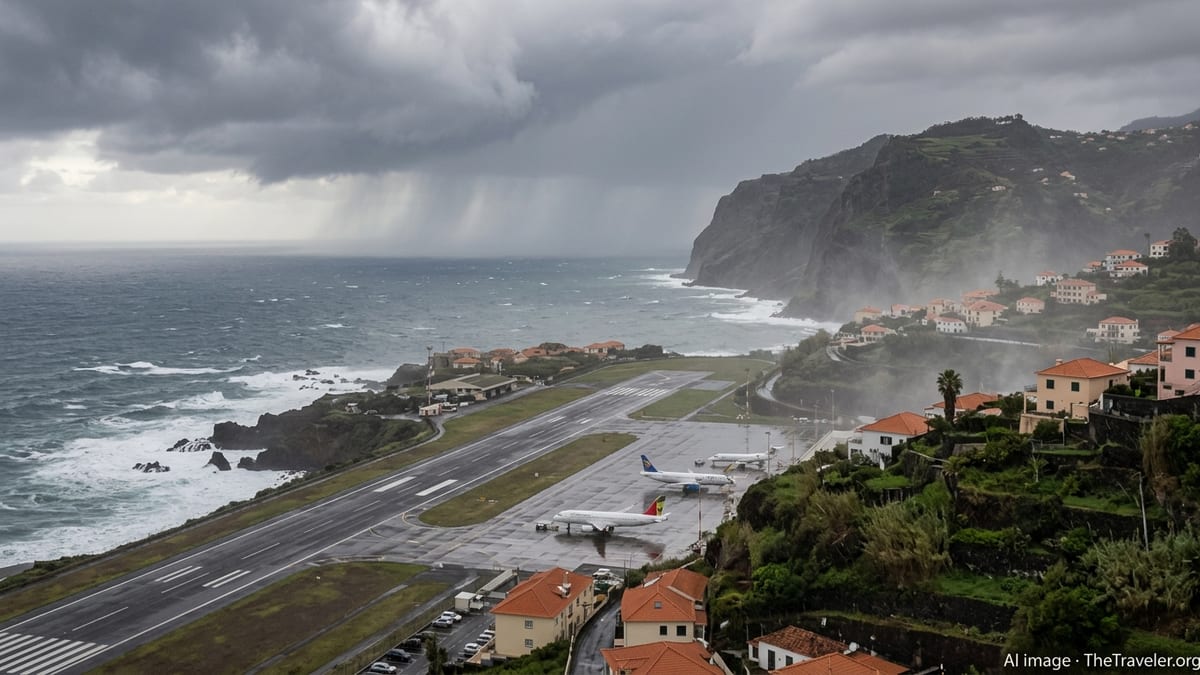
Storm Therese Brings Dangerous Winds and Heavy Seas
Storm Therese is the latest system in the 2025–26 European windstorm season to impact Atlantic travel, driving powerful winds and unsettled seas across parts of Macaronesia. Publicly available meteorological data describe a deep low pressure system tracking northeast over the Atlantic, sending bands of severe weather toward Madeira and, to a lesser extent, the Azores.
In Madeira, exposed coastal and mountainous areas are seeing the strongest effects, with gusts reported well above typical winter storm levels and forecasts pointing to further strengthening over the next 24 to 48 hours. These conditions are particularly challenging for aviation, as crosswinds on approach and departure routes around Funchal’s cliffside runway reduce safe operating windows for airlines.
The Azores, spread across the mid-Atlantic, are experiencing varying impacts depending on island group. Western and central islands are facing turbulent conditions and periods of intense rain, although current reports suggest less severe wind than in Madeira. Even so, weather alerts and precautionary operational restrictions are translating into delays and cancellations at key hubs such as Ponta Delgada.
Rough seas around both archipelagos are also affecting inter-island ferry links and port operations. While these maritime disruptions are secondary to the aviation impact for most international visitors, they further complicate itineraries for travelers who rely on combined flight and ferry connections to reach smaller islands.
Madeira Flights Hit Hard at Funchal Airport
According to recent coverage of the 2025–26 European windstorm season, Madeira has seen some of the most acute transport disruption from Storm Therese, with reports indicating that more than 50 flights have been canceled at Funchal Airport over a short period as crosswinds intensified. These cancellations affect both inbound and outbound services, including links with Lisbon and other European gateways that serve as primary connections for long-haul travelers.
Operationally, the challenge lies in the airport’s exposed location and approach profile, which is already known for strict wind limits. As gusts rise and shift direction, airlines are suspending operations in blocks of time rather than on a single-flight basis, creating waves of cancellations and knock-on delays. Some aircraft are being diverted to mainland Portugal or the Canary Islands when safe landing at Funchal is not possible.
Travelers booked on flights to or from Madeira over the coming days are being advised, through airline alerts and airport information channels, to expect short-notice changes. Schedules published the day before may not reflect real-time operational decisions as conditions evolve, so frequent checks closer to departure time are essential.
Accommodation pressure is also building in and around Funchal as passengers whose flights are canceled look for extra nights. Hotels with flexible inventory are already hosting stranded travelers, while some visitors are shifting to properties closer to the airport in the hope of catching earlier rebooked departures once operations resume.
Azores Experience Rolling Delays and Select Cancellations
In the Azores, the impact of Storm Therese on aviation has been more scattered but still significant for those transiting through the islands. Publicly accessible information on air traffic in the region points to rolling delays and targeted cancellations, particularly on routes involving smaller islands with shorter runways and stronger exposure to crosswinds.
Major hubs such as Ponta Delgada, Terceira, and Horta are operating with caution, with airlines stretching turnaround times, consolidating services, or downgrading aircraft types where possible to keep some connectivity in place. While the overall number of cancellations appears lower than in Madeira, the network effect is more pronounced because many journeys rely on tight inter-island connections.
Travelers connecting through the Azores to reach North America or mainland Europe may find that a single domestic sector cancellation breaks their itinerary. In these cases, carriers are generally prioritizing rebooking on the next available services within the network or routing passengers via Lisbon when capacity allows.
The timing of Storm Therese, outside the peak summer season, is limiting the number of affected leisure travelers compared with high season, but a sizeable share of winter visitors, including hikers and nature travelers, are still facing unexpected changes to carefully planned itineraries.
What Affected Travelers Should Do Now
For travelers with imminent departures to Madeira or the Azores, the most immediate step is to monitor flight status directly with the operating airline and, where available, through official airport information channels. Storm-driven operational decisions can change within hours as wind strength and direction shift, so same-day checks are more reliable than relying on earlier schedule snapshots.
Many airlines serving Portugal and its island territories increasingly use mobile apps, text alerts, and email notifications to share disruption updates. Ensuring contact details are up to date within booking profiles can help travelers receive automatic rebooking offers or confirmation of cancellations without needing to call customer service during peak demand.
Travelers already on the islands who face extended delays or cancellations may need to secure additional accommodation. Booking platforms and local tourism information points can assist in finding last-minute rooms, but availability around Funchal and the main Azores hubs may tighten if Storm Therese continues to disrupt operations. Flexibility in terms of location and property type can make it easier to find options.
Those with time-sensitive plans, such as cruises, tours, or long-haul connections beyond Lisbon, should review their terms and conditions. Some travel insurance policies include provisions for missed connections and weather-related delays, although coverage varies. Understanding the documentation required, such as written confirmation of cancellations, can make later claims smoother.
Planning Ahead for Macaronesian Travel During Storm Season
Storm Therese is a reminder that travel to exposed Atlantic archipelagos like Madeira and the Azores is particularly sensitive to seasonal windstorms. While severe disruption of this scale is not an everyday occurrence, the 2025–26 European windstorm season illustrates how quickly a single system can ripple through regional air networks.
Travel planners suggest allowing generous connection times in Lisbon or other mainland hubs when routing through the islands during the cool season, as this reduces the risk that a delayed or retimed island flight will jeopardize onward travel. Booking flexible airfares and refundable or changeable hotel rates where budget permits can also soften the impact of short-notice weather events.
Travelers with limited flexibility on dates may want to consider building in buffer days at either end of their itinerary if visiting during the most active months for Atlantic storms. This approach can transform a forced extra night due to weather into an additional opportunity to explore, rather than a cause for missed commitments back home.
As Storm Therese continues to pass through the region, attention is focused on how quickly conditions will improve at Funchal and across the Azores airports. Travelers planning upcoming trips to these islands are watching developments closely, using publicly available forecasts and airline updates to decide whether to adjust their schedules or proceed as planned.