

More news on this day
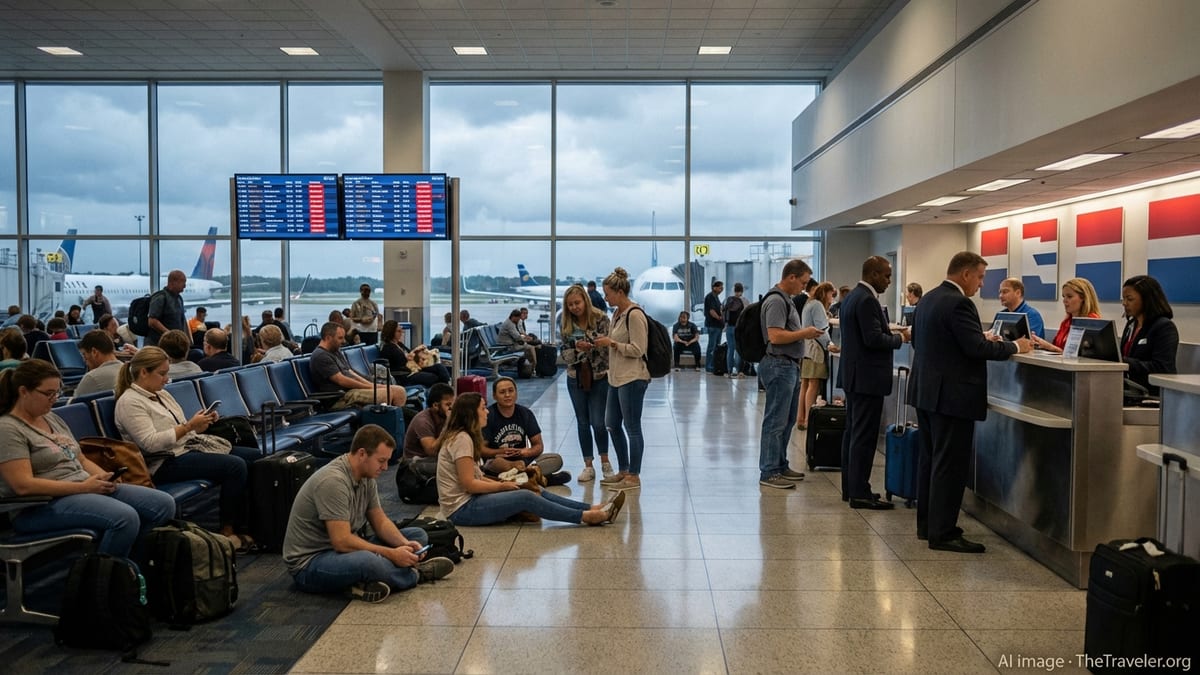
Hundreds of travelers were left waiting at Orlando International Airport on Tuesday as JetBlue, Delta, United and Southwest recorded 91 delays and 81 cancellations, snarling flight schedules on busy corridors to New York, Miami, Chicago and other major U.S. cities amid a powerful winter storm system.
Storm Fallout Hits Key Domestic Routes
The latest disruption unfolded as a severe winter storm swept across large parts of the eastern United States, triggering widespread operational challenges for major carriers and putting pressure on already stretched airline networks. Orlando International Airport, a critical hub for both leisure and connecting traffic, saw its departures and arrivals into major metro areas thrown off schedule as airlines attempted to thread aircraft through deteriorating weather and congested airspace.
Routes linking Orlando with New York area airports, Miami, Chicago and other heavily trafficked business and leisure destinations were among the hardest hit. With crews and aircraft out of position and rolling delays building throughout the day, schedules that had appeared manageable in the early morning quickly deteriorated into long hold times and abrupt cancellations at the gate.
By midafternoon, passengers on flights operated by JetBlue, Delta Air Lines, United Airlines and Southwest Airlines were contending with cascading delays that rippled far beyond Orlando itself. Misconnections mounted for travelers booked on onward services to secondary markets, compounding the disruption across carrier networks.
While Florida remained outside the deepest snow bands, the storm’s impact on airports in New York, Boston, Philadelphia and Chicago placed severe constraints on traffic flows in and out of Orlando. Airlines reduced frequencies, consolidated services and, in many cases, opted to cancel proactively rather than risk aircraft and crews becoming stranded later in the day.
Passengers Face Long Lines, Scarce Seats and Limited Options
Inside Orlando International’s terminals, the operational picture translated into long queues at airline counters and customer service desks as travelers scrambled for alternatives. Families returning from theme park vacations, business travelers facing missed meetings and connecting passengers en route to the Northeast all converged on the same limited pool of remaining seats.
With peak winter demand leaving most flights already close to full, rebooking options were constrained. Many passengers reported being offered itineraries departing a day or more later than originally planned or being rerouted through secondary hubs with tight connections and uncertain weather windows.
Gate areas grew increasingly crowded as rolling departure estimates were pushed back in 15 and 30 minute increments. For some, the delay ultimately ended in cancellation as conditions worsened along the route or at destination airports, forcing carriers to pull flights from the schedule after passengers had already spent hours waiting.
Stranded travelers described a patchwork of support, with some airlines providing hotel and meal vouchers where overnight stays became unavoidable, while others offered only rebooking assistance and encouragement to use mobile apps and digital tools. Many passengers resorted to searching multiple carriers simultaneously on their phones, hoping to find a last-minute seat out of central Florida before the storm’s effects spread further.
Operational Pressures Expose System Fragility
The disruptions at Orlando highlight how quickly conditions can deteriorate when severe weather collides with tight airline timetables and limited spare capacity. Major U.S. carriers have trimmed schedules and improved reliability compared with previous winters, but staffing constraints, congested airspace and high load factors leave little margin when storms hit large clusters of hub airports at once.
JetBlue, Delta, United and Southwest all operate extensive networks linking Florida with the Northeast and Midwest, meaning that a single weather system affecting New York and Chicago can simultaneously disrupt dozens of city pairs. Aircraft scheduled for quick turnarounds in Orlando were forced to wait for inbound crews or replacement equipment, while downstream flights in other cities also fell behind.
Aviation analysts note that the situation underscores the vulnerability of leisure-heavy markets like Orlando during peak travel periods. With many passengers on inflexible holiday itineraries and limited tolerance for extended delays, customer frustration tends to build quickly when multiple major carriers encounter issues on the same day and on the same high-demand routes.
The delays and cancellations also add pressure on ground operations, from ramp crews managing irregular aircraft flows to airport staff tasked with crowd control and passenger information. Even when weather conditions in central Florida remain manageable, knock-on effects from storms elsewhere can test the resilience of the entire local airport ecosystem.
Knock-On Effects Across New York, Miami and Chicago
While Orlando bore the brunt of today’s schedule disruptions, the operational challenges were closely tied to conditions in other major U.S. aviation markets. Airports serving the New York metropolitan area, Miami and Chicago all reported weather-related impacts, creating a web of constraints that limited airlines’ ability to recover quickly.
Flights between Orlando and New York area airports were especially vulnerable, with snow, strong winds and visibility issues prompting air traffic control programs that slowed arrivals and departures. Slot restrictions and departure metering meant that even flights technically able to operate faced extended ground holds, feeding back into delays for their return legs to Florida.
Miami and Chicago added further complexity. Miami’s role as a gateway to Latin America and the Caribbean meant that disruptions on Orlando–Miami services affected a wider network of international connections. In Chicago, winter conditions and heavy traffic combined to stretch de-icing operations and ground handling resources, forcing airlines to make hard choices about which rotations to protect and which to cancel.
As the day progressed, carriers worked to reposition aircraft away from the worst of the weather and rebuild schedules for the following morning. However, residual delays and scattered cancellations were expected to continue for several cycles, particularly on long-haul and multi-leg itineraries that depend on precise aircraft and crew routing.
What Travelers Can Expect in the Coming Days
With the storm system still moving across parts of the country, airlines serving Orlando cautioned that further schedule adjustments remain possible on routes to New York, Miami, Chicago and other major cities. While the intensity of cancellations may ease, recovery often takes longer than a single news cycle, especially when aircraft and crews are displaced from their normal patterns.
Passengers with upcoming flights into or out of Orlando are being urged to monitor their flight status frequently and to opt in to airline notification systems for real-time updates. Many carriers have enacted temporary change-fee waivers for affected regions, allowing travelers to move their trips to alternative dates or routes where space is available.
Industry observers say that the episode serves as another reminder of how weather in one part of the country can quickly affect travelers nationwide, particularly on dense corridors linking Florida with the Northeast and Midwest. For those planning near-term travel through Orlando, building extra time into itineraries, considering earlier departures and keeping flexible backup plans may help mitigate the impact of any lingering disruptions.
As operations gradually normalize, attention is likely to turn to how airlines and airports can build greater resilience into their winter schedules. For now, though, hundreds of travelers at Orlando International remain focused on a more immediate goal: simply finding a way home.