

More news on this day
Thousands of passengers across Europe faced long queues, missed connections and last-minute itinerary changes on April 4 as a powerful storm triggered widespread flight disruption, with 72 services cancelled and 743 delayed across Ireland, the United Kingdom, France, Turkey and Belgium.
Get the latest news straight to your inbox!
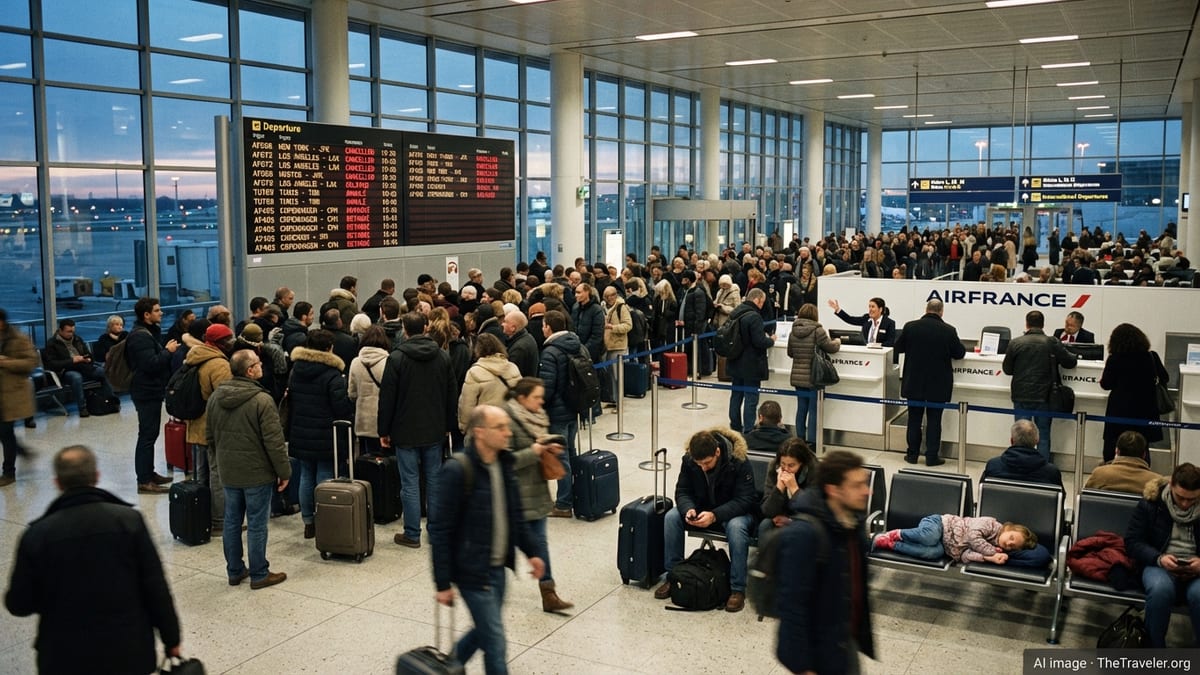
Airports from Dublin to Istanbul Struggle With Weather Fallout
Publicly available tracking data and aviation reports indicate that the latest round of disruption has hit a broad swath of Europe, focused on some of the region’s busiest hubs. Dublin, Edinburgh, Paris, Istanbul and Brussels all reported elevated levels of delays and cancellations as the storm moved across the North Atlantic into Western Europe.
In Ireland, operations at Dublin Airport were significantly affected after a winter of already fragile punctuality. Data compiled by flight disruption analysts shows that Dublin has endured repeated waves of delay this season, and the latest storm again forced airlines to thin out schedules and extend turnaround times on short haul routes.
In the United Kingdom, Edinburgh emerged as one of the hardest hit Scottish airports, following a pattern of recent days in which airports around England and Scotland have struggled with tight staffing and volatile weather. Reports from aviation industry outlets describe large clusters of late departures and missed onward connections at Edinburgh as the storm band crossed the North Sea.
Further south and east, Paris and Brussels continued to face their own bottlenecks. Paris, a major transfer point for transatlantic and intra European traffic, experienced a combination of ground handling slowdowns and flow restrictions in the surrounding airspace, while Brussels reported knock on effects from diversions and aircraft repositioning, affecting both arrivals and departures.
Emerald, easyJet, Pegasus and Air France Among Most Affected Carriers
Among individual airlines, regional operator Emerald Airlines, low cost carrier easyJet, Turkish based Pegasus Airlines and France’s flag carrier Air France are all prominently listed in disruption summaries covering April 4. Their networks intersect heavily at the airports most exposed to the storm band, leaving them vulnerable to aircraft and crew displacement as conditions worsened.
Emerald Airlines, which operates key regional links from Dublin and several UK cities, has already faced mounting schedule pressure in recent weeks as Irish and British airports battled poor weather and congested airspace. The latest cancellations and delays added further strain to thinly timed rotations, particularly on routes linking Dublin with Scotland and northern England.
easyJet, with a dense point to point network that includes Edinburgh, Paris and Brussels, saw a significant number of departures pushed back as the storm disrupted slot allocations and ground operations. Industry coverage notes that easyJet has also been preparing for potential further disruption related to planned cabin crew strike action in France around the Easter period, which could amplify existing scheduling challenges.
In Turkey, Pegasus Airlines experienced fresh turbulence at its Istanbul base as the wider European weather system combined with recent airspace and operational constraints affecting parts of West and Central Asia. Publicly available data from aviation news outlets shows that Istanbul’s role as a bridge between Europe and Asia has made it especially vulnerable when weather and airspace issues converge.
Air France, meanwhile, has been navigating a complex environment that blends weather related disruption in France with lingering knock on effects from earlier air traffic control constraints and long haul reroutings. With Paris Charles de Gaulle and Paris Orly acting as primary hubs, the carrier has had limited flexibility to absorb additional cancellations without ripple effects for connecting passengers.
Storm Adds to Season of Chronic Disruption for European Flyers
The latest tally of 72 newly cancelled flights and 743 delays slots into a broader pattern of instability that has defined the 2025 to 2026 winter and early spring travel season in Europe. Aviation analytics firms have repeatedly highlighted how a series of Atlantic storms, combined with staffing shortages at some airports and periodic industrial actions, has kept on time performance under sustained pressure.
In December 2025, large scale disruption across multiple European hubs left thousands of travelers stranded as hundreds of flights were cancelled and more than a thousand delayed in a single day. More recently, storms tracking across the North Sea and Irish Sea have repeatedly forced airports in Ireland, the UK and northern France to curtail operations or operate with reduced runway capacity for extended periods.
At the same time, international carriers linking Europe with the Middle East and Asia have faced their own headwinds as regional conflicts and airspace closures have forced rerouting and schedule reductions. Industry data shows that these adjustments have tightened capacity on key long haul corridors, leaving less slack in the system when European weather events trigger fresh waves of disruption.
For passengers, this combination of structural and weather related challenges has translated into a higher likelihood of missed connections, last minute rebookings and extended time spent in terminals, particularly at major transfer hubs. Travel industry observers note that even modest storms are now more likely to cascade into widespread disruption when they intersect with an already stretched aviation network.
Knock On Effects Reach Beyond Primary Hubs
Although headline figures tend to focus on headline airports such as Dublin, Edinburgh, Paris, Istanbul and Brussels, the latest storm related disruption has also spilled over into secondary and regional airports across Europe. Aircraft and crew repositioning decisions made at major hubs can quickly reverberate through the network, cancelling or delaying flights many hundreds of miles away from the original weather system.
Reports from regional terminals in the UK, Ireland and mainland Europe describe passengers facing abrupt schedule changes on seemingly unrelated routes, as airlines reshuffled aircraft to protect key trunk services. In some cases, flights from smaller airports were consolidated or shifted to later time slots to allow carriers to rebuild their rotations after earlier cancellations.
This kind of cascading impact has become more common in recent seasons as airlines seek to maximize utilization of limited fleets. With many carriers operating dense schedules and reduced spare aircraft capacity compared with pre pandemic norms, a single period of severe weather at one hub can quickly consume available contingency resources.
Travel analysts suggest that passengers departing from smaller airports are often among the first to feel the impact of these network wide adjustments, particularly on leisure heavy or lower frequency routes where alternatives on the same day are limited.
What Travelers Can Expect in the Coming Days
While the worst of the current storm system is expected to move away from Western Europe within days, aviation data providers warn that residual disruption can linger well beyond the period of active severe weather. Displaced aircraft, out of position crews and mandatory rest requirements can keep schedules fragile even after skies clear over major hubs.
Publicly available guidance from consumer advocacy and flight compensation platforms recommends that travelers scheduled to fly in the coming days build additional time into their itineraries, particularly when making tight connections through busy European airports. Passengers are generally encouraged to monitor airline apps and departure boards frequently, and to be prepared for last minute gate or timing changes.
Regulatory frameworks such as the European Union’s passenger rights rules continue to apply, with eligibility for rerouting, care and in some cases financial compensation depending on the cause and length of a delay or cancellation. However, weather related disruption is often classified differently from carrier controllable events, which can influence the type of support available.
For now, the April 4 wave of 72 cancellations and 743 delays adds another chapter to a difficult travel season for Europe’s aviation sector. With holiday periods approaching and further industrial actions already signaled in several countries, industry observers note that travelers may need to brace for additional bouts of turbulence in the skies and on the ground through the spring.