

More news on this day
Hundreds of passengers faced major travel disruptions at Boston Logan International Airport this week as a potent late season storm and ripple effects across airline networks led to at least 23 cancellations and 92 delays, affecting routes to and from the United States, Mexico, Hong Kong, Canada and other international destinations.
Get the latest news straight to your inbox!
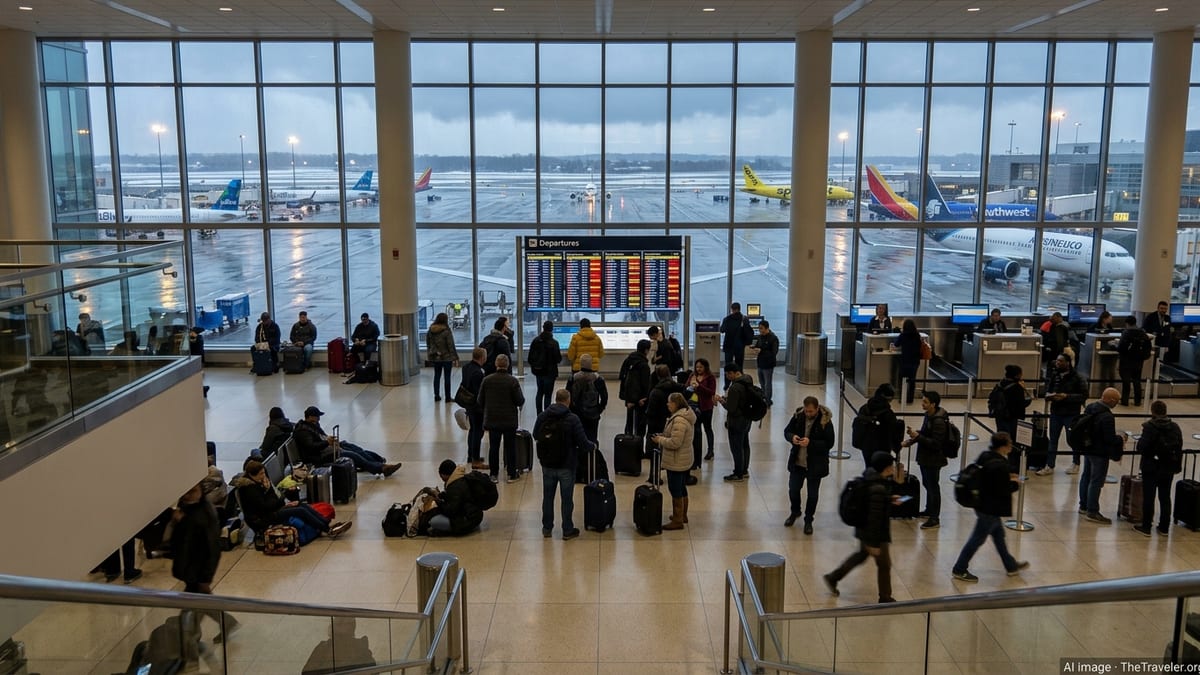
Weather Turmoil and System Strain Converge at Logan
Publicly available flight tracking data and airport status boards for Boston Logan on Tuesday indicate that a compact but intense storm system moving through New England combined with broader operational pressures to trigger a wave of schedule disruptions. While overall traffic at Logan continued, the mix of cancellations and long delays built through the day, hitting regional carriers and international operators alike.
The pattern mirrors recent severe weather episodes in the Northeast, where high winds and fast‑moving snow or rain bands have repeatedly forced airlines to slow arrivals, stretch departure intervals and reassign aircraft. Earlier in March, a powerful blizzard brought damaging gusts, power cuts and dozens of cancellations at Logan, and this week’s system followed a similar trajectory, though with less widespread infrastructure impact.
Airlines appear to have used a combination of preemptive cancellations and rolling delays to manage the reduced operating window. That strategy can limit last‑minute chaos on the tarmac but often shifts the disruption burden onto passengers, who must rebook complex itineraries that link Boston with major hubs across North America and long haul gateways in Europe and Asia.
According to published coverage of recent storms, Logan has been particularly sensitive to episodes of low cloud ceilings, strong crosswinds and runway contamination, conditions that can quickly erode capacity on its intersecting runways and generate backups that ripple through airline schedules in multiple countries.
Multiple Carriers Hit, From Regionals to International Brands
Flight status information shows that the day’s 23 cancellations were spread across several operators, with Republic Airways among the hardest hit on regional routes that feed larger domestic hubs. As a contract carrier operating flights on behalf of major U.S. airlines, Republic’s schedule adjustments at Logan translated into missed connections for travelers who expected to continue on to other cities across the United States and into Canada and Mexico.
Low‑cost and leisure focused airlines also featured prominently in the disruption picture. Spirit Airlines and JetBlue, both with sizable footprints at Logan, posted a combination of scrubbed departures and significant delays. For these carriers, even a modest number of aircraft stuck on the ground at an affected airport can create cascading problems, given their relatively tight aircraft and crew rotations across dense point‑to‑point networks.
Southwest Airlines, which operates a mix of domestic routes from Boston, likewise encountered operational headwinds, with delays compounding through the day as aircraft arrived late from other weather‑affected parts of the country. Public discussions among travelers in recent weeks have highlighted the challenge for airlines trying to recover from one disruption before another system rolls through a different region.
On the international side, Aeromexico joined the list of airlines adjusting its Boston programme. Disruptions to its Logan service affected travelers bound for Mexican hubs used to connect onward into Latin America. Long haul operations linking Boston with Asia were also under strain, with published schedules showing delays on services that feed into Hong Kong and other major Asian gateways via partner hubs.
Knock‑On Effects Across the US, Mexico, Canada and Beyond
Although the initial trigger for the latest problems was localized in New England, the impact extended well beyond Boston’s coastline. Airline networks rely on intricate aircraft rotations that can span multiple countries in a single day, so a delay or cancellation at Logan can reverberate through subsequent flights throughout North America.
Publicly available tracking of individual tail numbers and route patterns shows that some aircraft scheduled to operate Boston departures later in the day were arriving late from cities across the Midwest and southern United States, themselves recovering from earlier weather and air traffic control slowdowns. As those inbound flights slipped behind schedule, their onward legs from Logan to Canadian cities and Mexican beach destinations were pushed back, leaving passengers facing multi hour waits in terminals far from the original weather system.
The disruption also affected transborder itineraries that string together multiple short segments, such as Boston to a U.S. hub, onward to a Canadian city and then continuing to smaller markets. Even when the final legs remained nominally on time, missed connections from Boston meant empty seats on some departures and overnight stays for delayed travelers at intermediate hubs.
Passengers with itineraries touching Hong Kong and other Asian gateways were not spared. Long haul flights often operate near the limits of daily crew duty windows, and a late pushback from Boston can make it difficult to complete the full sequence of segments under existing regulations. In some cases, airlines opted to rebook travelers through alternative hubs rather than risk further disruption downline.
Passenger Experience: Crowded Terminals and Scrambled Plans
Inside Logan’s terminals, the operational strain manifested in longer queues at check in counters and customer service desks as travelers sought new options. Social media posts from the airport this week describe scenes of crowded gate areas, repeated schedule updates on overhead screens and rolling departure times that shifted out by 30 minutes at a time.
For many affected passengers, the key challenge was not simply the initial delay but the difficulty of reconstructing complex itineraries that spanned multiple airlines and alliances. Travelers bound for Mexico or Canada via U.S. hubs sometimes found that while their original Boston departure was canceled, downstream connecting flights were still operating, leaving them to negotiate rebooking to preserve as much of their original routing as possible.
Families and leisure travelers headed to sun destinations faced particular complications, as many holiday routes operate only a few times per week outside peak seasons. A missed departure from Boston to a Mexican resort city or a Canadian winter sports destination could mean a lost day or more from a short break, with limited alternatives available at short notice.
Reports from recent disruption events at Logan underscore that even when airlines provide hotel or meal assistance, travelers can struggle to find nearby rooms during busy periods, especially when weather issues coincide with school holidays, business conventions or major sporting events in the Boston area.
How Travelers Can Navigate Ongoing Volatility
The latest episode at Boston Logan adds to a growing pattern of volatility in North American air travel, influenced by increasingly changeable weather, tight airline staffing and congested airspace on both sides of the U.S. border. Industry statistics compiled by federal transportation agencies already show that on time performance for several carriers has been under pressure during recent winters, with Republic, Spirit, JetBlue and Southwest all listed among airlines managing high volumes of delayed or canceled flights at various points.
Travel analysts note that passengers booking itineraries through weather exposed hubs such as Boston during late winter and early spring may benefit from modest schedule buffers. That could include choosing earlier departures in the day, allowing longer connection times for trips to or from Canada and Mexico, or avoiding extremely tight layovers for long haul connections toward Asia.
Experts also point to the value of using airline apps and airport information tools that provide near real time updates on security wait times, gate changes and runway constraints. Newer technology being adopted at major U.S. airports, including Logan, is designed to give passengers clearer expectations about when to arrive at the terminal and how long they might wait at checkpoints during periods of disruption.
With forecasts signaling further episodes of unsettled weather in the Northeast as winter transitions into spring, travelers using Boston Logan can expect continued periods of strain on airline operations. The latest wave of 23 cancellations and 92 delays serves as a reminder that even a single day’s disturbance at a major international gateway can send shockwaves through flight schedules linking the United States to Mexico, Hong Kong, Canada and a wide network of global destinations.