

More news on this day
Europe’s aviation network has been hit by a fresh wave of disruption in early April 2026, with publicly available data showing more than 1,000 flight delays and hundreds of cancellations across major hubs as severe weather systems collide with ongoing airspace and operational pressures.
Get the latest news straight to your inbox!
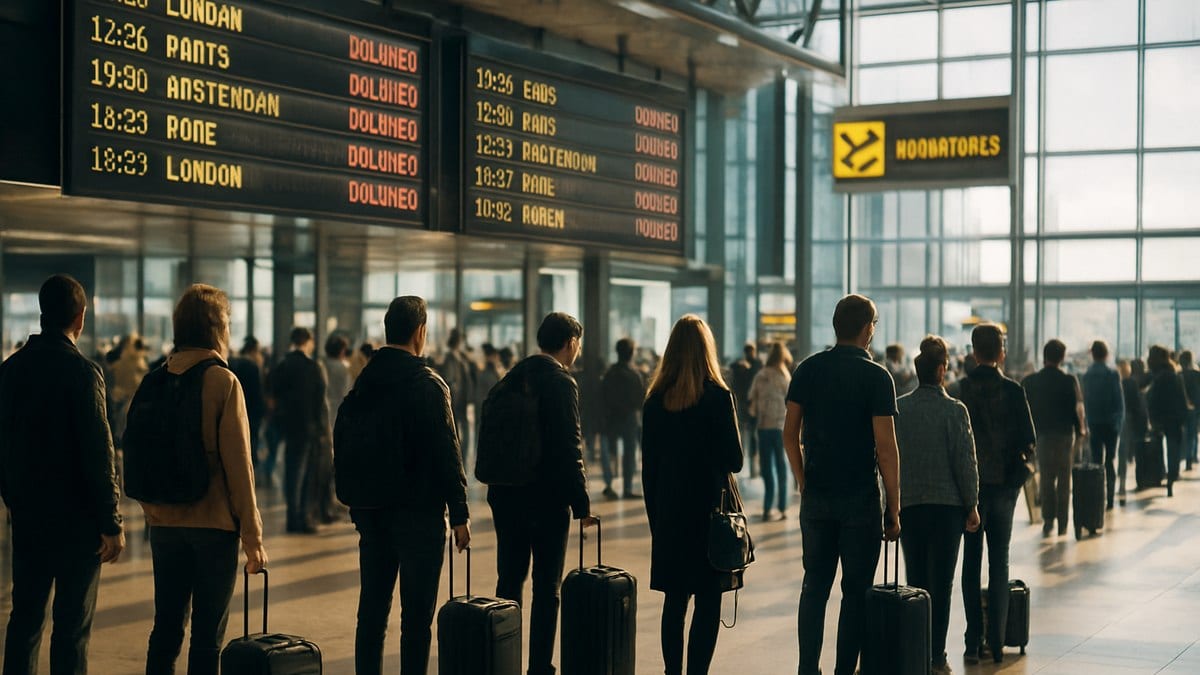
Storm Dave and Spring Weather Systems Slam Key Northern Hubs
Weather remains a central driver of the latest disruption, with Storm Dave sweeping across northern and western Europe on 7 April 2026 and triggering widespread schedule upsets. Data compiled by passenger-rights platforms points to at least 238 flight cancellations and 1,469 delays in a single day, affecting airports from Iceland to Germany and Ireland.
Keflavik International, Dublin Airport, London-area airports and Frankfurt were among the locations facing extended knock-on delays as winds, heavy rain and low cloud reduced runway capacity and slowed ground operations. The impact has rippled through both short-haul and long-haul networks, with late arrivals forcing aircraft and crew rotations to slip further behind schedule.
Because many of these hubs act as primary transfer points for transatlantic and intra-European journeys, individual weather events have translated into system-wide congestion. Travellers connecting through London, Frankfurt or Dublin have reported long queues, last-minute gate changes and missed onward flights as airlines attempt to rebuild their schedules.
Industry data from recent years suggests that such weather-driven shocks are hitting a network already vulnerable to delay. European air traffic management performance reports show that average minutes of delay per flight have risen over the past decade, leaving less resilience when storms like Dave cross key traffic corridors.
Southern Europe Feels the Knock-On Effect as Athens and Mediterranean Gateways Slow
The disruption has not been confined to northern latitudes. Athens International Airport and other Mediterranean gateways have also recorded elevated levels of delay and a smaller number of cancellations in early April, as unstable spring conditions and upstream congestion push schedules off track.
Reports from Greek and regional outlets on 5 and 6 April highlight how even relatively modest local weather issues can quickly escalate once they interact with already stretched networks. One dataset for 5 April notes 85 cancellations and 381 delays across Europe, with connections through hubs such as Amsterdam, London and Copenhagen cascading into late arrivals and departures for services to and from Greece.
At Athens, late inbound aircraft have contributed to rolling delays on both domestic and international sectors. Passengers heading to island destinations or onward to other European capitals have had to contend with extended waiting times, re-routed itineraries and, in some cases, overnight stays when minimum rest times for crews or night curfews at regional airports are triggered.
The pattern illustrates how interconnected Europe’s air travel system has become. A storm front over the North Atlantic or staffing strain at a northern hub can manifest hours later as delays at Mediterranean leisure airports, even where local conditions appear relatively benign.
Airspace Rerouting and Operational Strain Add to April Backlog
Weather is only one piece of the puzzle. The April flight disruption follows weeks of broader operational pressure linked to airspace restrictions along key Europe–Middle East and Europe–Asia corridors. Rerouted traffic around sensitive regions has increased flight times, fuel consumption and crew duty periods, narrowing the margin for recovery when additional problems arise.
Analysts note that extended routings can push aircraft out of their planned rotations, with a late-arriving long-haul service arriving into hubs such as London, Paris, Frankfurt or Amsterdam too late to operate its scheduled onward sectors. Once that happens, airlines must make rapid decisions on which flights to delay, combine or cancel, often resulting in clusters of disruption around peak periods.
Air traffic management statistics underline that the regional network is already operating close to its capacity limits on busy days. Industry bodies have previously reported that European air traffic flow management delays have more than doubled over the past decade, while the growth in flight numbers has been far more modest. This structural imbalance leaves limited room to absorb additional shocks from storms or route closures.
Ground operations and staffing are another constraint. Airports and handling companies in several countries continue to report tight labor markets, which can slow processes such as check-in, security screening, baggage handling and aircraft turnaround during surges in demand. When combined with adverse weather, these bottlenecks contribute to longer queues at terminals and delayed departures from stands.
Major Hubs Bear the Brunt as Passenger Numbers Climb
The latest figures show that the heaviest disruption in recent weeks has clustered around Europe’s primary hubs. One recent snapshot from late March cited by industry-focused publications described more than 1,600 delays and over 100 cancellations in a single day across airports in England, France, Germany, Greece, Spain and the Netherlands.
Amsterdam Schiphol, London Heathrow, Paris Charles de Gaulle, Frankfurt and Munich feature repeatedly in daily disruption tallies, reflecting their role as high-traffic connecting points. Secondary but strategically important airports such as Barcelona, Madrid and Athens have also seen elevated delay counts during the same period, particularly during peak morning and evening banks of flights.
As passenger demand continues to rebound in 2026, these hubs are once again operating at or near pre-pandemic throughput levels. While infrastructure and staffing have recovered in many locations, industry commentators argue that some parts of the system remain fragile, particularly when multiple stress factors coincide. A single day of heavy weather can generate a backlog that takes several days to clear fully.
For airlines, the cost of disruption is mounting. Economic analyses from international aviation groups estimate that European air traffic control and flow management delays alone now impose multi-billion-euro costs each year, once fuel burn, crew overtime, passenger care obligations and lost productivity are taken into account.
What April 2026 Travellers Can Expect and How to Prepare
For passengers planning trips in April 2026, the current pattern suggests that further pockets of disruption are likely, particularly around busy weekends, school holidays and during any subsequent storm systems. While conditions can vary significantly from day to day, the recent run of events shows that more than 1,000 delayed flights across the region in a 24-hour period is no longer unusual when weather and airspace constraints overlap.
Consumer advocacy groups recommend that travellers build extra time into itineraries that rely on tight connections at major hubs, especially if journeys involve multiple carriers or separate tickets. Early-morning departures are often less exposed to accumulated delays, although they can still be affected by aircraft arriving late from overnight operations or distant time zones.
Passengers are also being urged, through public guidance notices and airline advisories, to monitor flight status closely on the day of travel and to keep contact details updated with carriers so that rebooking options can be communicated quickly if schedules change. Travel insurance policies that include cover for delays, missed connections and additional accommodation can provide a financial buffer when disruption strikes.
Regulatory protections remain a key consideration. Under European Union rules, travellers departing from EU and EEA airports, or flying into the bloc on EU carriers, may be entitled to care, assistance or compensation in certain circumstances involving long delays, cancellations or denied boarding. However, exceptional events such as severe storms or airspace closures are often treated as outside airline control, limiting cash compensation but not necessarily removing the obligation to provide meals, refreshments and accommodation while passengers wait.