

More news on this day
Travelers passing through Los Angeles International Airport on March 10 and 11 faced mounting disruption as major carriers including United Airlines, Air Canada, American Airlines, El Al and Qatar Airways scrubbed at least eight flights and triggered rolling delays to key domestic and international destinations.
Get the latest news straight to your inbox!
Weather and Geopolitics Converge on a Busy Hub
The latest wave of disruption at Los Angeles International Airport, one of the world’s busiest international gateways, reflects a volatile mix of powerful U.S. storm systems and deepening unrest in the Middle East that has upended timetables across multiple continents. While Los Angeles itself reported only modest local weather impacts, its schedules were knocked off balance by aircraft and crews stranded at other hubs and by rapidly evolving airspace restrictions.
Industry data tracking for March 10 shows Los Angeles International registering 151 delayed flights and 11 cancellations across domestic and international services, with American Airlines, Delta Air Lines, United Airlines and Alaska Airlines among the carriers most affected. Operational planners say that number understates the passenger impact, as missed connections and rolling knock-on delays stretched into March 11.
At the same time, airlines were still recalibrating networks in response to Middle East airspace closures and security concerns around Israel and the Gulf. That combination left some long-haul services to and from Los Angeles particularly exposed, including links to Tel Aviv and Doha and key domestic and transborder connections used as onward gateways to the region.
For travelers arriving to find departure boards flashing red across multiple terminals, the result was a confusing patchwork of weather-related delays, crew shortages and security-driven cancellations that often shared the same outcome: missed meetings, rebooked itineraries and unexpectedly long nights on airport benches and hotel rollaway beds.
Tel Aviv and Middle East Links Bear the Brunt
Routes connecting Los Angeles with Tel Aviv emerged among the most vulnerable, as United Airlines, American Airlines and El Al adjusted or suspended services amid heightened regional instability. United and American had already extended broader suspensions of U.S. to Tel Aviv flying into late March, and passengers booked on Los Angeles services were being reprotected on alternative routings or later dates.
El Al, which operates nonstop services between Los Angeles and Tel Aviv, has faced a succession of operational challenges tied to the conflict, ranging from tightened security protocols to ad hoc delays when suspicious items or unverified baggage require additional screening. That heightened security environment, combined with temporary airspace closures and congestion around Ben Gurion Airport, has increased the likelihood of late arrivals into Los Angeles and subsequent departure delays.
Qatar Airways, which connects Los Angeles to Doha and onward to major destinations across the Middle East, Asia and Africa, has also been navigating intermittent disruption following missile strikes, airspace closures and capacity caps at Gulf hubs. While the carrier has begun restoring a limited schedule from Doha, operational constraints have led to selective cancellations on long-haul sectors, including services touching the U.S. West Coast.
The net effect for Los Angeles passengers bound for Tel Aviv, Dubai, Doha or secondary cities across the region has been a shrinking pool of one-stop options and a rising risk of unplanned stopovers in European or East Coast hubs when aircraft or crews fail to materialize on time.
Ripple Effects to Chicago, Aspen and Canadian Gateways
The disruption at Los Angeles is closely tied to conditions hundreds or even thousands of miles away. Severe storms sweeping through the central United States this week caused widespread delays and cancellations at Chicago O’Hare and other Midwest hubs, with United and American among the hardest hit. As aircraft originating in Chicago and other storm-affected airports ran late or were grounded altogether, knock-on impacts spread to West Coast outstations such as Los Angeles.
That cascade affected not only trunk routes like Los Angeles to Chicago but also smaller markets that feed traffic into long-haul services. Mountain destinations including Aspen reported average ground delays at their own airports, while connections through Denver and other Rocky Mountain hubs have been slowed by weather and flow-control measures. For travelers booked on Los Angeles flights relying on inbound aircraft from Aspen and similar markets, last-minute gate changes and rolling departure times were common.
To the north, transborder routes linking Los Angeles with major Canadian gateways such as Montreal and Toronto were also strained. Air Canada has been in the midst of a complex network reset as it navigates Middle East unrest, having already suspended select services to Tel Aviv and Dubai for much of March. Those long-haul adjustments, combined with winter-weather sensitivities at Canadian hubs, increased schedule fragility for Canada–California flying over recent days.
At Los Angeles, passengers on both United and Air Canada found that delays in Toronto and Montreal quickly translated into missed connection windows for onward flights to Asia and the South Pacific, illustrating how tightly coupled today’s long-haul networks have become and how quickly a single weather system or regional conflict can snarl itineraries far beyond its immediate footprint.
Passengers Confront Long Queues and Limited Options
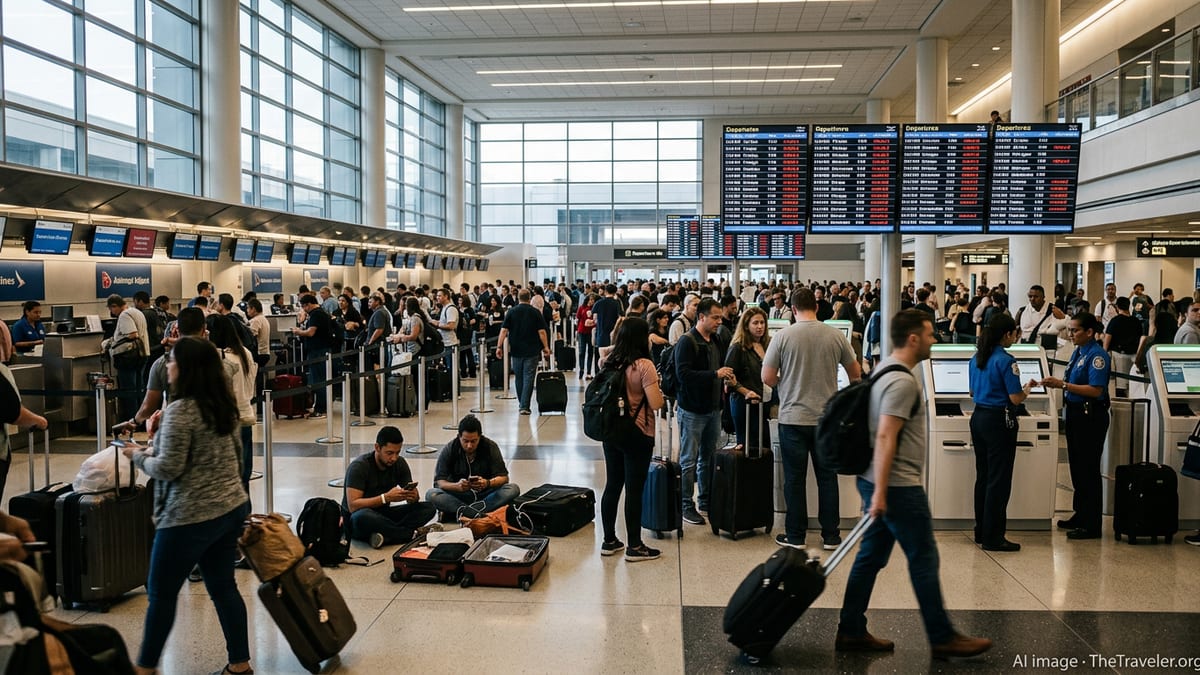
Inside Los Angeles International’s terminals, the knock-on effects of the multi-layered disruption were readily visible. Check-in halls and customer service counters for United, American, Air Canada, El Al and Qatar Airways drew long queues as travelers sought rebooking options, overnight accommodation or meal vouchers, often with limited success as nearby flights filled and hotel inventory tightened.
Agents reported that many travelers arrived at the airport still unaware of cancellations or substantial delays despite airline app notifications and travel alerts, particularly on codeshare services where multiple carriers share responsibility for communication. Some passengers only discovered that their Los Angeles to Tel Aviv or Los Angeles to Chicago flights had been scrubbed after clearing security and reaching the gate, forcing hurried scrambles to secure alternate seats via New York, Dallas, Vancouver or European hubs.
Families attempting to connect from leisure destinations such as Aspen, or from Canadian cities where weather disruptions were also in play, faced an added layer of complexity. In some cases, they saw their inbound flights operate but arrive too late to make tight Los Angeles connections, leaving them stranded at the airport as the final long-haul departures of the night pushed back without them.
With a fresh round of storms forecast and geopolitical conditions in the Middle East still uncertain, airline staff at Los Angeles have been advising travelers to build additional buffer time into their itineraries, monitor multiple legs of their journey, and be prepared for schedule changes that can come with little warning even after boarding passes are issued.
What Travelers Through LAX Should Do Now
For passengers scheduled to travel through Los Angeles in the coming days, carriers and travel experts are urging a more proactive approach than usual. The first step is to monitor flight status closely via airline apps or text alerts beginning at least 24 hours before departure and continuing up to the time of leaving for the airport, as aircraft and crew positioning can change rapidly when storms or security developments alter flying patterns elsewhere.
Travelers booked on United, American, Air Canada, El Al or Qatar Airways should also review any active travel waivers, particularly on itineraries touching Tel Aviv, Dubai, Doha or key North American hubs such as Chicago, Toronto and Montreal. These waivers can allow free changes to travel dates or routings, a valuable option for those who have flexibility and prefer to avoid known hotspots for disruption.
Once at Los Angeles, passengers experiencing cancellations or long delays are being advised to seek assistance through multiple channels at once, combining airport customer service counters with calls or chat sessions to airline support centers. Same-day seats on alternative routings, for example via San Francisco, Vancouver or European gateways, are often snapped up quickly and may be visible sooner in digital channels than at crowded airport desks.
With operational stress likely to persist as long as the combination of stormy spring weather and geopolitical uncertainty remains, frequent travelers through Los Angeles say the best strategy is to pack patience, keep options open and recognize that a localized delay message may actually reflect turbulence in the wider global aviation system rather than anything happening on the tarmac outside their immediate terminal window.