

More news on this day
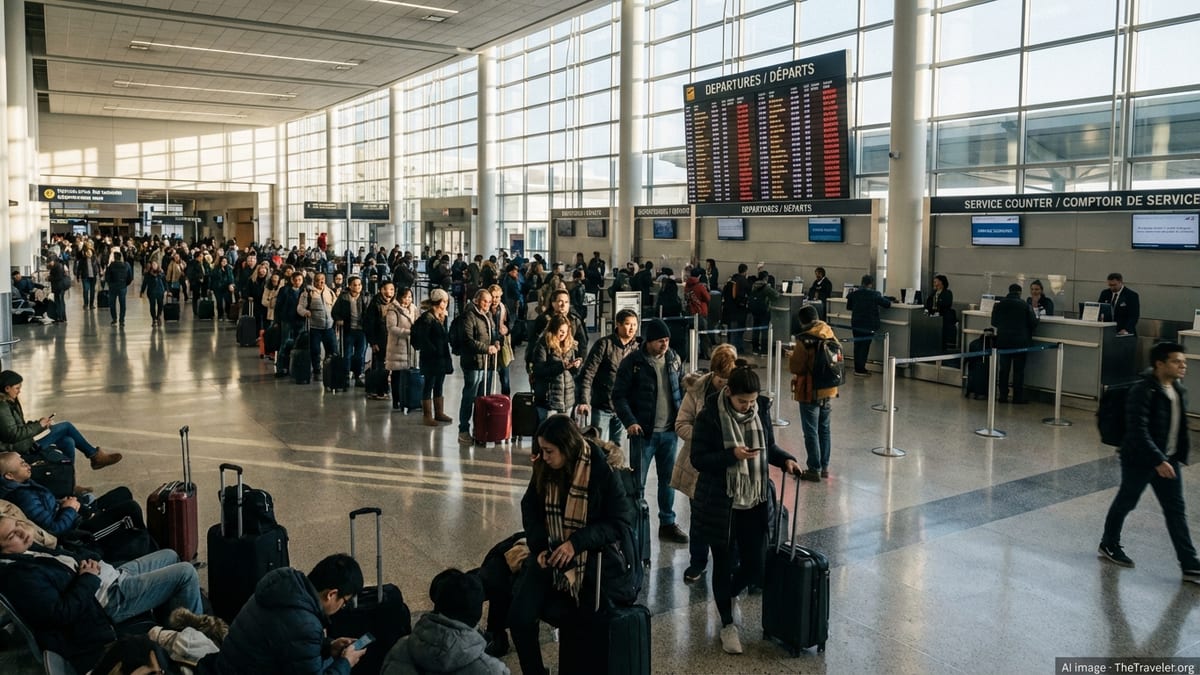
Travellers across Canada are facing another day of heavy disruption as publicly available tracking data shows more than 40 flights cancelled and over 200 delayed on Saturday, affecting services operated by Air Canada, Jazz, Porter Airlines, Icelandair, WestJet and other carriers through major hubs in Toronto, Montreal, Vancouver, Ottawa and Calgary.
Get the latest news straight to your inbox!
Major Hubs See Wave of Cancellations and Delays
Data from widely used flight-tracking dashboards on March 21 indicates that Canadian airports are once again grappling with a concentrated wave of schedule disruptions. The latest figures point to at least 40 outright cancellations and well over 200 delays by midday, with numbers fluctuating as airlines adjust their operations in real time.
Toronto Pearson, Montreal Trudeau and Vancouver International appear to be bearing the brunt of the impact, reflecting their roles as primary connecting hubs for both domestic and transatlantic routes. Flight-status boards show a mix of grounded departures and late arrivals, with knock-on effects visible on services linking onward to Ottawa, Calgary and smaller regional centres.
Publicly available information shows that the cancellations are spread across a range of airlines, including Air Canada and its regional partner Jazz, WestJet, Porter Airlines and Icelandair, which serves Canada on transatlantic links. Several ultra-low-cost and regional carriers are also listed among the affected operators, contributing to a patchwork of disruption rather than a single-airline event.
The pattern mirrors what passengers have seen repeatedly during the 2025–2026 travel seasons, when even a modest cluster of grounded flights can quickly ripple through tightly timed schedules and lead to growing numbers of delayed departures later in the day.
Weather, Winter Operations and Tight Schedules
The latest disruption comes against the backdrop of an unsettled March across North America, following a powerful storm system between March 13 and 17 that brought blizzard conditions to parts of the central United States and southern Canada. Meteorological summaries of that system describe heavy snow, strong winds and complicated de-icing conditions extending into Quebec and Ontario, leaving airlines in recovery mode as they work aircraft and crews back into position.
Canadian aviation in early 2026 has already been challenged by several bouts of extreme winter weather, including an Arctic cold spell and high snowfall totals in the Toronto region earlier in the year. Historical reporting on those events shows that even when airports remain open, low temperatures and repeated de-icing cycles can constrain capacity and increase the likelihood of what carriers describe as operational cancellations.
Industry analyses of recent seasons suggest that major hubs such as Toronto and Montreal are especially vulnerable to cascading disruption when storms arrive at peak travel periods. A single day of heavy snow can leave aircraft and crews out of position across the network, which can take several days to untangle, even after skies clear. That context is shaping how airlines respond to the latest round of schedule changes, with some opting to proactively cancel flights to reduce the risk of extended rolling delays.
For travellers, the practical effect is that a storm or operational constraint in one region can influence flights thousands of kilometres away, as aircraft that were meant to feed transcontinental or international services from Toronto, Vancouver or Calgary fail to arrive on time.
Airlines Balance Recovery Efforts and Passenger Frustration
Over the past year, Canada’s largest carriers have faced growing scrutiny over how they manage irregular operations. Reports on Air Canada and WestJet have highlighted pressure on on-time performance and questions about staffing levels and spare aircraft availability, particularly during peak winter and holiday periods when there is less slack in the system.
Regional and niche operators, including Jazz and Porter Airlines, are also experiencing the strain. As feeders into larger hubs, their delays can have an outsized impact by disrupting connections for passengers headed to smaller communities or onward international journeys. In parallel, Icelandair and other foreign carriers serving Canada can be affected when inbound flights are slowed by weather or congestion at Canadian airports, forcing adjustments to return departures.
Analysts note that airlines continue to operate with finely tuned schedules that leave limited room for recovery after major weather events. When storms or ground constraints reduce the number of flights that can safely move through an airport each hour, carriers often must decide between long rolling delays and more decisive cancellations designed to stabilise the remainder of the timetable.
Publicly accessible consumer forums and travel discussion boards in early 2026 have been filled with accounts of last-minute cancellations, lengthy waits for rebooking and uncertainty over compensation rules. While individual experiences vary by airline and circumstance, the volume of such reports underscores the level of frustration among travellers caught in repeated disruption cycles.
Impact on Travellers Across Domestic and International Routes
Saturday’s pattern of cancellations and delays is affecting a broad mix of domestic and international flights. In the domestic market, disrupted services include some of the country’s busiest corridors, such as Toronto to Vancouver, Toronto to Calgary and Montreal to Toronto, along with onward links to Ottawa, Atlantic Canada and cities in the Prairies and northern regions.
Internationally, late departures and aircraft rotations at Toronto, Montreal and Vancouver are influencing flights to the United States, Europe and sun destinations. For example, when a morning departure from Calgary or Ottawa into a major hub runs late or is cancelled, the aircraft and crew slated for an afternoon transborder or overseas leg may no longer be available, forcing schedule reshuffles.
Travellers connecting between different airlines are particularly exposed to these knock-on effects. A delayed arrival into Toronto on a regional carrier can cause passengers to miss onward flights operated by a different airline alliance, leaving them reliant on same-day seat availability in an already strained system.
For those already en route, the combination of weather-related constraints and tight aircraft utilisation can mean extended time spent on airport concourses, repeated gate changes and uncertainty about whether a delayed service will eventually depart or be cancelled outright.
What Travellers Can Expect in the Coming Days
Looking beyond Saturday, operational patterns seen throughout this winter suggest that it may take several days for airlines to fully absorb the latest wave of cancellations and delays. Aircraft and crews will need to be repositioned, and schedules may continue to see targeted adjustments as carriers work to restore regular frequencies on key routes.
Industry statistics published for recent years indicate that Canadian airlines typically cancel a relatively small percentage of their overall schedules, but that isolated days of higher disruption can be sharply felt when they coincide with strong travel demand or severe weather. As a result, travellers flying through Toronto, Montreal, Vancouver, Ottawa and Calgary over the next few days may continue to encounter residual delays even as the number of outright cancellations declines.
Publicly available guidance from airlines and consumer advocates consistently encourages passengers to monitor flight status frequently on the day of travel and to build extra time into itineraries involving tight connections, especially during the winter and early spring period. Same-day rebooking options, where available, may be limited on popular routes when multiple flights are affected simultaneously.
While broader discussions continue over infrastructure capacity, airline staffing and consumer protection rules, the current round of disruptions highlights how vulnerable Canada’s air travel network remains to a combination of severe weather and tightly packed schedules, particularly when multiple carriers and hubs are affected at once.